
January 27th, 2016
Should I Bare My Sole? Reflections on Patient-Provider Trust and Barefoot Running
Scott Cuyjet, RN, MSN, FNP-C
; [/php]/images/AU000_scuyjet.jpg)
Scott Cuyjet, RN, MSN, FNP-C, practices adolescent medicine in the San Francisco Bay area.
In my own experience as the patient doing something out of the norm, I am a barefoot/minimalist runner. And I’d like to share my own story here with some background information in case you encounter one of “us” in your practice. That way you can be better prepared, so you don’t have a negative gut reaction that comes out verbally or nonverbally.
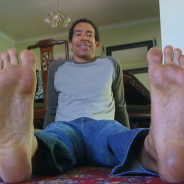
My journey into barefoot running started in May of 2005, after my first and only marathon, which gave me a horrible blister on my right arch, and a painful second half of said marathon. It was after this that I read an article in Runner’s World magazine about a man named Ken Bob Saxton who lives in Long Beach, California — an article that changed how I run to this day. After reading the article, I went to his website, and read about other barefoot runners throughout history and how their form is more natural and gentle. The thing that was most intriguing about running barefoot was that all of the people on his bulletin board claimed they no longer experienced injuries like shin splints, joint pain, twisted ankles, and blisters. I had been chronically plagued by knee pain since I started running at the age of 8, which I was told was from my flat feet causing me to over-pronate. So to minimize my discomfort, I had tried every over-the-counter orthotic, custom orthotic, and motion-control shoe — with little to no relief, but I kept running anyway. I also had two pairs of shoes that I alternated between each day and tracked their mileage so that the midsole would not get too compressed and make me even more prone to injury. Lastly, I looked for the softest surface to run on so I would not hurt myself while “pounding the pavement.”
A minimalist runner on the other hand, or foot, is one who wears the least amount of substance between his/her foot and the ground while running. It may be the Vibram Five Fingers, the Nike Free or one of its competitors, or a modernized version of the huarache sandal worn by the Tarahumara Indians in the book Born to Run (such as Xeroshoes). One can purchase minimalist shoes for general wear as well.
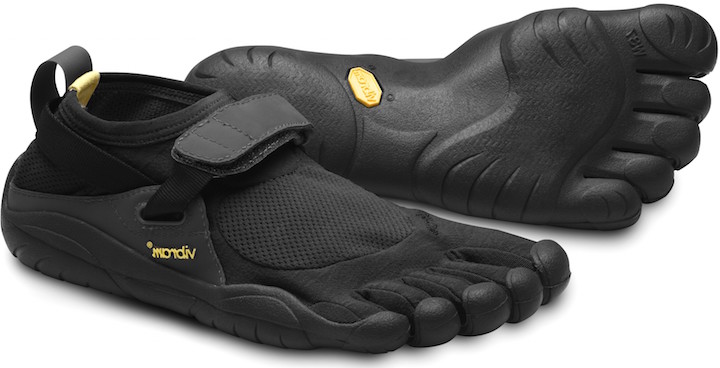
I wear my Vibrams when I am running in an unknown location, on a trail, or the temp drops below 40 degrees, but most of the time I am barefoot. I tried some huaraches/Xeroshoes, but they did not work for me. To maintain general foot strength, I stay barefoot as much as possible, or close to it. I wear vivobarefoot shoes at work and flip-flops everywhere else. I also ride my single-speed bike barefoot or in Vibrams. In 2012 there was a lawsuit brought against the Vibram company for, “[Allegedly making] false and unsubstantiated claims about the health benefits of its glove-like footwear.” In this article I found, the author states, “A friend of mine owns a running shoe store and he reports sales of Vibram Five Fingers have all but ceased,” but I feel that the people injured either were being used by liability lawyers to make a buck or did not use any common sense.
As far as the latter, when I started, I read a lot before ditching my shoes, and what I read told me to start slow. At the time of my switch I was running 9-13 miles 4 days a week. I cut my mileage back to 2-3 miles and increased 10% a week if my feet and legs allowed it. Some of you may be thinking, he probably runs really slow, or does not run very far, so I am including some of my barefoot race PRs: 2 miles in a sprint triathlon — 9:27 (4:44/mi); 5K — 17:49 (5:44/mi); 12K — 44:37 (5:59/mi), half marathon — 1:28 (6:47/mi). When training for my half marathons, my long run before a race was 18 miles.
Since I began running barefoot and in my Vibrams, I get lots of stares and the occasional request to take a picture, but I have had none of the knee pain that plagued me in shoes. I have also not had any foot, ankle, shin, or hip pain, or blisters. I step on a piece of glass maybe a few times a year so I carry tweezers, pick it out, and keep running. I also have not had any foot infections from these impalements.
When my primary provider found out about how I ran, he was not judgmental at all. This enabled me to feel safe discussing it with him. On the other hand, a nurse co-worker assured me that I was going to wind up in the hospital with a staph infection. If she had been my provider, I would have either switched to someone else or been very careful about what I shared with her in the future.
2 Responses to “Should I Bare My Sole? Reflections on Patient-Provider Trust and Barefoot Running”

NP/PA Bloggers
Elizabeth Donahue, RN, MSN, NP‑C
Alexandra Godfrey, BSc PT, MS PA‑C
Emily F. Moore, RN, MSN, CPNP‑PC, CCRN
Advanced practice clinicians treating patients in a variety of settings and specialties
Learn more about In Practice: Reflections from NPs and PAs.
 NEJM — Recent Clinical Medicine Articles
- A Cure Out of Most Patients’ Reach — Sickle Cell Disease in the Gene-Therapy Era September 24, 2026Gene therapy can spare people with sickle cell disease from recurrent vaso-occlusive crises, but for the populations that bear most of the global burden of disease, there’s no pathway to such treatment.
- Anticoagulation for Atrial Fibrillation with a Single Risk Factor for Stroke September 24, 2026Stroke is a severe and common complication of atrial fibrillation. Anticoagulation with vitamin K antagonists or with direct oral anticoagulants (DOACs) prevents the majority of strokes in patients with atrial fibrillation and at least two clinical risk factors for stroke (Table 1).1 Patients who receive DOACs or vitamin...
- Cerebral Schistosomiasis September 24, 2026A rice farmer presented to the ED after a 1-minute episode of arm and leg shaking on the right side. MRI showed linear enhancement associated with a cluster of enhancing nodules and surrounding edema in the left frontal lobe.
- A Cure Out of Most Patients’ Reach — Sickle Cell Disease in the Gene-Therapy Era September 24, 2026
- NEJM — Recent Pediatrics Articles
- Gaps and Borders September 24, 2026How can anyone in the U.S. medical community help children facing down the demons unleashed on them by the human traffickers entrusted with delivering them to better lives?
- Case 27-2026: A 4-Year-Old Boy with Fatigue, Imbalance, and Frequent Falls September 24, 2026A 4-year-old boy presented with fatigue and frequent falls. After falling, he could not stand up using his legs and would instead push himself up with his hands. The aminotransferase levels were elevated. A diagnosis was made.
- Cumulative Hematologic Morbidity and Outcomes in Shwachman–Diamond Syndrome September 24, 2026In an international cohort of 865 patients, Shwachman–Diamond syndrome was associated with a high risk of myeloid cancer and poor survival. Early hematopoietic stem-cell transplantation for high-risk features had a potential benefit.
- Gaps and Borders September 24, 2026
Steve great story. i own a store selling only minimal shoes and would love to share your store. i’m also a practicing physician afrundoc@gmail.com
Mark
Thanks for reading Mark. I will PM you about your comment.
Scott