
August 9th, 2010
FDA Issues Warning About Inferior Vena Cava Filters
Larry Husten, PHD
The FDA has issued an initial communication informing health professionals that it is evaluating reports of adverse events with the long-term use of inferior vena cava (IVC) filters. The FDA “recommends that implanting physicians and clinicians responsible for the ongoing care of patients with retrievable IVC filters consider removing the filter as soon as protection from PE is no longer needed.”
Simultaneous with the FDA announcement, the Archives of Internal Medicine published online a paper by William Nicholson and colleagues reporting a high rate of fracture and embolization, “with potentially life-threatening sequelae,” in the Bard Recovery and Bard G2 filters. In an accompanying commentary, Rita Redberg writes that “remarkably, these filters, which are placed inside the IVC, were considered Class II by the FDA—the same risk category of mercury thermometers—and received approval without any clinical data of safety and effectiveness identified in their 510(k) clearances.” She proposes that “high-risk devices must go through the appropriate approval process adequately supported by reliable data. Manufacturers should not be routinely permitted to circumvent the PMA process for high-risk devices by means of 510(k) clearances.”
August 6th, 2010
Three Questions about Ticagrelor: Part 4 — Bob Harrington
Sanjay Kaul, MD
PLATO is one of the most impressive trials in recent years, demonstrating substantial benefits for ticagrelor over clopidogrel in a wide population of ACS patients. However, patients enrolled in the US showed no benefit from ticagrelor, and experts have been unable to agree on a cause. Possible factors could include much higher doses of aspirin used in the US versus the rest of the world, differences in baseline characteristics (the US population was heavier and had more diabetes), and different patterns of invasive procedures. It is also impossible to exclude the play of chance. At the recent FDA advisory panel which recommended US approval of ticagrelor, one FDA official summed up the dilemma: “this drug doesn’t do what it’s supposed to do in the country in which it’s being asked to get approved.”
CardioExchange asked several panel members and other experts to respond to 3 questions about the panel. The fourth and final installment is from Bob Harrington, who presented PLATO data to the panel on behalf of the sponsor. Previous installments were with panel chairman Sanjay Kaul and panel members Mori Krantz and Jonathan Halperin.
1. What is your interpretation of the finding in the subgroup of US patients?
Both the investigators and the sponsor have spent much time and effort thinking about the US subgroup effect. As was explained in some detail at the FDA meeting, we first explored any systematic issue such as a reversal of treatment codes or drug kits that might explain the effect. We could not identify any such issue. In fact, US ticagrelor patients have drug levels consistent with having received the drug, and a platelet function substudy conducted in US and UK sites show similar levels of platelet inhibition with ticagrelor. We next devoted substantial analytical effort to trying to understand if we could identify patient characteristics or patient care patterns that differed in US and non-US patients. There are some patient characteristics that do vary (weight and diabetes for example), but the differences do not explain the treatment effect differences. We looked at differences in concomitant medication use as well as procedural use, and after approaching the question from different analytical perspectives, the one consistent finding was that there was an association between maintenance aspirin dose and the observed treatment effect. Patients in the US are frequently (60% or so of the time) treated with aspirin at doses ≥300 mg, while use of these higher aspirin doses is far less frequent outside of the US (10%). After much analysis and thinking about the data, we believe that the use of higher aspirin doses in the US might be a plausible explanation for the observation. It’s not definitive. Only a randomized clinical trial could answer the question in a more definitive way, but it is a reasonable explanation. Of course, aspirin might be associated with some unknown factor for which we didn’t collect the data and therefore for which we can’t adjust in the analyses. Finally, the play of chance is possible here, though it seems less likely given the extreme nature of the US treatment observation.
2. How should this result influence the guidelines?
There are a lot of steps to consider here. First, the drug has to be approved in the US for the guideline writers to consider evaluating evidence and making recommendations. Second, the typical guideline process is to consider the peer–reviewed literature as the key elements in understanding new therapies. Several papers from PLATO are now in the public domain. More will follow, including one devoted to these issues of aspirin and the US PLATO observations.
3. If approved now, whom would you treat with this drug… in the United States? and why?
If the drug were available now, I would consider using it in patients presenting with an acute coronary syndrome defined along the entry criteria of PLATO. In PLATO, the overall effect and specifically the CV mortality effect favoring ticagrelor over clopidogrel are quite compelling.
August 5th, 2010
Three Questions about Ticagrelor: Part 3 — Jonathan Halperin
Sanjay Kaul, MD
PLATO is one of the most impressive trials in recent years, demonstrating substantial benefits for ticagrelor over clopidogrel in a wide population of ACS patients. However, patients enrolled in the US showed no benefit from ticagrelor, and experts have been unable to agree on a cause. Possible factors could include much higher doses of aspirin used in the US versus the rest of the world, differences in baseline characteristics (the US population was heavier and had more diabetes), and different patterns of invasive procedures. It is also impossible to exclude the play of chance. At the recent FDA advisory panel which recommended US approval of ticagrelor, one FDA official summed up the dilemma: “this drug doesn’t do what it’s supposed to do in the country in which it’s being asked to get approved.”
CardioExchange asked several panel members and other experts to respond to 3 questions about the panel. Today’s installment is from panel member Jonathan Halperin, who voted in favor of approval. Our series started with the chairman of the ticagrelor panel, Sanjay Kaul, and continued with Mori Krantz, the one panel member who voted against approval. Tomorrow’s installment will be from Robert Harrington, who presented PLATO data to the panel on behalf of the sponsor.
1. What is your interpretation of the finding in the subgroup of US patients?
The finding in the patients enrolled in the US is subject to the usual limitations of subgroup analysis, particularly one that was not statistically adjusted for multiple comparisons, but may reflect regional differences in practice patterns that are incompletely explained by aspirin dose, length of hospital stay, and variations in criteria for various therapeutic interventions. Covariates that clearly correlate with differential outcome when tested in the international cohort, such as higher aspirin dose, should be addressed in future studies and, pending such additional data, should be considered by clinicians in decisions about how and when to employ ticagrelor in patient management.
2. How should this result influence the guidelines?
The apparently disparate findings should be addressed in the text accompanying guideline recommendations, but they carry insufficient weight in evidence to warrant recommendations that directly contradict conclusions derived from the primary outcome of the trial. The caveats mentioned in response to the previous query should be considered in the development of specific recommendations, and the limitations of a single study of any scope, including the possibility of systematic bias affecting the overall results, should be kept in mind when interpreting the results of PLATO, requiring confirmatory evidence in an independent trial cohort before these data can be considered as reflecting the highest level of medical evidence.
3. If approved now, whom would you treat with this drug… in the United States? and why?
My response would depend on the totality of evidence available, including information in the approved labeling, and economic considerations based on both the pricing of ticagrelor in the marketplace and, eventually, the comparative cost of generic clopidogrel, but available information would make me favor use of ticagrelor in situations when therapy is initiated early in the course of evaluation of a patient with a suspected acute coronary syndrome, to use a low dose of aspirin concurrently, and to terminate therapy earlier in patients with an eventual diagnosis of unstable angina pectoris without infarction than in those in whom myocardial necrosis is confirmed.
August 4th, 2010
Three Questions about Ticagrelor: Part 2 — Mori Krantz
Sanjay Kaul, MD
PLATO is one of the most impressive trials in recent years, demonstrating substantial benefits for ticagrelor over clopidogrel in a wide population of ACS patients. However, patients enrolled in the US were found to have no benefit from ticagrelor, and experts have been unable to agree on a cause. Possible factors could include much higher doses of aspirin used in the US versus the rest of the world, differences in baseline characteristics (the US population was heavier and had more diabetes), and different patterns of invasive procedures. It is also impossible to exclude the play of chance. At the recent FDA advisory panel which recommended US approval of ticagrelor, one FDA official summed up the dilemma: “this drug doesn’t do what it’s supposed to do in the country in which it’s being asked to get approved.”
CardioExchange asked several panel members and other experts to respond to 3 questions about the panel. Our series started yesterday with the chairman of the ticagrelor panel, Sanjay Kaul, and continues today with Mori Krantz, the one panel member who voted against ticagrelor approval. Tomorrow we’ll have responses from another panel member, Jonathan Halperin. A subsequent installment will be from Robert Harrington, who presented PLATO data to the panel on behalf of the sponsor.
1. What is your interpretation of the finding in the subgroup of US patients?
PLATO is one of only a few trials demonstrating a mortality benefit versus active comparator, so its overall results can’t be discounted. In this context, the surprising findings in the US could reflect a statistical anomaly. However, a confluence of factors not definitively identified in the trial may have impacted the results. What’s ultimately problematic for me is that the US constituted nearly 1500 patients and 150 adjudicated events and was the sole signal of harm among 31 pre-specified subgroups.
Although variation in aspirin dose is a plausible explanation, post-hoc and non-randomized assessments must be viewed with skepticism. Beyond population differences (obesity, diabetes) there were also key care-process inconsistencies, including lower adherence, more coated stents, and a 50% shorter length of stay, which could account for the divergent results in the US.
2. How should this result influence the guidelines?
The current trial creates challenges for ACS management, since most of my patients receive coronary stents. The ACC/AHA guidelines recommend 162-325 mg/day of aspirin, and as seen in PLATO, most US clinicians prescribe 325 mg/day for a minimum of 1 month after bare-metal and 6 months after coated stent implantation. A guideline or labeling requirement for variable aspirin dosage depending upon which ADP-receptor antagonist is selected could be entertained, but would certainly complicate management. It begs the question, should therapeutic decisions be based on post-hoc exploratory analyses?
3. If approved now, whom would you treat with this drug… in the United States? and why?
Despite the theoretic advantage of ticagrelor as a reversible platelet antagonist, there was no reduction in CABG–related bleeding. Given uncertainty around ticagrelor’s efficacy in the US and its BID dosing schedule (which resulted in lower adherence in US patients), it’s hard to identify a population I’m confident would derive incremental benefit over clopidogrel. I believe a confirmatory US trial would be essential for ticagrelor to become an accepted treatment of choice in ACS. Although, I was the only “no” vote among advisory panelists, I would point out that others suggested a US ACS trial was needed, but felt comfortable if it were performed post-approval.
August 4th, 2010
Research Suggests Possible New Early Strategies for HCM
Sanjay Kaul, MD
CardioExchange welcomes Carolyn Ho to discuss her study in the New England Journal of Medicine, which looked at myocardial fibrosis as an early manifestation of hypertrophic cardiomyopathy (HCM). Her team found that levels of serum C-terminal propeptide of type I procollagen (PICP) were higher in mutation carriers without LVH and in patients with HCM than in controls. The authors conclude that “incorporating genetic testing to identify at-risk mutation carriers, defining features of early disease, and developing therapies to mitigate fibrosis will foster vital new opportunities to change the natural history of hypertrophic cardiomyopathy.”
Do these data imply a role for anti-fibrotic drugs, such as aldosterone antagonists, in patients with HCM? If so, would you advocate treating patients prior to, or after the development of, overt hypertrophy?
It is intriguing to consider that anti-fibrotic agents may be able to modify disease, but such an approach should initially be investigated by randomized clinical trials. We’ve begun to address this process by administering losartan to mouse models that carry human HCM mutations and preliminary results are promising; however, further investigation is needed before starting treatment in patients. Notably in animal studies, early treatment in mice that carry sarcomere mutations but have not yet developed cardiac hypertrophy seemed far more beneficial than later treatment started after mice developed overt HCM. Thus, defining the optimal time to initiate treatment will be very important in human patients. Another related consideration is that angiotensin receptor blockers or aldosterone antagonists may not be well tolerated by HCM patients with obstructive physiology. Therefore, treating genetically at-risk patients before the development of hypertrophy may be the most effective strategy.
To directly define the role of anti-fibrotic drugs in human HCM, we have initiated a multi-center effort to identify key early phenotypes and surrogate endpoints of treatment effect. This information will serve as a springboard to launching translational clinical trials of disease modification and prevention in pre-hypertrophic sarcomere mutation carriers.
In your patient population, was there any correlation between PICP levels and history of arrhythmias/symptomatic heart failure? If so, do you think PICP levels (or similar biomarkers) could be used in the future to determine prognosis or guide the need for a prophylactic ICD in HCM patients?
PICP levels were significantly higher in the small number of patients with end-stage HCM/symptomatic heart failure as compared to the rest of patients with overt HCM. This preliminary finding may suggest a use for PICP levels in predicting patients at risk for developing heart failure. However, further confirmation and long-term follow up are needed to fully understand the potential applications of PICP levels in clinical practice. PICP values were not significantly higher in the small subset of patients with VT and/or appropriate ICD discharges.
How does this research relate to patient care? How do you think research in HCM genetics will be applied to patient care?
Our findings demonstrate that the integration of genetics into clinical medicine has the power to transform the care of patients with HCM. Using this approach, LVH is seen to be a late manifestation of sarcomere mutations. In contrast, we have now found that collagen synthesis, as reflected by serum levels of PICP, is increased early in the development of HCM, before a clinical diagnosis can be made by imaging studies. These findings provide provocative new information about the biology of HCM. Fibrosis appears to be an early and perhaps fundamental consequence of sarcomere mutations. As discussed earlier, this suggests that early anti-fibrotic therapy may be able to change the natural history of disease.
By defining an at-risk population and identifying critical mechanistic triggers to target for therapy, new therapeutic paradigms are possible based on genetic discoveries and diagnosis. Early interventions can now be designed to target a preclinical population with the goal of preventing the development of disease, rather than simply managing its consequences.
August 3rd, 2010
Vitamin B Trial Finds No Clinically Significant Benefit
Larry Husten, PHD
The VITATOPS (The VITAmins TO Prevent Stroke) Trial randomized 8164 patients with recent stroke or TIA to either placebo or B vitamins. After a median followup of 3.4 years, the primary endpoint — the combined incidence of stroke, MI, or vascular death — occurred in 616 patients in the B vitamin group and 678 in the placebo group, for an absolute risk reduction of 1.56%. The modest 9% reduction in relative risk, with a 95% confidence interval ranging from 0% to 18%, led the authors to write in their report in Lancet Neurology that “our findings do not definitively confirm that supplementation with B vitamins has a clinically significant beneficial effect on major vascular events.”
In an accompanying “Reflection and Reaction,” Peter Sandercock writes that the results are not “sufficiently robust” enough to support usage of vitamin B supplements, however, one cannot rule out the possibility that “B vitamins could still be potentially worthwhile.” He notes, however, that it may be difficult if not impossible “in the present regulatory environment” to successfully mount a clinical trial for this sort of non-commercial intervention.
August 3rd, 2010
Three Questions about Ticagrelor: Part 1 — Sanjay Kaul
Sanjay Kaul, MD
PLATO is one of the most impressive trials in recent years, demonstrating substantial benefits for ticagrelor over clopidogrel in a wide population of ACS patients. However, patients enrolled in the US showed no benefit from ticagrelor, and experts have been unable to agree on a cause. Possible factors could include much higher doses of aspirin used in the US versus the rest of the world, differences in baseline characteristics (the US population was heavier and had more diabetes), and different patterns of invasive procedures. It is also impossible to exclude the play of chance. At the recent FDA advisory panel which recommended US approval of ticagrelor, one FDA official summed up the dilemma: “this drug doesn’t do what it’s supposed to do in the country in which it’s being asked to get approved.”
CardioExchange asked several panel members and other experts to respond to 3 questions about the panel. Our series starts with the chairman of the ticagrelor panel, Sanjay Kaul, who voted for approval but urged caution in the drug’s usage and recommended that the FDA require the company to perform additional trials in the US. Tomorrow we will post answers from Mori Krantz, the one panel member who voted against ticagrelor approval. Other installments are from Jonathan Halperin, another panel member, and Robert Harrington, who presented PLATO data to the panel on behalf of the sponsor.
1. What is your interpretation of the finding in the subgroup of US patients?
The reasons for US vs. OUS (outside US) disparity in efficacy outcomes are not readily discernible from the trial data. Potential explanations include the play of chance; aspirin dose interaction with ticagrelor treatment effect; and the “process of care” differences.
Much has been made of the interaction term that was statistically significant: P value of 0.045 for the US vs. overall cohort, or P value of 0.01 for the US vs the OUS cohort. In my opinion, from a statistical perspective, the US vs. OUS is not a proper subgroup comparison because:
1. It was not prespecified.
2. There is no biologically plausible reason for such an interaction.
3. The qualitative nature of the interaction (difference in direction with evidence of benefit in OUS but harm in US) makes it unlikely to be reliable or replicable. And,
4. It was not adjusted for multiple comparisons (when adjusted for 31 prespecified comparisons, the P values are no longer significant).
Thus, the estimate of treatment effect in the overall cohort is the most reliable estimate of the treatment effect in any subgroup, including the US. Finally, the bleeding data did not track with the efficacy data, i.e., there were no differences in the hazard for bleeding between the US (risk ratio of 1.09 for total or 1.24 for non-procedural major or minor bleeding) and the OUS cohort (risk ratio of 1.10 for total or 1.38 for non-procedural major or minor bleeding).
The validity of ASA dose-efficacy outcome interaction would have been strengthened if the pharmacokinetic (PK), pharmacodynamic (PD) or bleeding data were congruent. There were no pharmacokinetic or pharmacodynamic interactions that would predict an undesired effect at high aspirin doses. Similarly, no difference in bleeding was apparent between high-dose aspirin (risk ratio of 1.06 for total major or minor bleeding) vs. low-dose aspirin (risk ratio of 1.03 for total major or minor bleeding). Unless the interaction is mediated by a non-platelet effect, one would have expected reduced bleeding with high-dose aspirin as a result of reduced antiplatelet efficacy of ticagrelor.
Thus, if the US vs. OUS difference is real, it is likely related to differences in the “process of care” issues, and the aspirin dose might simply be a marker of these differences. However, this is at present a conjecture, albeit a plausible one, that clearly warrants confirmation in prospective assessment.
2. How should this result influence the guidelines?
There is no doubt that the guideline committees will be keen (if not under pressure) to incorporate the findings from PLATO in their latest recommendations. However, given the cloud of doubt (justified or not) whether the drug does really work within the US practice environment, I would urge caution. In my opinion, guidelines are unlikely to be integrated into medical practice if the clinicians feel that the evidentiary support for the recommendations is not generalizable to their practice environment. Regardless of the lack of a statistically or biologically plausible explanation for the US vs. OUS treatment disparity, it is hard to conceive that this will not have any impact on the clinical use of this drug. Accordingly, it might be worthwhile to wait until we have a better idea regarding its efficacy and safety in the US practice environment.
I think it would be in the best interest of the sponsor to sort out this issue ASAP, i.e., conduct another study in ACS patients with at least 50% patients enrolled from within the US. A potential study design would be a 2×2 factorial design (ticagrelor vs. clopidogrel as the first factorial, and low-dose ASA vs. high-dose ASA as the second factorial) to sort out both the US vs. OUS and the low-dose vs. high-dose ASA issues. The trial can be designed to rule out a clinically unacceptable harm with ticagrelor (for example 30% harm or an equivalent hazard ratio of 1.3). Such a trial can be conducted with a sample size of less than 5000. Piggybacking on top of the chronic stable angina trial, as proposed by the sponsor, is unlikely to address potentially relevant issues that might best explain the disparities, such as difference in “process of care” for ACS. Some will justifiably question whether such a trial would be feasible post-approval. In fact, some in the FDA have already deemed it “awkward” and even “unethical,” given the cardiovascular mortality advantage with ticagrelor, while others in the FDA and half of the advisory panel members expressed support for this trial. I think the trial can be designed without major ethical concerns, but I am also aware of the challenges, especially if the drug ends up getting a “broad” claim by the FDA.
3. If approved now, whom would you treat with this drug… in the United States? and why?
Recommended use of ticagrelor can be limited only to the ACS setting alone at the present time.
1. Patients with moderate- to high-risk NSTEMI ACS who are managed invasively with a PCI exhibit the most optimal benefit-risk profile in favor of ticagrelor, followed closely by the same patients managed medically.
2. Although, patients with STEMI ACS managed invasively also benefit overall, there does not appear to be any treatment benefit in the first 30 days, a finding which is in contrast with the prasugrel benefit observed in TRITON. This finding tempers my enthusiasm for this drug as the treatment of choice during primary PCI, where early benefit is desirable. There were too few STEMI cases managed medically in PLATO (less than 2.5% of the overall cohort) to draw clinically meaningful inferences.
3. In contrast, patients with unstable angina alone or low-risk (TIMI risk score, 0-2) or troponin-negative NSTEMI ACS managed medically have the least favorable benefit-risk profile.
With respect to the US cohort, there were very few primary endpoint events in patients with unstable angina (17/148 events) or STEMI (24/148 events) as index events. In the NSTEMI subgroup (107/148 events), compared with those managed with PCI (where the outcomes favored clopidogrel, HR of 1.46), those managed medically did not appear to be harmed with ticagrelor (HR of 1.01).
It is interesting to note that while one half of the total number of primary endpoint events in PLATO occurred within the first 30 days, only one third of the ticagrelor benefit was evident during this time. The lack of early treatment effect is inconsistent with other P2Y12 antagonists such as prasugrel or clopidogrel. Moreover, the drug shows a delayed mortality benefit, which no other P2Y12 antagonist has shown. These observations raise questions about the mechanism behind the beneficial effects of ticagrelor and suggest the tantalizing possibility that they may be mediated, in part, via a non-platelet effect.
The rapid “onset” and “offset” of ticagrelor’s antiplatelet effect observed in the laboratory setting would make it desirable for use in patients with NSTEMI ACS with unknown coronary anatomy or in whom urgent CABG or any other surgery is not deferrable. Unfortunately, this is not borne out by outcome data in PLATO as no early or short-term advantage in clinical efficacy or safety was apparent. In fact, there was increased bleeding requiring treatment cessation at least 5 days prior to CABG or surgery, which is not much different from the 7 days required for clopidogrel. This then raises questions regarding the predictive value of PK and PD (platelet function tests) evaluation in informing treatment decisions. In other words, do these tests have clinical utility?
Although the reported adverse events are clinically manageable, I would, nevertheless, urge caution (but not avoid ticagrelor) in patients with COPD, severe chronic kidney disease, advanced bradyarrhythmias (without pacemaker support), and history of severe gout or hepatic dysfunction.
I would avoid ticagrelor in patients at high– risk for bleeding, especially intracranial hemorrhage, such as those with history of stroke or TIA, even though these variables were not predictive of intracranial hemorrhage in PLATO. The numerical imbalance in fatal intracranial hemorrhage (11 vs. 2) is a concern, even though there was a counterbalancing imbalance in fatal extracranial bleeding (9 vs. 21). Some have raised concerns regarding noncompliance leading to increased thrombotic risk (related to rapid “offset”). As mentioned above, I am not convinced if there is more to this other than laboratory phenomenology (unless, of course the bleeding effect is dissociated from the antithrombotic effect)!
August 2nd, 2010
Framingham: Cardiac Function Linked to Brain Aging
Larry Husten, PHD
Brain age is closely associated with cardiac function, according to a new report in Circulation from the Framingham Heart Study. Angela Jefferson and colleagues collected brain MRI, cardiac MRI, neuropsychological, and laboratory data on 1504 participants in the Framingham Offspring Cohort and found a significant association between neuropsychological and brain MRI variables and cardiac index as assessed by MRI. In a multivariate analysis, the Framingham researchers found that cardiac index was positively associated with total brain volume and information processing speed and negatively associated with lateral ventricular volume.
In their conclusion, the authors wrote that “although our analyses are based on an observational design and we are unable to establish a causal relation or temporality for the associations observed, we propose that subtle reductions in cardiac index, as well as cardiac index values in the low end of the normal range, may be implicated in accelerating age-related changes in the brain. However, we cannot rule out the possibility that the findings are due to some epiphenomenon.”
August 2nd, 2010
When in Rome…
John Mandrola, MD, FACC
CardioExchange welcomes this guest post reprinted with permission from Dr. John M, a blog by private-practice electrophysiologist and CardioExchange member, Dr. John Mandrola.
In the quiet of the exam room, the patient’s cell phone obnoxiously chimes to life.
“Hold on a minute Doc, I’ve been expecting this text.”
You think, but dare not say, “You are kidding me, right?”
This scenario is just one of technology’s canker sores.
Undoubtedly, the new world of always-on communication has irreversibly redefined the rules of human interaction — for the worse, many have argued. The actual person-to-person phone call has become so yesterday. This is not a judgment, just a matter of factuality.
The young of years get this. They have never known a TV with knobs or a rotary phone. While the middle-aged click with trepidation, and the aged do not click at all, the young click away fearlessly. It is their medium. Texting a youngster seems to bring out their inner sweetness. It is their language.
Like me, many of my peers in the medical world are equally enamored with this new communication realm.
And so it was recently when I tip-toed into the new world of “e-communication.” It was a risk.
Call me old-school if you will, but I still like to communicate with referring doctors. Not just because it is right and respectful to do so, but it would be disingenuous to deny the tacit component of bragging. “This curing with burning thing is so nifty, others would surely want to know,” is how most electrophysiologists roll.
The old way to communicate was to pull a busy referring doctor out of a room and speak over the phone.
A new way — which occurred to me spontaneously in a eureka-like moment — is to snap a photo of a photo, and send it along with the text message: “Mr ***** had a successful ablation.”
|
|
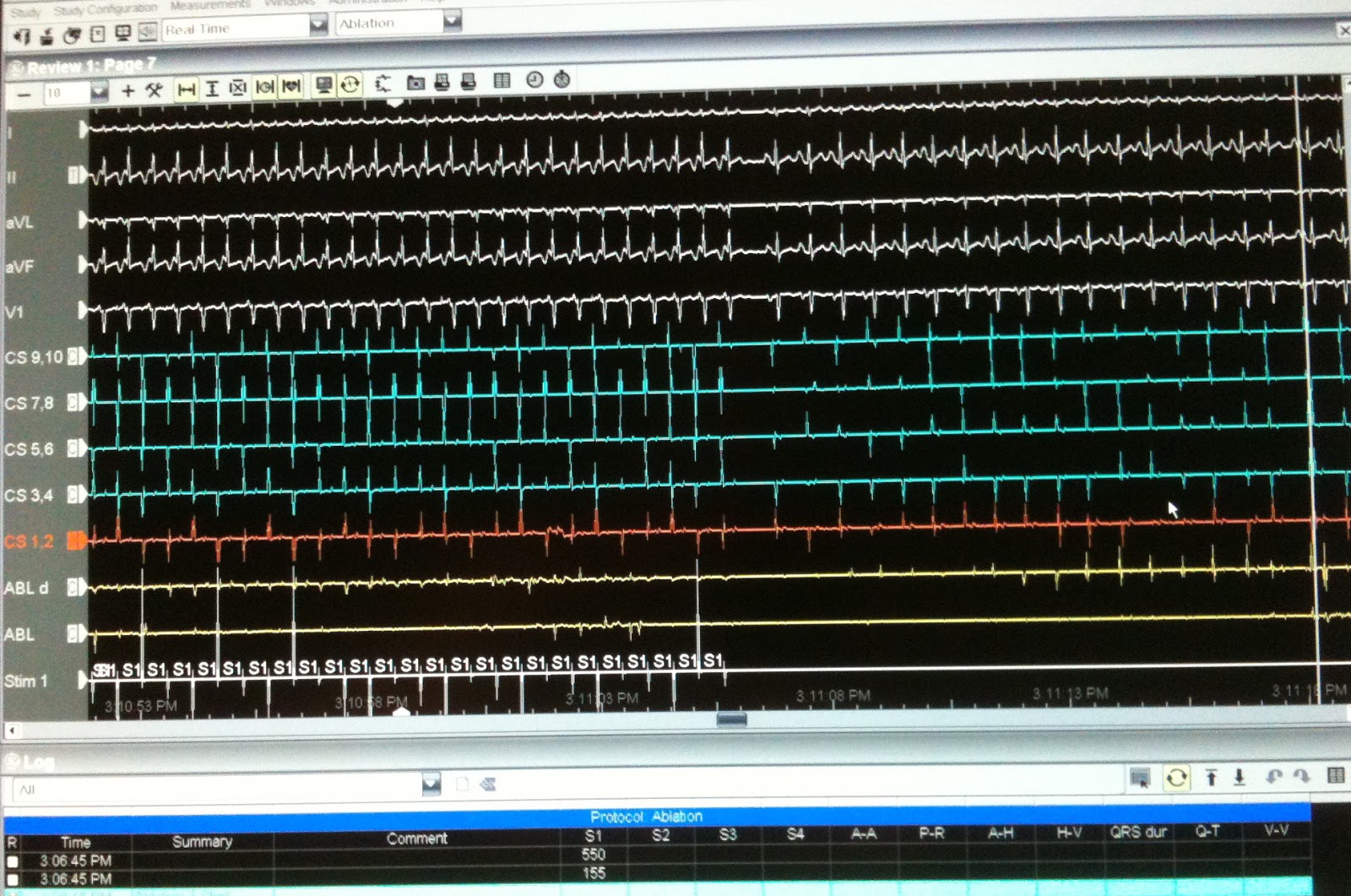
Termination of tachycardia is still so sweet!
Is the referring doctor taken aback by this new form of peer-to-peer communication? You be the judge from his text message response…
“BEAUTIFUL! Not sure which of us is the sicker: you for sending that image, or me for enlarging it and looking closely at it.”
Not all that beeps and interrupts is rude and impersonal.
It is a new world. Might as well join in.
Huge grin!
JMM