
May 15th, 2012
Xience Stents Gain European Nod for 3-Month Dual Antiplatelet Therapy
Larry Husten, PHD
The biggest drawback to drug-eluting stents has been the requirement for prolonged dual antiplatelet (DAPT) therapy following stent implantation to prevent stent thrombosis and other potential complications. The precise length of DAPT has been the subject of considerable discussion and research.
Now the Xience Prime and Xience V everolimus-eluting stents have received the CE Mark in Europe for a DAPT length of at least 3 months, according to the manufacturer’s press release. The manufacturer, Abbott, said this was the “shortest duration for any major drug eluting stent (DES) in Europe.”
Abbott said that data presented this week at the EuroPCR congress found no cases of stent thrombosis in more than 10,000 patients who received a Xience stent and who discontinued DAPT after 3 months.
An Abbott spokesperson said that the company is “currently exploring our filing strategies with the FDA for a three-month DAPT indication.”
May 15th, 2012
Returning to Detroit, William O’Neill Heads to Henry Ford Hospital
Larry Husten, PHD
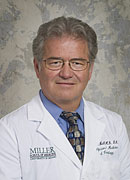 Interventional cardiology leader William O’Neill is leaving the University of Miami Miller School of Medicine to become the medical director of the new Center for Structural Heart Disease at Henry Ford Hospital in Detroit. The new center will focus on new minimally invasive treatments for heart failure and heart valve disease.
Prior to going to Miami in 2006, where he had been the executive dean for Research, Research Training and Innovative Medicine, O’Neill had spent 20 years in the Detroit area as the director of the division of cardiovascular medicine at William Beaumont Hospital. Prior to that he was the director of the cardiac catheterization laboratory at the University of Michigan.
O’Neill told the Detroit Free Press that he considers research in heart failure and valve problems to be his new career passion. “I’ve come to realize I love doing it,” said O’Neill.
May 14th, 2012
Revascularization in New York State: High Questionable Rates for PCI but Not CABG
Larry Husten, PHD
A large study looking at real-world use of elective coronary artery bypass surgery (CABG) and stenting (PCI) in New York State finds that nearly two thirds of PCI procedures have inappropriate or uncertain indications. By contrast, 90% of CABG procedures were deemed appropriate and 1.1% inappropriate.
In a paper published in the Journal of the American College of Cardiology, Edward Hannan and colleagues analyzed data from NY State patients who received CABG or PCI in 2009 and 2010 and applied appropriate use criteria (AUC) from the ACC, the AHA, and other organizations. (The study only included patients without an acute coronary syndrome (ACS) or previous CABG, as these indications have not generally been the subject of previous concern. By contrast, a large, controversial study last year, that found a significant percentage of nonacute PCIs were performed for inappropriate or uncertain indications, included patients both with and without ACS.)
Here are the main findings of the study:
CABG:
- Appropriate: 90.3%
- Inappropriate: 1.1%
- Uncertain: 8.6%
PCI:
- Appropriate: 36.1%
- Inappropriate: 14.3% (91% of these had 1- or 2-vessel disease without proximal LAD disease and little or no anti-ischemic medical therapy)
- Uncertain: 49.6%
The investigators also found significant variation in utilization among hospitals, writing: “the treatment recommended to patients without ACS was very much dependent on the hospital in which they were treated.” The authors also noted that their study was unable to assess the amount of underuse of revascularizatioin in NY State. They wrote that their “intent is to share these findings with clinicians and to work collaboratively to reduce inappropriate clinical decisions and variations in hospital and cardiologist practice patterns.”
In an accompanying editorial comment, John Spertus and Paul Chan, who were co-authors on the previous JAMA study, acknowledge that “there are certain to be patients rated as inappropriate for which almost all competent cardiologists would recommend intervention.” They recommend that in such cases the physician should “very clearly document the extenuating circumstances that warranted revascularization.” However, the presence of a wide variation among hospitals in the proportion of inappropriate cases suggests that “there is room for improvement in clinical decision-making for coronary revascularization.”
May 14th, 2012
Selections from Richard Lehman’s Literature Review: Week of May 14th
Richard Lehman, BM, BCh, MRCGP
CardioExchange is pleased to reprint selections from Dr. Richard Lehman’s weekly journal review blog at BMJ.com. Selected summaries are relevant to our audience, but we encourage members to engage with the entire blog.
JAMA 9 May 2012 Vol 307
Glucose, Insulin, and Potassium for MI (pg. 1925): In a wonderful letter to Humphry Davy in 1800, Coleridge declared that science, as a human activity, “being necessarily performed with the Passion of hope, is poetical”. All good science is inspired with the poetry of hope; but, alas, so also is a lot of bad science. If results are negative, then it is a lot easier to hope vainly that they contain hints of great things to come than to admit that years of effort have simply proved nullity. And if a simple cheap intervention like intravenous glucose, insulin, and potassium (GIK) seems to have promise in the treatment of acute myocardial infarction, all of us would much rather hope this is true than dismiss the possibility altogether. Several randomized trials have proved that GIK makes no difference when given in hospital, so this double-blinded RCT investigates whether the same applies to GIK given by emergency service personnel to patients with presumed cardiac chest pain before arrival at hospital. Again, there was no 30-day mortality benefit; but since (as a poet before Coleridge said) hope springs eternal in the human breast, the investigators draw attention to the fact that GIK was associated with lower rates of the composite outcome of cardiac arrest or in-hospital mortality. Nah, that won’t quite do: when I have a myocardial infarct, I want to be alive at 30 days. This intervention is beyond hope: GIK RIP.
NEJM 10 May 2012 Vol 366
Elective PCI without Surgical Standby (pg. 1792): I have had a lot of exposure to US cardiovascular outcomes research over the last year, and very enjoyable and formative it has been. I’m left convinced that there is no particular hierarchy of research in this area: good observational studies can be of the highest value, and qualitative or mixed-methods research can yield much more of practical value than some clever exercise in endless statistical adjustment and regression applied to a large database. Randomized controlled trials are relatively uncommon in this field, so while they do not automatically count as top dog, they are always interesting. Given that elective percutaneous intervention is now a procedure with very small immediate risks (e.g. acute MI, dissection of the coronary artery), PCI is often performed in hospitals without on-site cardiac surgery. If this interests you deeply, you can read all about it in a review on p.1814. This massive trial (n=18,867) randomized patients needing PCI on a 3:1 basis to hospitals with or without cardiac surgery units. Readers who object to the word noninferiority must clench their teeth at this point, because that is what this trial showed. And anyone who claims that this word does not belong in the English language will be sent a punitive stream of e-mails until they beg for mercy.
BMJ 12 May 2012 Vol 344
Varenicline and Cardiovascular Risk: That smoking cessation is a great good is undeniable, and varenicline undeniably helps many people to stop smoking. Does it therefore follow that varenicline is a great good? This is a nice debating point, because smoking cessation is actually a surrogate end-point, albeit one directly linked with certain outcome benefits; yet these benefits can be outweighed by other considerations, such as direct cardiovascular harm from the intervention itself. A previous meta-analysis seemed to show a 72% increase in risk of serious CV events from taking varenicline: this one shows no increase in risk. The main reason is ascertainment bias in the trials which had poor follow-up data from placebo groups; but the fact remains that we can never be full sure until the manufacturer releases full individual data from its trials for independent scrutiny, as should be mandatory in all cases like this.
May 12th, 2012
HRS 2012: More Clarity on DOJ ICD Investigation, ‘Incidental PCIs’ Still Excluded
Edward J. Schloss, MD
Thursday morning at Heart Rhythm Scientific Sessions 2012, Suneet Mittal MD of Columbia University gave a detailed account of his group’s experience with a Department of Justice investigation of ICD implantation outside of NCD guidelines. The talk served to amplify and clarify points made in his perspective in JACC written with Jonathan Steinberg MD, in March 2012.
Not long after Al-Khatab and colleagues published their account of “non-evidence based” ICD implants in JAMA in January 2011, the US Department of Justice launched an investigation of numerous US hospitals looking for ICD implants outside NCD rules. This action appeared to have a “chilling effect” on ICD market growth. Steinberg and Mittal’s account of their experience with a DOJ investigation was a topic of discussion in the blogosphere and was covered by CardioExchange.
In his HRS discussion, Mittal was careful to distinguish between a CMS audit and a DOJ investigation. CMS is responsible for enforcing National Coverage Determinations (NCD). He indicated that the NCD for ICD implants is unique: “this is the first time in the history of US medicine that a National Coverage Decision is being nationally enforced.” To CMS, the NCD is “analogous to the 10 Commandments” with little room for nuance or interpretation.
In contrast, the Department of Justice serves as a bridge between CMS and clinicians, and has the ability to exercise what Mittal termed “incredible prosecutorial discretion.” Their charge is enforcement of the False Claims Act and Mittal found them to exercise more flexibility than CMS.
Mittal’s group was asked to defend 8.7% of one of their institution’s ICD implants that had been flagged as falling outside the NCD. After individual case review, they were able to classify most of the cases into five “buckets” that they felt represented medically indicated procedures that fell outside the NCD. This discussion is detailed in theirJACC article.
Thursday’s talk gave some inkling of “the rest of the story” not revealed in their JACC account. Mittal was able to discuss the instances in which the DOJ seemed to agree or dispute the physician justifications for ICD implant.
Justice agreed with some but not all of Mittal’s group’s interpretations. Acceptable ICD indications to the DOJ reviewers included:
- Pacing indication in patients in ICD “waiting period,” i.e. post CABG heart block with preexisting LV dysfunction.
- Recent troponin leak misclassified in coding as a myocardial infarction in patients otherwise indicated for ICD.
- Sustained VT at EP study – the study must however not be performed per a routine pattern, i.e. after all CABGs. One must also be able to supply documentation of the induced arrhythmia.
- Genetic conditions predisposed to sudden cardiac arrest.
- Bridge to cardiac transplant – the patient must have clear plan for transplant, ideally with the patient already listed.
- Generator replacements – these are “likely to be no problem.”
Unacceptable indications for ICD implant to the DOJ reviewers included:
- Near syncope rather than true syncope in high risk patients
- Recent “incidental PCI” in a patient otherwise indicated for primary prevention ICD. Mittal gave the example of an established heart failure patient with LV systolic dysfunction getting a stent in a distal coronary vessel, who is then promptly sent for ICD: “that will be subject to the full exclusionary rule” necessitating a 90 day waiting period.
Mittal said that penalties for unacceptable deviations are still being determined. Penalties under the false claim act can recover up to treble the monetary damages of the event. He added the DOJ would consider prior patterns of infraction and ongoing hospital corporate integrity agreements in assessing penalties.
Mittal’s institution has established a system of education and review to prevent further deviations to the NCD that are not clinically justifiable. This includes instructions to coders, morning peer review conference call prior to all ICD implants, formal implanter standardized documentation, and post-hoc nursing reviews.
To get at the issue of ICD exclusion due to incidental PCI, he urged communication between ICD implanters and coronary interventionalists: “this begs for collaborative medicine.”
Based on his experience, Mittal made a few broader recommendations:
- ACC and HRS should request reevaluation and update of current NCD for ICD implant.
- Trials should be implemented to “close the gap” between NCD and commonly observed clinical situations.
- A national discourse is needed to add “clinical nuance” to the inflexibility of the NCD.
May 11th, 2012
A ‘Brilinta’ Theory on Why Ticagrelor Doesn’t Work as Well in the U.S.
Harry Peled, md
In July 2011, the FDA approved ticagrelor (Brilinta) as a blood-thinner for acute coronary syndrome patients. Both before and since then, experts and frontline clinicians have been discussing why this selective P2Y12-receptor antagonist did not show, in the PLATO randomized comparison with clopidogrel, a significant advantage in North American participants — even though it showed a benefit in the overall trial and in non-U.S. participants. Some have wondered whether relatively higher doses of aspirin used in the U.S. might be the problem and, therefore, that such doses should be “avoided” by users of ticagrelor. However, there is a very simple alternative theory:
Intermediate-dose aspirin is just plain more effective than low-dose aspirin. Therefore, ticagrelor provides no additional benefit when intermediate-dose aspirin is being used.
Take a look at the “ancient” aspirin trials, in which relatively higher doses of aspirin were often associated with outcome benefits despite more gastrointestinal bleeding. Many physicians do not know — or maybe just forgot — that some early trials showing a significant benefit of aspirin were done with 1300 mg daily! I’m not suggesting doses on that scale, but rather 162 mg to 325 mg daily, which also showed benefits in early studies.
Anecdotally, we seem to see a lot less GI bleeding nowadays, as the early studies were conducted before routine use of H2-receptor antagonists and proton-pump inhibitors. Given that some patients have aspirin resistance and there is a dose-response curve (albeit nonlinear), it makes sense that some subgroups may benefit from intermediate-dose aspirin (just as we explore whether some patients benefit from higher doses of clopidogrel).
The proper message may not be to “avoid tigacrelor” if you take intermediate-dose aspirin. Perhaps you just don’t need ticagrelor in the first place because aspirin’s already doing the job. Yes, this goes against the ACCF/AHA guidelines, but that’s what blog posts are for.
What do you think about my intermediate-dose aspirin theory? Please chime in.
May 10th, 2012
FDA Advisory Panel Recommends Approval for Weight Loss Drug Lorcaserin
Larry Husten, PHD
The FDA’s Endocrinologic and Metabolic Drugs Advisory Committee voted to recommend approval of lorcaserin (Lorqess, Arena). The result signals a remarkable turnaround for the drug, which the same panel had rejected in September 2010. The vote was 18 in favor of approval, 4 against, and 1 abstention.
Committee members seemed less disturbed this time around about the issues that concerned them at the earlier meeting. The theoretical risk for an increase in cancer was discussed at length but did not appear to bother the panel. Valvulopathy and cardiovascular adverse events were the major obstacles. For valvulopathy, although the data from Arena did not allow the FDA reviewers to rule out an increased relative risk of 1.5 with lorcaserin, the absolute incidence of valve problems was low. A few panel members raised the idea of requiring echocardiograms prior to prescribing lorcaserin.
An increased risk for cardiovascular adverse events could not be ruled out by the committee, but members felt that it would be unfair to change the rules in midstream and require a CV events study prior to approval. It appears likely that the FDA will require a post-approval outcomes study if the drug is approved, however.
Committee members wrestled for much of the day with questions about the drug’s modest efficacy in producing weight loss, a problem that was exacerbated by the high rate of dropouts in clinical trials. Ultimately, however, Arena was able to demonstrate that the drug met one of the predefined FDA criteria for efficacy.
Sanjay Kaul, a panel member who was one of the four negative votes, provided the following comment:

There is a discernible weight loss with lorcaserin which meets the categorical weight loss efficacy criterion outlined by the FDA draft guidance. However, this is a necessary, but not sufficient, criterion, in my opinion. The weight loss did not translate into a tangible benefit in clinically relevant cardiometabolic biomarkers, quality of life, or risk prediction models except for improvement in HbA1c in the cohort with type 2 diabetes mellitus (less than 8% of the overall development program).
There remains lingering uncertainty regarding potential valvulopathy associated with lorcaserin as the sponsor failed to rule out the prespecified excessive FDA-defined VHD risk. I had no issues with cancer or neuropsychiatric adverse events, and there was insufficient evidence to assess MACE risk.
Benefit-risk assessment is essentially a qualitative science grounded in quantitative data and dependent upon judgment. Using this framework, the totality of evidence does not persuade me to conclude that the potential benefits of lorcaserin outweigh the potential risks when used long-term in a population of overweight and obese individuals.
May 10th, 2012
Shedding Light on Riata at the Heart Rhythm Society Meeting
Edward J. Schloss, MD
This morning in Boston, HRS 2012 sessions began with a state-of-the-art session on St. Jude ICD leads. Riata, Riata ST, and Durata are being discussed at the first large electrophysiology meeting since this lead came under FDA recall.
It was obvious at the outset that this is a vital topic to the EP community. Those who didn’t arrive early were relegated to a remote viewing station. Even there, the crowd was very large and engaged.
Kenneth Ellenbogen started the presentation with updated data on the VA Riata and Riata ST leads. Interestingly, these data actually showed an increased failure rate of Riata ST as compared to Riata. This stands in distinction to data from the Minneapolis Multicenter Data presented later in the late breaking trials session.
Things got interesting with the discussions of the clinical aspects of Riata lead management. Dr. Larry Epstein of Boston highlighted potential management strategies. He advised against placement of a sensing lead alone if the lead has failed. In explaining why “I’m scared about Riata,” he gave the account of a patient with completely normal lead parameters that fortuitously suffered a cardiac arrest in his hospital. The ICD was ineffective at terminating the arrhythmia and the patient had to be externally defibrillated. To screen for these sort of silent lead failures, he performs fluoroscopy and high-energy shock delivery on his Riata leads before scheduled generator changes.
Dr. Roger Carillo of Miami outlined his approach to Riata lead management as well. He expressed concern over the potential for thrombus formation on externalized leads. He advocated routine fluoroscopic exams on all Riata leads. He then performs transeosphageal echo on externalized leads and anticoagulates those with thrombus. He presented a step-by-step account of the unique challenges of Riata lead extraction. Warning of a variety of pitfalls and complications, he added, “if you fail to follow any of these steps, the lead will not forgive you.”
The session ended with more calming words from Charles Love of Columbus. In his talk on Durata leads, he repeatedly emphasized “it is a very, very different lead.” He spent some time going over the design of all St. Jude leads and pointed out the potential benefit of the Optim insulation coating added to Durata and Riata ST Optim leads. Active registries on these newer leads continue to show robust performance approaching 5 years. He did acknowledge the small numbers of leads in late follow up. But in the question and answer section, not all were convinced. Dr. Larry Epstein stated, “I still have issues with trust.”
May 10th, 2012
Atorvastatin Lifts Ranbaxy While Pfizer Abandons Its Lipitor Marketing Efforts
Larry Husten, PHD
Pfizer will no longer aggressively market Lipitor (atorvastatin), its former crown jewel and the most lucrative pharmaceutical product ever. At the same time, generic drug manufacturer Ranbaxy posted record revenue for the last business quarter, growth fueled largely by sales of generic atorvastatin in the United States.
Pfizer told the Wall Street Journal that it was abandoning efforts to market Lipitor. It said it was no longer selling Lipitor to health plans, that it had stopped using drug reps to promote the drug to physicians, and that it had ceased all Lipitor advertising. The Pfizer move comes after the expiration of the Lipitor patent last fall but immediately prior to May 31, when a host of new generic versions of atorvastatin are expected to enter the marketplace.
Pfizer mounted an aggressive campaign to retain as much of the atorvastatin market as possible in the early days after the loss of market exclusivity. In the first quarter, according to the Journal, Lipitor revenues for Pfizer were $383 million. This was more than most analysts had originally anticipated, until Pfizer rolled out its aggressive campaign, but paled in comparison to the $12.9 billion annual sales of the drug at its peak. Pfizer said it had spent $87 million marketing Lipitor in the quarter.
Also in the first quarter, Ranbaxy sales in the U.S. doubled to $375 million. This was the first full quarter in which the company sold generic atorvastatin. In March, for the first time, Ranbaxy had a greater share of the atorvastatin market than Pfizer, according to Fierce Pharma.
May 10th, 2012
Three Guideposts for Talking to Loved Ones After a Patient Dies
Harlan M. Krumholz, MD, SM
From my earliest days in medicine, notifying loved ones about a patient’s unplanned or unexpected death was among my most stressful and challenging responsibilities. I recognized that my words at that critical moment might stay with people for a long time, maybe the rest of their lives. What I said could soothe and provide comfort — or fester and cause pain. I also realized that, with the right words, I just might be able to preempt the pathology of blame and guilt that can surface after the initial shock passes. In short, I quickly came to see that my responsibility to a patient does not end with his or her death. It extends to this all-important conversation with the people left behind.
So I came up with three simple steps to allow me to help those who have experienced a loss. I am always honest during these conversations, but I use my three guideposts to chart the way. I suggest that my students and residents use them as well, and I share them humbly with you here.
1. Say something positive about your patient. It is your responsibility to know your patients as people. You should have something personal to say that is dignifying, that speaks to the person’s courage, wisdom, or humanity. Make clear that this person was not just another patient, but someone with admirable qualities. You can find the best in everyone, and this is an opportunity to share that insight with the people who will appreciate it deeply. I can remember telling family members about how the person treated me kindly, showed strength in the face of immense health challenges, or revealed wisdom. Usually I have not had to think hard to recall something that not only compliments the person but also illustrates the personal connection I had with him or her. If you never formally met the patient, perhaps in the setting of a cardiac arrest when you are covering for other doctors, take a moment to find someone in the hospital who knew the person, even a detail from the chart. You can always find something that will add dignity.
2. Try to convey that the death was not painful. Of course, your responsibility is always to work hard to diminish suffering by palliating symptoms and mitigating pain. But actually mentioning that your patient did not suffer can make a huge difference to loved ones, who always worry about this issue. Ideally, this was the case and you can identify the specific steps that were taken to prevent or reduce suffering. That kind of specificity matters.
3. Most important, seek to alleviate guilt. Most people will harbor some belief that they contributed to a death. They may think that they could have pushed the patient to see a doctor sooner — or should have recognized the early signs of illness. I have heard many people say (mistakenly) that it was something they fed the patient, or some stress that they caused. Discover who is holding on to such guilt and set them free. Help them understand that it was not their fault, and give them the gift of knowing that the doctor is certain about that fact. You must be honest, but it is almost always true that these feelings of guilt are unfounded. Even if there is some possibility that the loved ones could have done things differently, this moment is not the time to discuss that. Be kind and sensitive to what they are experiencing and the concerns they have. Your responsibility to the patient does not end until you have intervened to alleviate this type of guilt. Your words have the power to heal or hurt and will often be remembered for many years. You can set a family on a path of healing as they begin a journey of grief.
These three steps always help me to finish caring for my patient after death. Not everyone will agree with this approach. You may have your own, and I’d like to hear it. Also feel free to share specific stories about discussing patients’ deaths with their loved ones. What have you learned? What do you teach other caregivers who have this responsibility?