
November 9th, 2016
Social Media Is Bad for Kids’ Mental Health
Scott Cuyjet, RN, MSN, FNP-C

Scott Cuyjet, RN, MSN, FNP-C, practices adolescent medicine in the San Francisco Bay area.
I remember reading an article in ESPN about a 19-year-old woman who appeared to have the perfect life on social media, but who jumped off a parking structure to her death. I specifically recall the reactions of people close to her who could not imagine why she did this, as her life appeared so perfect. She had posted the following quote a year before she died, “Even people you think are perfect are going through something difficult.” She was an avid Instagram user. In the article, the authors discuss that point, stating, “With Instagram, one thing has changed: the amount we consume of one another’s edited lives. Young women growing up on Instagram are spending a significant chunk of each day absorbing others’ filtered images while they walk through their own realities, unfiltered. In a recent survey conducted by the Girl Scouts, nearly 74 percent of girls agreed that other girls tried to make themselves look ‘cooler than they are’ on social networking sites.” Adolescents and young adults can be particularly vulnerable to this as they are the most avid users of technology and the Internet. In a recent study by the Pew Research Center, 92% of teens reported going online every day, with 24% saying they go online “almost constantly.” The top four social media sites, according to their study, are: Facebook at 71%, Instagram at 52%, Snapchat at 41%, and Twitter at 33%.
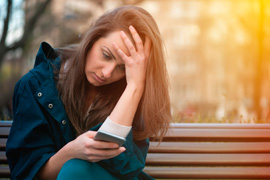 Psychology researchers have studied the phenomenon of comparing oneself to others. In this 2006 study, the authors found that, “People who said they made frequent social comparisons were more likely to experience envy, guilt, regret, and defensiveness, and to lie, blame others, and to have unmet cravings.” This is based on the social comparison theory by Leon Festinger, which postulates that we measure ourselves in relation to others’ failures and successes. Social comparison is also cited in this article about research showing that people can become depressed after spending extensive time comparing themselves to others on Facebook.
Another problem that youth can encounter on the Internet is cyberbullying and harassment. The Internet can be toxic to a developing adolescent identity and psyche as the lack of face-to-face interaction, anonymity, and the ability to spread information rapidly and widely can lead to negative effects on mood and, in the worst-case scenario, like that of Amanda Todd, to suicide. In a recent American Academy of Pediatrics report on suicide in adolescence, lead author and child psychiatrist Dr. Benjamin Shain states, “Bullying has always been a major issue for adolescents, but there is now greater recognition of the connection between bullying and suicide…The Internet is a key influence, as well. Cyberbullying, for example, is as serious a problem as face-to-face bullying.”
One troubling finding is the young age at which cyberbullying and online harassment is beginning. In a 2016 study, 15% of 424 sixth-grade students in Southeast Texas reported engaging in bullying of a dating partner on the Internet. Other data indicate that young women might experience a disproportionately high rate of certain types of harassment online. In a 2014 survey by The Pew Research Center, researchers found that 40 percent of adult Internet users have experienced harassment online – from name-calling and attempts to embarrass people to physical threats and stalking. Of this 40%, women aged 18-24 experienced disproportionately high rates of online stalking and sexual harassment. Social networking sites were by far the most frequently cited online location where respondents were harassed (66%).
While I haven’t encountered patients coming to me with issues related to harmful social media exposures, we are fortunate at our adolescent health clinic to be linked with counseling services on site where we could refer patients who are having such problems. Overall, it is important for clinicians – as well as parents, teachers, school counselors, and policymakers – to be aware of this as a problem and to try to address it when assessing screen use time in adolescents. From a clinical viewpoint, in my opinion, it would be helpful to add some questions on these topics to the routine psychosocial health assessment, which includes the Home, Education and Employment, Activities, Drugs, Sexuality, Suicide and depression (HEADSS) assessment that most adolescent providers use as a screening tool.
One Response to “Social Media Is Bad for Kids’ Mental Health”

NP/PA Bloggers
Elizabeth Donahue, RN, MSN, NP‑C
Alexandra Godfrey, BSc PT, MS PA‑C
Emily F. Moore, RN, MSN, CPNP‑PC, CCRN
Advanced practice clinicians treating patients in a variety of settings and specialties
Learn more about In Practice: Reflections from NPs and PAs.
Over the past 10 years I have adopted the habit of ALWAYS inquiring about my adolescent patient’s e-presence – how many media, rate of engagement, personality presented, safety and security measures/knowledge, quality of reality testing, and of course “issues” or problems.
There have been a Journal of Internet Addictions (almost all bipolar versions) for some time now.