
An ongoing dialogue on HIV/AIDS, infectious diseases,
June 17th, 2018
Remembering Robert H. (Bob) Rubin, Father of Transplant Infectious Diseases
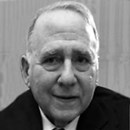 During my ID fellowship, Robert (Bob) Rubin was my very first attending. It was the transplant service in July, and Bob and I would round with the surgeons each morning.
Early each morning. That was part of it. We needed to be there with them, before they disappeared to the OR. If we weren’t there, he explained, we might as well be invisible — they wouldn’t trust us.
This was one of Bob’s many strengths as an ID doctor, his ability to connect with our surgical colleagues. So many of us timidly leave our consult notes in the patient chart, hoping the surgical team will listen to our recommendations.
No such passivity from Bob. He spoke right to them.
It didn’t hurt that he had extraordinary clinical instincts, and was one of the most naturally intuitive clinicians I’ve ever worked with. His assessments were lightning quick, an especially notable trait in a specialty often prone to (endless) rumination and equivocation.
And, like a good surgeon, Bob was direct about everything. He knew what he knew — and told you — and knew what he didn’t know, and acknowledged this too. No hedging.
He was also by nature an active doer rather than a passive observer. In clinical care, he frequently used war and sports metaphors. No surprise — surgeons really like an ID doctor like this!
Bob is best known for his contributions in transplant infectious diseases, a field he practically created. Many of the concepts we now take for granted as accepted standard of care either originated with him or were greatly amplified by his skillful and prolific teaching.
Here are a few of these key principles (with thanks to Jay Fishman and Francisco Marty for contributing):
- The predictable timeline after transplant for the occurrence of certain opportunistic infections.
- The “net state of immunosuppression”, which is the sum of pharmacologic, nutritional, and anatomic factors contributing to infectious risk.
- The compromised host as the “sentinel chicken” (a.k.a. “canary in the coal mine”) for environmental hazards.
- The “therapeutic prescription” — he wrote: “The close linkage of infection with the nature and intensity of the immunosuppressive program has led to the concept of the therapeutic prescription. This has two components: an immunosuppressive one to prevent or treat rejection and GVHD, and an antimicrobial one to make it safe. Implicit in this statement is the recognition that changes in the immunosuppressive strategy must trigger changes in the antimicrobial program.”
- A refusal to define a specific length of antimicrobial therapy at the outset of treatment — treat “long enough”, he would say.
- The immunomodulating effects of certain opportunistic infections, in particular cytomegalovirus.
- The use of “preemptive” treatments in patients at high risk for developing infectious complications — here’s his classic review of the concept.
- Corticosteroids are like credit cards — patients (and doctors) get immediate satisfaction, but the bill comes at the end of the month. He often called them “feel goods”.
During fellowship, I remember presenting him a case one day of a man who’d had a renal transplant several years before, and was doing great — on low dose cyclosporine and prednisone, with normal renal function. He’d been struggling for the past week or so with intermittent headaches, and his primary care doctor was concerned — could this be something infectious?
My differential diagnosis was absurdly broad, including practically every known opportunistic infection that can cause headaches — listeria, cryptococcus, nocardia, aspergillus, mucor, toxoplasmosis. Cripes, I might have even mentioned acathamoeba.
Bob sat and politely listened, then kindly said — “Very good — but I’ll bet you it’s none of these things. He just doesn’t fit the pattern.”
His point — this patient was too healthy for these infections. The kind of transplant patient who usually gets these infections has been treated for repeated bouts of rejection, or experienced CMV reactivation, or has been heavily exposed to some pathogen, or is nutritionally compromised, or worst of all, all of the above — these are the “awful-awfuls”.
“If you want to send a serum cryptococcal antigen, go ahead,” he said. “But it will be negative.”
I sent it, and of course Bob was right — test negative. Turns out the patient had stopped drinking coffee because of heartburn, and was suffering from caffeine withdrawal. No acanthamoeba.
Bob died earlier this month after a lengthy illness. We will all miss him.
10 Responses to “Remembering Robert H. (Bob) Rubin, Father of Transplant Infectious Diseases”
Paul E. Sax, MD
Associate Editor
NEJM Clinician
Biography | Disclosures & Summaries
Learn more about HIV and ID Observations.

 FROM NEJM — Recent Infectious Disease Articles
- The End of the War on Biomedical Science? September 19, 2026The turmoil of the past 20 months has inflicted lasting damage on American science and public health. But history and recent events suggest that the attacks will subside.
- Cerebral Schistosomiasis September 19, 2026A rice farmer presented to the ED after a 1-minute episode of arm and leg shaking on the right side. MRI showed linear enhancement associated with a cluster of enhancing nodules and surrounding edema in the left frontal lobe.
- Human Adenovirus B3–Induced Immune Thrombocytopenia and Thrombosis September 17, 2026Virus-induced immune thrombocytopenia and thrombosis after HAdV-B3 infection supports a shared platelet factor 4–targeted immune mechanism linking natural adenovirus infection and adenoviral vector–associated disease.
- Honoring the Legacy of the HIV Epidemic September 17, 2026Progress against the U.S. HIV epidemic is stalling, owing in part to government attacks and fear. But clinicians, patients, and activists can learn from the epidemic’s early heroes and find ways to advance.
- Short or Long Antibiotic Regimens in Orthopedics September 16, 2026In a randomized trial involving adults who received local antibiotics during surgery for orthopedic infection, a short duration of systemic antibiotics was noninferior to a long duration regarding treatment failure at 12 months.
- The End of the War on Biomedical Science? September 19, 2026
Love the anecdote at the end about the caffeine withdrawal-induced headaches! I certainly have seen plenty of patients with them. Dr. Rubin sounds like he was a brilliant clinician and a gifted teacher. We all stand on the shoulders of giants, don’t we?
Recently had what I think was a mild version of e.coli enteritis. Day 2-3 developed a viscious pounding headache that won’t let you sleep. Not sure exactly why the lightbulb went off but 30’minutes after drinking a cup of coffee I was peacefully asleep. It occurred to me how I need to add caffeine withdrawal headache to the differential and n the setting of an acute illness. It also occurred to me how many people have had their heads irradiated when a shot of espresso might have done the trick. Nespresso Stat! .
I consider myself lucky to have worked both as a fellow and later attending physician with consultants such as Dr Bob Rubin, his team and in fact that whole transplant medicine “family” at the MGH. I saw what determines the excellence of care in healthcare, and the kind of simple yet thought-provoking questions that he would present to us as physicians. He was a role model, and a sincere colleague. My condolences to his wife Dr Nina Rubin and to the transplant community for his loss.
I am not an ID doctor but like others, Bob not only taught me so much about infection, especially in the critical care environment, but also about general medicine and what is now termed professionalism.. Aside from Nina, I have never met a better or more intuitive clinician or teacher (or iconoclast). Bob was a true mentor to me, always supplying guidance and opportunities..It was a privilege to have worked with him as a colleague and friend.
As anesthesiologist and intensivist involved in abdominal transplant program in Italy i had the opportunity since the beginning of studying Rubin’s papers….Pivotal, seminal , clear,…
I met Prof Rubin once at a international meeting many years ago and we discussed of fungal infections after liver transplant: in spite i was “one” (and very young, and not yet expert in the field) and he was the “big shot” we know, he gave me quite a long time for my problems.
Go to the first number of Transplant Infectious Disease (1999) where all the concepts proposed by Dr Sax are clearly exposed. I have this journal : still unvaluable
Thanks Prof Bob!
Dear Paul
Thanks for a nice essay.
Did he ever talk about his time at CDC?
Regards,
Phil
I read his publications with biblical care to detail. I quote his medical aphorisms endlessly on our ID rounds.
He was a medical and ID “original” and will certainly be missed
I also refuse to provide exact length of treatment advice in many instances, a lesson which I learned from his teachings.
I only met him once briefly at a medical meeting but I knew him well through his medical writings.
Condolences to his family.
Thanks, Dr Sax, for a superb tribute. Dr Rubin was indeed among the best surgical ID doctors ever, especially for the transplant community. Condolences to the Rubin family.
I, too, started my ID fellowship with Bob on the Transplant ID service–and finished it with a clinical trial for which he and Marty Hirsch were the faculty PI’s. I learned how to work as a true team with surgeons from him, as well as the ID that equipped me for AIDS when that came along. I am truly sorry to hear of his illness only after it is over, too late for him to hear or read these thoughts.
Bob was the last of the clinical giants trained by Louis Weinstein and Mort Swartz, but he had his own direct style and the broad instincts of a dedicated physician who spent many long hours at the hospital honing his clinical skills. His directness and simplicity of thought made him a superb teacher. I was lucky to have him as an attending in medicine and infectious diseases.