
April 26th, 2012
FDA Advisory Panel Gives Green Light to HeartWare Ventricular Assist System
Larry Husten, PHD
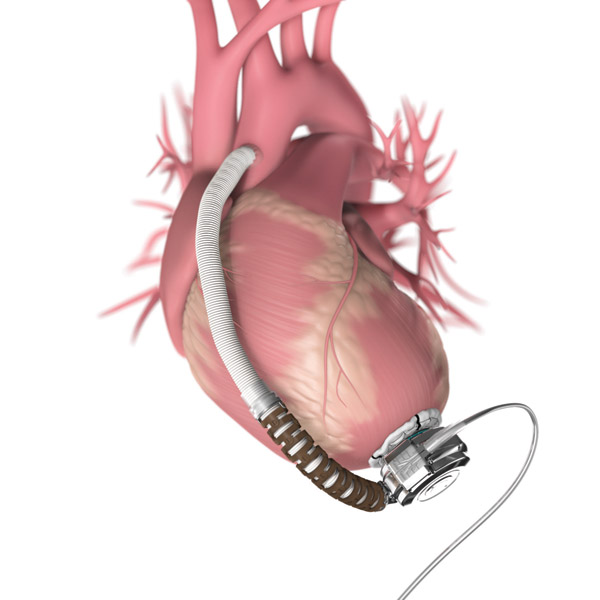 The FDA’s Circulatory System Devices panel voted 9-2 on Wednesday to recommend approval of the HeartWare Ventricular Assist System as a bridge to heart transplantation for patients with end-stage heart failure. The panel agreed unanimously (11-0) that the new device is effective. The panel was more divided about safety but ultimately voted 8-3 that the device was safe.
In briefing documents published online earlier in the week, FDA reviewers raised a number of questions about the safety of the device and the reliability of the data from the pivotal ADVANCE trial, in which 140 patients received the Heartware device and were compared to historical controls who had received Thoratec’s HeartMate II device. The FDA had not previously permitted historical controls to be used in this fashion. Safety questions focused on stroke and thrombosis.
Unlike the HeartMate II VAS, which is surgically implanted in an abdominal pouch, the HeartWare VAS is implanted next to the heart.
“I think this device is of incredible benefit to patients who are very ill,” said panelist Ralph Brindis, as reported by MedPage Today. Acting panel chair Rick Page said the device represented “a real advance in technology,” as reported by Heartwire.
April 25th, 2012
When You’re Hot, You’re Hot: Salim Yusuf Second Most Influential Scientist in 2011
Larry Husten, PHD
 McMaster University’s Salim Yusuf has tied for second place in the annual ranking of the “hottest” scientific researchers, according to Thomson Reuter’s Science Watch. Yusuf was a co-author of 13 of the most cited papers in 2011. Only one other researcher, genomic pioneer Eric Lander of the Broad Institute of MIT and Harvard, had more highly-cited papers than Yusuf.
Two of Yusuf’s most-cited papers tested novel anticoagulants in the setting of atrial fibrillation: the RE-LY trial with dabigatran and the AVERROES trial with apixaban.
“It’s a new experience to be called a hottie,” Yusuf joked in an interview with the Hamilton Spectator.“This means it has impact on other scientists. It’s nice to know you’re doing something useful.”
The Science Watch report also included a list of “red-hot” research papers published in 2011. Five of the top 38 papers were cardiology-related:
- S.J. Connolly, et al., “Apixaban in patients with atrial fibrillation,” New Engl. J. Med., 364(9): 806-17, 3 March 2011.
- F. Zannad, et al., “Eplerenone in patients with systolic heart failure and mild symptoms,” New Engl. J. Med., 364(1): 11-21, 6 January 2011.
- H.J. Bouman, et al., “Paraoxonase-1 is a major determinant of clopidogrel efficacy,” Nature Med., 17(1): 110-6, January 2011.
- A.V. Khera, et al., “Cholesterol efflux capacity, high-density lipoprotein function, and atherosclerosis,” New Engl. J. Med., 364(2): 127-35, 13 January 2011.
- G.W. Stone, et al., “A prospective natural-history study of coronary atherosclerosis,” New Eng. J. Med., 364(3): 226-35, 20 January 2011.
April 25th, 2012
Study Sheds Light on Cardiac Device Infective Endocarditis
Larry Husten, PHD
A new study sheds light on a rare but highly dangerous complication associated with device implants: cardiac device infective endocarditis (CDIE). Approximately 10% to 23% of device infections result in CDIE, leading, in one estimate, to an overall rate of 1.14 cases per 1000 device-years.
In a paper published in JAMA, Eugene Athan and colleagues analyzed data from 3284 patients who were enrolled in the International Collaboration on Endocarditis–Prospective Cohort Study (ICE-PCS). Among patients with a definite diagnosis of infective endocarditis (IE), 6.4% had CDIE. Mortality rates were high:
- in-hospital mortality: 14.7%, CI, 9.8%-20.8%
- 1-year mortality: 23.2%, CI 17.2%-30.1%
Compared with other IE patients, CDIE patients were more likely to be male, older, and diabetic. Staphylococci infections accounted for most of the cases. Coexisting valve infection occurred in more than a third of the cases, and these patients were more likely to die. Patients who had the device removed during the initial hospitalization had a lower 1-year mortality rate than those who did not have the device removed (19.9% vs. 38.2%, HR 0.42, CI 0.22- 0.82).
April 23rd, 2012
Selections from Richard Lehman’s Literature Review: Week of April 23rd
Richard Lehman, BM, BCh, MRCGP
CardioExchange is pleased to reprint selections from Dr. Richard Lehman’s weekly journal review blog at BMJ.com. Selected summaries are relevant to our audience, but we encourage members to engage with the entire blog.
Week of April 23rd
JAMA 18 Apr 2012 Vol 307
Patient-Centered Outcomes: George Orwell predicted a nightmare world where soothing words would mean their opposites, and gave his dystopia the date of 1984. It was about that year that the term patient-centered first appeared in the medical literature, coinciding with the time when the medical-industrial complex went totally out of control in the U.S. and patients were thrown entirely to the mercy of the market. Books and papers about patient-centeredness proliferated in America during the 1990s, but the momentum of medicine there has continued to career in the opposite direction. Now that total chaos and unaffordability loom, the U.S. government has set up the Patient Centered Outcomes Research Institute with a hefty budget to find out how to put things right by finding out what systems of care work best for patients. A laudable aim and a fine-sounding name, certain to arouse suspicion among cynics everywhere; but this particular cynic is amazed and optimistic. To find out why, listen to the visionary speech that Harlan Krumholz gave to the PCORI Patient and Stakeholder group a few weeks ago. This goes way beyond the usual rhetoric of being nice and involving patients, and commits PCORI to a radical agenda of patient empowerment – the only way that health systems the world over can reclaim the true purpose of medicine. This article shows how Harlan’s vision is shared by others in the developing organization.
Uncertainty: But the moment that you attempt to empower patients, you run into problems. Patients as well as doctors like to believe that there must be a single right answer for every problem, when very often there is not. As I’ve said before, Harlan’s surname (meaning crooked wood in German) always reminds me of Kant’s famous dictum, “out of the crooked timber of humanity, no straight thing was ever made.” And it’s no good torturing the evidence by exercises in subgroup analysis and modeling: in most of medicine, there is irreducible uncertainty. Here is a nice short philosophical piece by David Kent and Nilay Shah, headed with the splendid observation of George Box that all models are wrong, but some are useful.
Involving Patients in Research: Three non-clinicians discuss the problems of continuous patient engagement in comparative effectiveness research. Now comparative effectiveness research is actually fiendishly difficult, for reasons I will try to outline very briefly in a moment; and securing patient involvement in research is also difficult, but absolutely essential. In fact it will be a measure of PCORI’s success if it can demonstrate that every aspect of its research is genuinely patient-centered – i.e., that it listens to the patient voice at every stage, and that every output has direct bearing on decision making with patients and society. The ultimate measure of its success, ironically, will be the disappearance of the concept of the patient altogether.
Medicine-Based Evidence: In this hefty themed issue of JAMA, there now follow five examples of comparative effectiveness research (CER), followed by a knotty editorial with the title “Is It Time for Medicine-Based Evidence?” And here is the problem for you and for me, dear Reader: you cannot properly assess a paper on outcomes research or CER without some understanding of the following methods – multiple linear regression or analysis of covariance for continuous (dimensional) outcomes, logistic regression for binary (dichotomous) variable outcomes, proportional hazards analysis or Cox regression when a time interval is relevant to a binary outcome (i.e., survival analysis), and Poisson regression when outcomes are measured as counts. Moving on, you then need to employ these techniques in one or both of two conceptual processes which can help to balance the characteristics of unmatched groups in observational studies: propensity scores and instrumental variables. There are plenty of statistics texts to confuse the unwary, but there is no simple, comprehensible guide to outcomes research for the non-specialist. I know, because I am trying to help write one. And I am hoping somebody else will deal with all this while I write about patient-centeredness. So finally, back to this study. You need not read it: it is simply a good teaching example for those who want to understand the use of propensity scoring in retrospective cohort studies. The study concludes that without needing a randomized controlled trial, we can be pretty certain that adding bevacizumab to carboplatin-paclitaxel chemo for advanced non–small cell lung cancer makes no difference. And that is useful knowledge for decision-making.
NEJM 19 Apr 2012 Vol 366
CABG vs. PCI: Now that we’ve finally escaped from JAMA and all this stuff about CER methodology, let’s look at this first paper in the New England Journal of Medicine. Being in NEJM, funded by the NHLBI, and conducted by a distinguished team of researchers, it must be right, and it concludes that: “In this observational study, we found that, among older patients with multivessel coronary disease that did not require emergency treatment, there was a long-term survival advantage among patients who underwent CABG as compared with patients who underwent PCI.” Proof at last of what we all suspected: new tubes must be better than stents. But hang on, what was the absolute mortality difference between these groups? The median follow-up period was 2.67 years, at which time the survival lines were beginning to diverge in favor of CABG, but not by very much. In the minority of patients followed to 4 years, the difference was statistically significant and stood at an absolute value of 4.4% provided one accepts the methods of the study. And what are these methods? Why, our new friends propensity scores and inverse-probability-weighting adjustment. So we are back to the problems of comparative effectiveness research with a vengeance. The left brain, without the help of complex statistical computation, cannot interrogate these results; while my creaky old right brain tells me that I cannot make use of this information in decision-making with patients, because there are too many variables to rely on such small differences. In fact I think we may need new methods of describing the confidence limits when using these two-stage weighting adjustments with unbalanced groups. So do we need another RCT comparing CABG with PCI using current methods? The editorial discusses this question, but not with any satisfactory conclusion. I think equipoise still best describes the clinical situation.
On- Vs. Off-Pump CABG: And now, like a Common White Butterfly, we must return to the field of cabbage. CABG can, as all of you know, be performed with a cardiopulmonary bypass pump or without. Off-pump CABG is technically more challenging but is supposed to reduce the amount of debris reaching the brain during surgery. This trial (given the unoriginal acronym CORONARY – how much jollier BRASSICA might have been) randomized 4752 patients in 79 centers to have their cabbage done one way or the other. At 30 days, there was no significant difference in gross outcomes, but they acknowledge that “Neurocognitive outcomes and economic data may have an important effect on and substantially influence the ultimate interpretation of the primary findings.”
April 23rd, 2012
FDA Posts Results of Cameron Subcutaneous ICD Pivotal Trial
Larry Husten, PHD
 In preparation for Thursday’s meeting of the FDA’s Circulatory System Devices advisory panel, the FDA has released the results of the pivotal trial for the Cameron Health subcutaneous ICD system (S-ICD). The results have not been previously available. Unlike previous ICDs, which require threading a transvenous lead to the heart, the S-ICD system contains no leads to connect the device to the heart.
The S-ICD pivotal trial was a prospective, nonrandomized, single-arm study performed at 33 sites. The trial enrolled 330 patients, 314 of whom received the S-ICD system. Mean follow-up was 321 days.
The FDA found that the trial met the primary safety and effectiveness endpoints.
For safety, the system-complicaton-free rate at 180 days was 97.9%, which was well above the performance goal of 79%. Eight patients died during the trial, but none of the deaths were tied to the S-ICD system. Four patients had systemic infections requiring explant of the device, while 14 had incision or superficial infections that did not require an explant. The FDA noted that when compared to traditional transvenous ICDs, the S-ICD system had “higher rates of infection, increased time to delivered therapy, and reduced device service life.”
Inappropriate shocks occurred in 38 patients (11.8%); 32 of these patients were managed noninvasively with system reprogramming and drug therapy. Overall, 30.6% of shocks were deemed inappropriate. The FDA reviewer said that a literature review found that about one-third of shocks were inappropriate in a similar group of patients with standard ICDs.
The efficacy rate was 100%. Acute VF conversion was successful in 304 instances, with no failures. Sixteen episodes were nonevaluable. The FDA calculated that even if all the nonevaluable cases were assumed to be failures, the lower confidence interval for the efficacy rate would have been 91.7%, still well above the performance goal of 88%.
April 23rd, 2012
How to Avoid a Lousy Practice Position After Fellowship
CardioExchange Editors, Staff
The following post by a CardioExchange member who did not wish to be identified was originally submitted as a comment to another post. Because the topic is likely to be of significant interest to many in our audience, the editors have decided to publish it as an independent blog post.
I’d like to pose a question to the forum. What makes otherwise smart doctors accept lousy practice positions after finishing fellowship?
For the seventh time in as many years I have witnessed another young cardiologist having to pick up sticks and move to another state because he made the mistake of signing on to an abusive practice with an egregious restrictive covenant. I’ve been in this community for over 20 years and EVERY other cardiologist around here knows about the history of this particular practice chewing up and spitting out young cardiologists after two to three years of abuse. And yet there never seems to be a shortage of eager applicants to fill the vacancies. If these doctors were of marginal quality with limited options I could understand it, but most of them are well-trained, bright, caring individuals. Many of them signed contracts without even consulting an attorney. I often ask them, as they frantically search for new positions, why they signed on in the first place. The usual excuse is that they had no idea of what sort of practice they were getting into.
So, I don’t get how this happens. Is it that finishing fellows are not taught how to do due diligence before interviewing with a practice? Does the subservience of residency and fellowship make them too timid to inquire as to doctor retention rates or to ask for the names of former associates of the practice? Are they getting bad information from program directors? Do they even call around to ask other cardiologists about the practices they are considering? Are they so dazzled by the short-term gain of a nice salary that they ignore the fact that they have no future in the practice? Are they unable to discern outright, obvious lies?
I’m a partner in the same practice I joined 20 years ago straight out of fellowship. I was lucky enough to have a program director who steered me away from other unfair or abusive practices (including the one I mentioned above). My advice:
1. Before you interview, ask everyone you know if they have heard anything about the practice. You’d be surprised at how small a community cardiology really is.
2. When you interview, don’t be afraid to ask how many associates have left the practice. If it’s more than a couple in the last two to three years, call them up and ask them about the practice.
3. Unless you are only looking for a short-term position, don’t be dazzled by a high starting salary. Ask yourself what you are going to be getting in 5 years, or if you’re even going to be there in 5 years.
4. Rather than asking specific questions about the workload (i.e., call schedule, office hours, vacation, etc.) try to find out if the workload is distributed equitably. (You are more likely to get this information from the office manager than one of the doctors.)
5. If you know nurses in the community ask them about the practice.
6. Beware of any practice that has one physician with overwhelming dominance over management. Especially beware of any practice where the senior partner’s spouse is involved in management.
7. Don’t give too much credence to hospital administrators singing the praises of a particular practice. Hospitals and doctors are signing deals left and right. They’re often scratching each others’ backs.
8. Don’t be afraid to cold-call other cardiologists in the community. If two or more independent sources have nothing nice to say, walk away from the deal. Plus, they might turn you on to better alternatives.
9. Beware of contracts with overly convoluted or confusing paths to partnership.
10. Never, ever, ever, sign a contract before you have shown it to an attorney, preferably one who specializes in health care contracts. No matter what you pay the lawyer it will be more than worth it.
We’ve been fortunate to hire excellent cardiologists over the years, most of whom are now my partners. At their initial interview I tell them all the same thing: “Ask around about our practice. Ask doctors and nurses and anyone else. If we are good, we don’t mind. And if we are bad, you need to know.” The same can be said of any practice. If you are worried that they won’t “like” you because you are asking these questions, that alone should be a red flag.
Good luck on your search!
April 20th, 2012
Aliskiren (Tekturna) Gets New Warning and Contraindication from FDA
Larry Husten, PHD
The FDA has issued new warnings about antihypertensive drugs containing the direct renin inhibitor aliskiren (including Tekturna, Amturnide, Takamio, and Valturna) when used in combination with ACE inhibitors or angiotensin-receptor blockers (ARBs). The FDA now states that these drug combinations are contraindicated in patients with diabetes, and it is adding a new warning to avoid the use of this combination in patients with moderate to severe renal impairment (GFR <60 mL/min).
The new warnings are based on preliminary data from the ALTITUDE (Aliskiren Trial in Type 2 Diabetes Using Cardio-Renal Endpoints) clinical trial. As previously reported here, ALTITUDE was terminated last December when the independent Data Monitoring Committee (DMC) found an increased risk for nonfatal stroke, renal complications, hyperkalemia, and hypotension in patients taking aliskiren after a median follow-up of about 27 months. More than 8500 patients with type 2 diabetes and renal disease were randomized to receive aliskiren or placebo in addition to an ACE inhibitor or an ARB.
Click here to read the FDA Drug Safety Communication.
April 19th, 2012
Arizona Cardiac Surgeons Pay $100,000 to Settle HIPAA Violations
Larry Husten, PHD
An Arizona cardiac surgery group has agreed to pay $100,000 to resolve an investigation into potential violations of the Health Insurance Portability and Accountability Act of 1996 (HIPAA). In the agreement, the surgical group did not offer an admission of liability but did agree to implement a corrective action plan in addition to the payment.
According to the Health and Human Services Office for Civil Rights (OCR), the investigation of Phoenix Cardiac Surgery, PC, which is owned by two cardiac surgeons, Pierre Tibi and H. Kenith Fang, began when OCR received a report that the group’s clinical and surgical appointments were available to the public on an internet-based calendar. As part of its investigation, OCR discovered that the group had failed to implement policies and procedures to comply with HIPAA and “had limited safeguards in place to protect patients’ electronic protected health information (ePHI).”
OCR listed a number of specific problems:
Phoenix Cardiac Surgery failed to implement adequate policies and procedures to appropriately safeguard patient information;
Phoenix Cardiac Surgery failed to document that it trained any employees on its policies and procedures on the Privacy and Security Rules;
Phoenix Cardiac Surgery failed to identify a security official and conduct a risk analysis; and
Phoenix Cardiac Surgery failed to obtain business associate agreements with Internet-based email and calendar services where the provision of the service included storage of and access to its ePHI.
“This case is significant because it highlights a multi-year, continuing failure on the part of this provider to comply with the requirements of the Privacy and Security Rules,” said Leon Rodriguez, director of OCR, in an HHS press release. “We hope that health care providers pay careful attention to this resolution agreement and understand that the HIPAA Privacy and Security Rules have been in place for many years, and OCR expects full compliance no matter the size of a covered entity.”
One of the co-owners of the group, Pierre Tibi, is a former president of the Phoenix Board of Directors of the American Heart Association and has been a principal investigator in several large clinical trials, including Primo CABG II and EVEREST II.