
May 3rd, 2012
WARCEF: No Advantage for Warfarin over Aspirin in Heart Failure
Larry Husten, PHD
A new study offers “no compelling reason” to use warfarin instead of aspirin in heart failure patients who don’t have atrial fibrillation. In a paper published in the New England Journal of Medicine, Shunichi Homma and members of the Warfarin versus Aspirin in Reduced Cardiac Ejection Fraction (WARCEF) study group report the results of a trial in which 2305 patients with left ventricular dysfunction were randomized to warfarin or placebo and followed for up to 6 years.
No significant differences were observed in the primary endpoint (the composite of death, ischemic stroke, or intracerebral hemorrhage) or its individual components. Warfarin was superior to aspirin in reducing the rate of ischemic stroke, but this advantage was offset by an increased incidence of major hemorrhage in the warfarin group.
- Primary endpoint: 26.4% for warfarin versus 27.5% for aspirin, HR 0.93, CI 0.79-1.10
- Ischemic stroke: 1.8% versus 3.5%, HR 0.55, CI 0.32-0.96
- Major hemorrhage: 5.8% versus 2.7%, OR 2.21, CI 1.42-3.47
The authors conclude:
Given the finding that warfarin did not provide an overall benefit and was associated with an increased risk of bleeding, there is no compelling reason to use warfarin rather than aspirin in patients with a reduced LVEF who are in sinus rhythm.
In an accompanying editorial, John Eikelboom and Stuart Connolly agree with the study authors that there is no justification for the “routine clinical use of warfarin in most patients with heart failure” but write that warfarin is still “most likely to benefit” heart failure patients with atrial fibrillation or with a history of cardioembolic stroke or formation of LV thrombus. They leave open the possibility that warfarin may also benefit heart failure patients with underlying coronary artery disease, and recommend that future studies of anticoagulants in heart failure focus on this population.
May 3rd, 2012
The Dark Side of EKG Screening in Athletes
Shengshou Hu, M.D.
CardioExchange welcomes this guest post from Dr. Westby Fisher, an electrophysiologist practicing at NorthShore University HealthSystem in Evanston, Illinois, and a Clinical Associate Professor of Medicine at University of Chicago’s Pritzker School of Medicine. This piece originally appeared on his blog, Dr. Wes.
They sat nervously with their son in the doctor’s office, wondering why they were there. John was, after all, the picture of health and had just received a scholarship to Stanford University to play soccer. His mother and father had been to every soccer match throughout his formative years, enduring the travel schedule with its weekends away from home, long hours, horrible weather. John was staring at his iPhone, his mother clutching a Kleenex. John’s father stared out the window. It was raining.
The door opened.
“Hello, I’m Dr. Kiljoy. They asked me to see your son about a finding on his EKG.”
“Hello,” they said back.
“As you know, we’ve been looking into EKGs in athletes because we have suspected for some time that an EKG will help us better detect students who might be at risk for sudden cardiac death while participating in sports. You know, even if we can prevent one death in these young people, it would be worth it. None of us want a young person to die. That New York Times article yesterday… dang… with that crying family and all right there at the top… poor boy collapsed, people had no clue what happened at first, people thought he overheated, then waited… only later did they find that AED. Then it didn’t work ’cause the battery was dead. So sad! We really are trying to prevent that from ever happening. Seriously. Sad as hell. And to think we could have caught this if that teenager had just had an EKG…”
“Yes, of course!” said John’s mother. “I’m SO glad you did this! We’ll be so reassured to know that John’s going to be okay. ”
A pause filled the room…
“He IS going to be okay, isn’t he?” she asked.
“Well, Mrs. Smith, we’re not sure, we have to run some other tests. You see, he had a slight elevation to his ST segments in these leads here, see? Then look at his heart rate, it’s so slow! And that voltage here, it’s more than we usually see… It’s probably okay, but I’m going to order an echo to look at his chamber sizes.”
“Okay…”
“And then I’m going to have one of our EP people see him to make sure he doesn’t have a congenital ion channel disorder…”
“A what?”
“A channelopathy — a genetic defect of some ion channels in his heart – the most common form is called Brugada Syndrome…”
“How do you spell that?” She waited with pen and paper to jot it down…
“B-R-U-G-A-D-A. Look, he’s probably okay, but we want to be absolutely sure, especially with that ST segment elevation in those leads… We’ll also check a stress test to make sure his heart rate comes up appropriately with exercise and that there aren’t any funny EKG changes with exercise that might suggest an anomalous coronary artery – I’ve seen three people die like a dog with that one!”
“How often does that happen?” she asked.
“Well, it’s pretty uncommon, but if it’s there, sometimes we have to do open heart surgery to reimplant it so that it won’t get pinched between the pulmonary artery and aorta when he exercises.”
“But he’s never had a problem! And no one has ever died suddenly in our family – ever!”
“Mrs. Smith. Remember why we’re doing this: John’s safety. This is all about John’s safety.”
“And if you find something in all these tests, then what?”
“Well, he wouldn’t be able to play soccer.”
John’s eyes suddenly lift from his cell phone. “What did you say?” he asked.
“You won’t be able to play soccer,” Dr. Kiljoy repeated.
“Mom, what the f#$*!? If I don’t play soccer, I don’t go to Stanford. If I don’t go to Stanford, I’ll never play soccer again! Are you serious?”
The father, sensing his son’s concern, returns to the room from his window transcendental meditation.
“Son, let’s just get the tests. Your mother’s concerned.”
“Mom’s concerned? What the hell do you mean ‘Mom’s concerned?’ What about me? I never wanted to get this frickin’ EKG anyway! Look, I’m FINE. I never so much as farted wrong. We have no family history of heart disease. I’ve never felt my heart race, I’ve never passed out, I’m faster than everyone else on my team and we just won the State Championship! How’s THAT for a stress test? I’ve worked my ass off for YEARS to get this scholarship. And now, just because of this EKG with bull—- findings that don’t pertain to kids my age they’re going to do a million tests just to be sure? Seriously? Honestly, Dad, you gotta be kidding me… How much is all this gonna cost, huh? And maybe I’ll lose my scholarship, too? How much is THAT worth?”
“John, honey, it’s for your safety,” his mother whispers, tears streaming down her cheeks. “We love you so. We just don’t want anything bad to happen to you…”
“Your Mom’s right, John. We just want to be sure… Really…” Dr. Kiljoy continued.
John looked up at Dr. Kiljoy, and said slowly, painfully, with tears in his eyes:
“Doctor, f*&% you.”
-Wes
P.S.: For more, please see Dr. John M’s take on the New York Times’ abysmal reporting on this issue.
May 2nd, 2012
Real-World Experience with TAVI: Vive la France!
Richard A. Lange, MD, MBA and L. David Hillis, MD
A study of data from FRANCE 2, a prospectively maintained, multicenter registry of the French national experience with transcatheter aortic valve implantation (TAVI), has now been published in the New England Journal of Medicine. The registry captured every TAVI performed at all 34 active centers in France and Monaco; it therefore reflects “real-life” experience with TAVI in patients with severe aortic stenosis who were not candidates for surgical aortic valve replacement (AVR) because of coexisting conditions.
The procedural success rate was 97% in the 3195 patients enrolled between January 2010 and October 2011, with approximately 2/3 of patients receiving the Edwards SAPIEN device and 1/3 receiving the Medtronic CoreValve device.
|
Outcome |
Incidence |
| 1 month | |
| Death |
9.7% |
| Stroke |
3.4% |
| Periprosthetic aortic regurgitation |
64.5% |
| 1 year | |
| Death |
24.0% |
| Stroke |
4.1% |
| Periprosthetic aortic regurgitation |
66.9% |
Survival was significantly influenced by preoperative factors (NYHA class, EuroSCORE) and the presence of periprosthetic regurgitation.
We find two things interesting about this study: the procedure and the process.
Regarding the procedure, it is gratifying that the “real-world experience” parallels the results of the randomized PARTNER B trial.
Regarding the process, more than 50,000 patients have been treated by TAVI worldwide, despite the publication of only one randomized trial comparing TAVI with medical therapy in patients in whom surgery was contraindicated (PARTNER B, in 2010) and only one trial comparing TAVI with surgical aortic valve replacement in high-risk patients (PARTNER A, in 2011).
Both the Edwards SAPIEN and the Medtronic CoreValve devices gained CE Mark (abbreviation of French: Conformité Européenne, meaning “European Conformity”) approval for European commercial sales in 2007, well ahead of the randomized trial results published in 2010. The U.S. FDA approved the Edwards SAPIEN device in November 2011, after review by the Circulatory Device Panel in July 2011 (and only for patients who cannot undergo surgical AVR, not yet for those considered eligible but at high risk for surgical AVR). At this time, the Medtronic CoreValve is not FDA-approved.
The FDA approval process typically lags behind the European one by years. Do you feel safer — or shortchanged — by our device approval process?
May 2nd, 2012
Half the News That’s Fit To Print: NY Times on ECG Screening for Student Athletes
Larry Husten, PHD
There may be no more horrifying medical catastrophe than the sudden death of a young athlete on the playing field in front of a large crowd of friends, family, and community. But it’s also a dizzyingly complex subject with no easy solutions. Experts are divided. The American Heart Association recently reaffirmed that it does not recommend universal screening for potential cardiovascular disease with electrocardiograms (ECGs) in young athletes. On the other hand, universal screening has been adopted, apparently successfully, in Italy.
According to Anahad O’Connor in the New York Times, however, the movement toward routine ECG screening for student athletes may be inexorable, as it is not just cost-effective but also desirable from a medical and a societal perspective. The Times article states that sudden cardiac death (SCD) of young athletes “is far more prevalent… than previously believed.” About 2000 children each year die from SCD, according to the American Academy of Pediatrics, as cited by the Times, but this includes all children, not just athletes. The Times quotes the mother of a young athlete who died: “this happens all the time.”
But the world’s leading expert on SCD, Barry Maron, of the Minneapolis Heart Institute, insists that there has been no noticeable change in prevalence, and that SCD in children– whether athletes or not– is a rare event. “The peer-reviewed data on this topic suggest that there are about 75 sudden cardiovascular deaths in competitive athletes every year in the U.S.,” he told me in an interview. (The Times article is similarly dizzy about the cost of an ECG test. Although medical costs are always a byzantine topic, the $1400 cost cited in the article is preposterous. Move the decimal point one place: $140 is a lot closer to reality.)
O’Connor acknowledges that the AHA does not recommend universal screening, but argues that the position “pivots on old data.” He cites a 2010 study from Stanford published in the Annals of Internal Medicine suggesting that ECG screening may be cost-effective, but doesn’t cite an accompanying article in the same issue that reached a much less positive conclusion. Also not mentioned is an editorial accompanying the articles, written by Maron himself, offering a number of reasons why widespread ECG screening should not be widely adopted at this time. (Click here for my previous coverage of the Annals articles.)
Even the Stanford author tells the Times that “we are not advocating this as a mandatory test for all students or all athletes,” but the article moves on to quote another expert who thinks “the time has come for thorough heart screenings for all young athletes.” James Willerson, of the Texas Heart Institute, told O’Connor: “If we save even one life, it will be worth it.” But Willerson, who had a distinguished career as a cardiology thought leader, is not an expert in SCD, and has an important conflict of interest in this case. As mentioned in the Times article, Willerson has a $5 million private grant to screen 10,000 students in Houston middle schools.
In his interview with me, Maron offered a far more balanced perspective. He acknowledged that “each of these deaths is greatly tragic, and it is never the intention to minimize it by citing numbers, however large and however small. Furthermore,” he continued, “no one would ever feel comfortable placing a monetary value on a young athlete’s life.”
Maron spoke about the limitations that most cardiologists, Willerson aside, understand about ECGs. The test is far from perfect. There are false-negative and false-positive results, and these need to be considered when evaluating the test. The high rate of false negatives associated with the ECG means that “in a significant proportion of the screened population important diseases would be expected to be missed,” said Maron. “This limitation is not even mentioned in the [Times] article.” False positives are also important, Maron observed, “because they create the possibility of unwarranted disqualification from sports as well as substantial anxiety among the families and participants.”
Another cardiologist, electrophysiologist Wes Fisher, talked about false positives in more graphic terms:
The psychological and emotional toll of telling a young student athlete that they can no longer participate in sports… is huge. Anyone who thinks it’s as easy as “just get an EKG” has never had to evaluate the marginal 18-year old who’s life you’ll potentially change forever.
Maron was also highly critical of the exclusive focus on student athletes:
All this discussion about limiting preparticipation screening for the detection of potentially lethal cardiovascular disease to athlete populations does not make a lot of sense because it is exclusionary and discriminatory. More sudden deaths from these same genetic diseases occur in nonathletes, numerically speaking. Therefore it would seem most prudent to discuss screening in young people, athletes and nonathletes, for these diseases. However, the numbers involved in those projected screening programs are so large that they limit any reasonable discussion of practicality.
According to Maron, there are about 10.7 million athletes out of a total population of 63 million children and adolescents.
On the same day as the Times article appeared, the AHA issued a science advisory about screening approaches for heart disease in children and adolescents. Once again, the AHA did not endorse mandatory screening for athletic participation. As Stuart Berger, one of the authors of the AHA statement, wrote:
New screening programs, including mass ECG screening, must be based on sound and evidence-based principles rather than a reaction to catastrophic events.
The Times article appears to be one of the first articles featured in the Times new “Well” blog, which is intended to bring substantially enhanced coverage of health topics onto the Times’ website. This article does not bode well for the future of this coverage, as it falls short in so many respects.
May 2nd, 2012
CMS Issues National Coverage Decision for TAVR
Larry Husten, PHD
The Centers for Medicare & Medicaid Services (CMS) issued on Tuesday its national coverage decision (NCD) for transcatheter aortic valve replacement (TAVR). As expected, CMS will offer reimbursement for TAVR, but only if a number of criteria are first met. The NCD was initially requested by the American College of Cardiology and the Society of Thoracic Surgeons, responding to concerns that TAVR approval might lead to a stampede of implantations as cardiologists, surgeons, and hospitals sought to stake a claim in a major new territory.
The NCD decision memo outlines a series of conditions that must be met for CMS reimbursement:
- The use of an FDA-approved device for an FDA-approved indication.
- Evaluation of the patient by two cardiac surgeons.
- Performance of the procedure at an institution with sufficient surgical and interventional cardiology experience and expertise, including participation in a prospective national TAVR study and a commitment to the heart team concept. (The memo provides details on two sets of qualifications: one for hospitals without previous TAVR experience and the second for hospitals with TAVR experience.)
- Performance by physicians with sufficient experience and expertise.
- The patient must be enrolled in, and the physician must participate in, a national TAVR registry.
CMS also said it would provide coverage for patients enrolled in clinical studies for new indications, as long as the trials meet a long list of criteria. CMS said that coverage would be denied for indications other than those specifically mentioned in the memo.
April 30th, 2012
Certain Hospital Management Strategies Associated With Higher MI Survival Rates
Betsy Bradley, Ph.D. and John Ryan, MD
CardioExchange editor John Ryan interviews Elizabeth Bradley of Yale University, the lead author of an Annals of Internal Medicine study for which she and her fellow researchers (including CardioExchange editor-in-chief Harlan Krumholz) surveyed 537 hospitals to determine associations between hospital strategies and hospital risk-standardized mortality rates (RSMR) for acute myocardial infarction (AMI).
Thirty-day RSMR following AMI vary greatly across U.S. hospitals. National data show a twofold difference in RSMR at top-performing hospitals compared with the lowest-performing hospitals. In this study, data show that several strategies employed by a few hospitals are associated with significantly lower 30-day RSMR:
- Having an organizational environment that encourages physicians to creatively solve problems
- Having monthly meetings between hospital clinicians and EMS staff to review AMI care
- Having cardiologists always on-site; for hospitals without this, having pharmacists rounding on all patients with AMI
- Having physician and nurse champions rather than nurse champions alone
- Not cross-training nurses from intensive care units for the cardiac catheterization laboratory
Currently, only 10% of hospitals report using four out of five strategies associated with more favorable RSMR.
Ryan: Dr. Bradley, one of the strongest associations you observed was the monthly meetings between hospital clinicians and the staff who transported patients to hospitals. Why do you think these meetings were so successful and what was the structure of these meetings?
Bradley: What we know was that these meetings were regular, and their content involved quality-of-care review through case presentations and analyzing protocols in general. From qualitative data published a year ago, we found that these meetings involved cardiologists and emergency department physicians along with nurses and EMS staff (typically the director of EMS) as well as representatives from paramedic staff. At these meetings, people were able to voice what went right and what went wrong.
These meetings also generate awareness that someone is paying attention and that people care about the quality of care. It is also clear that people are trying to problem solve. These meetings produced some changes to protocols that would be helpful: for example, calling ahead with a STEMI so that the cath lab can start getting ready. Ultimately, these meetings helped create a culture to address quality as well as foster relationships, and this allows for effective problem solving, which likely plays the biggest role.
Ryan: What aspect of having a cardiologist in-house is affecting care? It is interesting that the cardiologist did not necessarily need to be an interventional cardiologist.
Bradley: We do have some insight on this and you rightly point out this is not just about having an interventional cardiologist in-house. What we are looking at here is broader because the outcome is 30-day mortality, which counts deaths from admission to 30 days later, even as patients are out of the hospital. So it does not cover just the intake. It also reflects the care of patients with NSTEMI, not just STEMI. So having cardiology on-site – and not just an interventional cardiologist – is what mattered in this study.
Ryan: You observed that 52% of hospitals had a quality-improvement (QI) team in place to improve mortality in AMI. What do you think are the restrictions on the other ~50% of hospitals limiting the introduction of such teams?
Bradley: The distinguishing factor was that these QI teams were focused on the outcome of 30-day mortality, not something more specific like door-to-balloon time. Although QI teams in general have been around for a while and directed at improving prescribing patterns or timeliness of care, having a team dedicated to improve mortality more generally is pretty novel, so that is why many hospitals in this study report that they did not have such teams. More critical in multivariable analysis was not just having a QI team but having an organizational culture that encouraged physicians to creatively solve problems.
Ryan: In hospitals that had zero to one of the measures you highlight the RSMR is ~16%, whereas hospitals that introduced three to four of these measures decreased the RSMR by approximately 1%. How do you anticipate these measures could be introduced on a national level?
Bradley: We feel that many of these strategies are implementable on the national level. For example, if we found that to decrease 30-day mortality you needed to be a teaching hospital or a big hospital, these are characteristics that would be difficult to change. Most of the factors we found, in contrast, can be changed and at relatively little cost. These changes are based on a positive working environment and several practical strategies.
Admittedly, having a cardiologist on-site all the time is expensive. Only 14% of hospitals do it now and it is impractical for many hospitals. Therefore we looked in particular at the hospitals that did not have cardiologists on site at all times, and we found that a key strategy was to have a pharmacist rounding on patients with AMI. Therefore, if a hospital cannot have a cardiologist on-site all the time, having a pharmacist heavily involved in the care of these patients is very beneficial.
April 30th, 2012
HeartRhythm Editor Douglas Zipes Defends Peer Review
Larry Husten, PHD
Rejecting an extraordinary request from industry to retract a controversial paper, Douglas Zipes, the editor-in-chief of HeartRhythm, has written a rare, highly pointed editorial defending the publication process. “If one disagrees with facts/statements in a publication,” writes Zipes, “there is a well-defined approach that can begin with a letter to the editor or submission of one’s own data for peer review to counter the conclusions in the article.”
Zipes was responding to a request from St. Jude alleging numerous mistakes and oversights in an article by Robert Hauser published online in HeartRhythm linking the company’s Riata and Riata ST leads to 20 or more deaths. The company publicly asked the journal, which is published by the Heart Rhythm Society, to retract the article.
“The peer review process is a time-honored, well-choreographed procedure that has served the intellectual world for several hundred years,” writes Zipes. “While occasional decisions may be incorrect, and fail to identify a submission of low (or high) quality, containing incorrect data, or even one that is fraudulent, in the main the system works.”
The publication of an editorial by Zipes was itself unusual, he noted: “I do not write many editorials because I feel my role as editor-in-chief is to be as impartial as possible.” In this case, “however, the recent events that transpired…have compelled me to speak out.”
The Hauser article has received additional public support from electrophysiologist Edward J Schloss. In a detailed review of the Hauser and St. Jude papers, Schloss noted that they had applied different methodologies in their search of the MAUDE database.
Schloss offered the following comment in response to the Zipes editorial: “I applaud Dr. Zipes and HeartRhythm for publishing Dr. Hauser’s study. This important work should serve as a call to the cardiology community to increase their vigilance in detecting electrical failures in Riata/Riata ST ICD leads.”
April 27th, 2012
Cameron Health’s Subcutaneous ICD Sails Through FDA Advisory Panel
Larry Husten, PHD
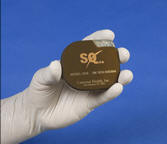 The FDA’s Circulatory System Devices panel voted 7-1 on Thursday that the benefits of the Cameron Health subcutaneous ICD system (S-ICD) outweigh the risks in appropriately selected patients.
Unlike all previous ICDs, the S-ICD is much easier to implant because it is does not require threading a lead to connect the device to the heart. Panel member Rick Lange said the S-ICD was an example of “I-should-have-thought-of-that technology”, according to Heartwire reporter Reed Miller on Twitter. That sentiment was echoed by device giant Boston Scientific in March when it agreed to acquire Cameron Health for $150 million initially, and as much as $1.2 billion in additional payments based on future performance, according to Reuters.
The advisory panel also voted 7-1 that the S-ICD was effective and 8-0 that it was safe.
Earlier this week, FDA reviewers posted the previously unavailable results of the pivotal trial for the S-ICD. The FDA review set the tone for a generally supportive panel meeting, finding that the trial met its primary safety and efficacy endpoints, though it identified several potential safety issues.
April 26th, 2012
Frailty Evaluation and High-Risk Interventions
John A. Dodson, MD
When taking care of older patients, we often have an intuitive sense of which ones will do well after an intervention and which ones won’t. This has been termed the “foot of the bed” test, or alternately something which separates a “young 80-year old” from an “old 80-year old.” Frailty is a syndrome defined as an increased physiologic vulnerability to stressors, and through its quantification we can help to standardize this clinical intuition. However, the routine measurement of frailty has largely remained outside both clinical trials and patient care.
A review published this past week (J Cardiovasc Nurs Mar/Apr 2012; 27: 120-131) calls for use of a consistent definition of frailty across studies of older adults with cardiovascular disease, in order to help determine its ability to predict outcomes. The authors support using previously defined criteria (Fried et al. J Gerontol A Biol Sci Med Sci 2001; 56: M146-M157) which consist of three or more of the following five: (1) unintentional weight loss, (2) self-reported exhaustion, (3) weakness (grip strength), (4) slow gait speed, and (5) low physical activity. In the original study by Fried et al., frailty was independently predictive of worsening disability, hospitalization, and death.
As there are a growing number of high-risk interventions that can be applied to older adults, including transcatheter aortic valve replacement (TAVR), left ventricular assist devices, and cardiac surgery, can a standardized definition of frailty help to predict which patients will derive meaningful benefit? For example, with TAVR, in the PARTNER trial (N Engl J Med 2010;363:1597-1607) where the mean age of patients was 83 years, 31% of patients undergoing TAVR still died at 1 year (despite a 20% absolute risk reduction with TAVR versus usual care). While frailty was reported, its degree of standardization (and association with outcomes) was unclear.
Can frailty help to identify a particular subgroup of older patients who may not benefit from high-risk interventions? Does it have the potential to become an important covariate in a similar manner to more traditional factors such as creatinine and ejection fraction? What are some of the barriers to its routine measurement?