
April 12th, 2012
Ascertaining ASCERT: How Well Do Registry Data Measure Up to the ‘Bedside Test’?
Øystein Horgmo, BSc
In the ASCERT observational study, stable patients (age 65 or older) with double- or triple-vessel CAD, but not left-main disease, were found to have better long-term survival after CABG than after PCI. ASCERT was a laudable achievement in terms of its scope and the level of collaboration it represents.
The ASCERT investigators used inverse probability weighting (propensity scores) in an attempt to mitigate the impact of selection bias. However, this technique depends on measured variables. Experts are currently debating whether the registries analyzed in ASCERT — the STS Adult Cardiac Surgery Database and the ACCF National Cardiovascular Disease Registry (NCDR) — adequately captured clinical characteristics that both influenced treatment selection and were associated with outcomes.
In a study published last year, my colleagues and I leveraged the granularity of the Kaiser medical record to assess, in 101 patients undergoing nonemergent, unprotected left-main PCI, the prevalence of typically uncaptured clinical conditions and their impact on post-PCI outcomes. The majority of patients in our series were considered by their treating clinicians to be ineligible for CABG.
We extracted the reasons that the treating clinicians cited for CABG ineligibility. The most common reasons were advanced age, severe lung disease, and poor targets or inadequate conduits, but frailty, malignancy, and severe aortic calcification were also frequently cited. Notably, the majority of the reasons for CABG ineligibility were not captured by the NCDR. Not surprisingly, both CABG ineligibility and the presence of a “non-NCDR captured risk factor” were associated with markedly worse long-term post-PCI outcomes, even after accounting for ascertainment bias and adjustment with standard risk scores.
Ours was a single-center study restricted to patients with left-main CAD. However, selection bias (related to factors typically not captured in registries) is likely to also be pertinent to patients with multivessel CAD. That bias could confound results from observational studies that rely on registry data. It remains to be seen whether such registries can ever capture sufficient detail to account for all the factors that influence bedside clinical judgment and, therefore, to allow for truly effective comparisons.
Are data from the NCDR suitable for comparing outcomes after PCI versus CABG if important clinical factors, like those identified in the Kaiser study, are missing?
April 11th, 2012
Study Evaluates Losartan Efficacy in Heart Failure
Larry Husten, PHD
The angiotensin II-receptor blocker (ARB) losartan has labored under the perception that it is not as potent as other ARBs, and some evidence has suggested that it may not confer the same clinical benefits as other ARBs in heart failure patients. In a paper from Denmark published in JAMA, Henrik Svanström and colleagues performed a country-wide registry study in which they compared heart failure patients who were new users of losartan and candesartan.
Overall there were no significant differences in mortality between the two groups:
- Adjusted hazard ratio (HR) for losartan: 1.10, CI 0.96-1.25
When compared with high-dose candesartan (16-32 mg), however, low-dose (12.5 mg) and medium-dose (50 mg) losartan were linked to an increased risk for death, but this was not observed with high-dose (100 mg) losartan:
- Low-dose losartan: HR 2.79, CI 2.19-3.55
- Medium-dose losartan: HR 1.39, CI, 1.11-1.73
- High-dose losartan: HR 0.71, CI, 0.50-1.00
The authors concluded that their “findings do not support the hypothesis of differential effects of specific ARBs in patients with heart failure.”
April 11th, 2012
Anticoagulation Conundrum
Tariq Ahmad, MD, MPH and James Fang, MD
A 75-year-old woman presents to a general cardiology clinic for the first time. She has a history of atrial fibrillation, sick-sinus syndrome requiring a permanent pacemaker, hypertension, and dyslipidemia. She has no specific complaints other than shortness of breath on exertion. Her medications include aspirin (81 mg daily), carvedilol (25 mg twice daily), lisinopril (5 mg daily), and furosemide (40 mg daily).
The woman has just moved in with her daughter, who lives in the area. She helps take care of her grandchildren and buys the groceries for the entire family.
A transthoracic echocardiogram reveals severe left-ventricular hypertrophy and an LV ejection fraction of 45% (atrial fibrillation is consistently rate-controlled). The patient has mild aortic, mitral, and tricuspid regurgitation. A mass detected in the left atrium does not opacify with contrast, suggesting the possibility of a thrombus.
The patient has brought medical notes from previous physician visits, showing that she was hospitalized 3 years ago with a severe headache. She was found to have a subarachnoid hemorrhage that required embolization. At that time, she had an INR in the 2.0 to 2.4 range on warfarin, which was discontinued in light of the subarachnoid hemorrhage.
A year later, the patient was hospitalized with severe bilateral calf pain. A CT scan revealed thrombotic occlusion of the right common iliac and right external iliac arteries. She underwent bilateral iliac and left profunda thrombectomy, with stent placement in the right common iliac artery. After much discussion between the cardiologists and neurosurgeons, the decision was made to re-initiate anticoagulation with warfarin.
Within 6 months after discharge, the patient was readmitted with a massive GI bleed requiring 8 units of packed red blood cells. At the time of this admission, her INR was 2.2. Subsequently, all anticoagulation was stopped. Six months before the patient’s current clinic visit, she had re-initiated aspirin therapy, which she tolerated well.
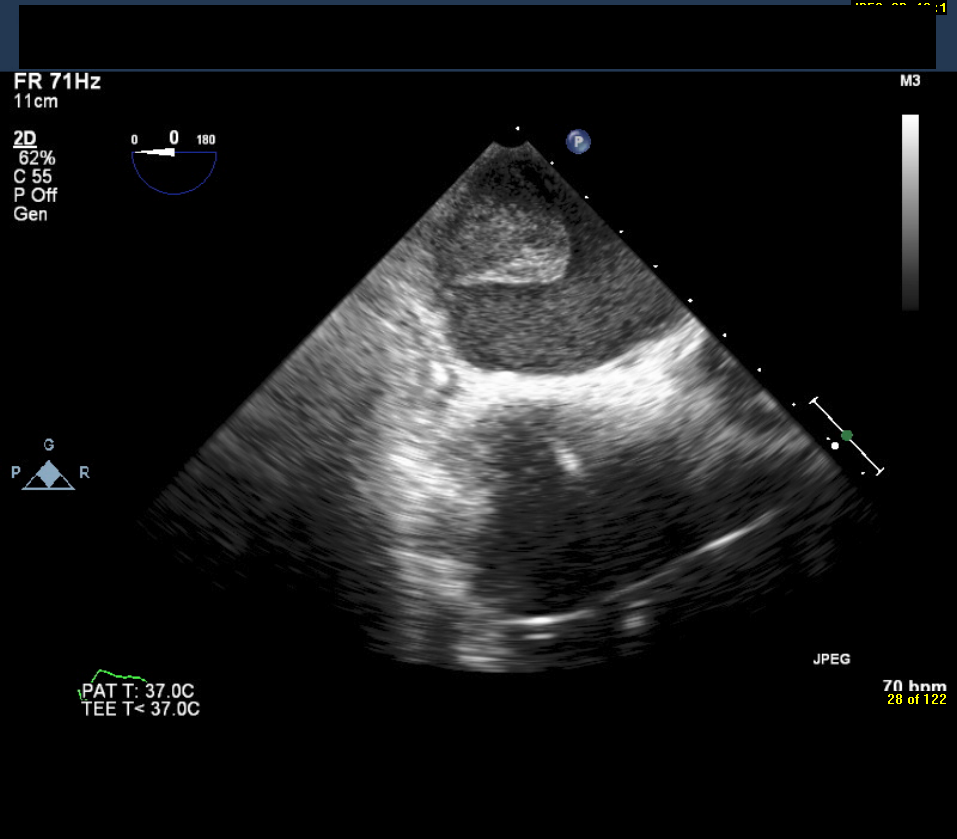
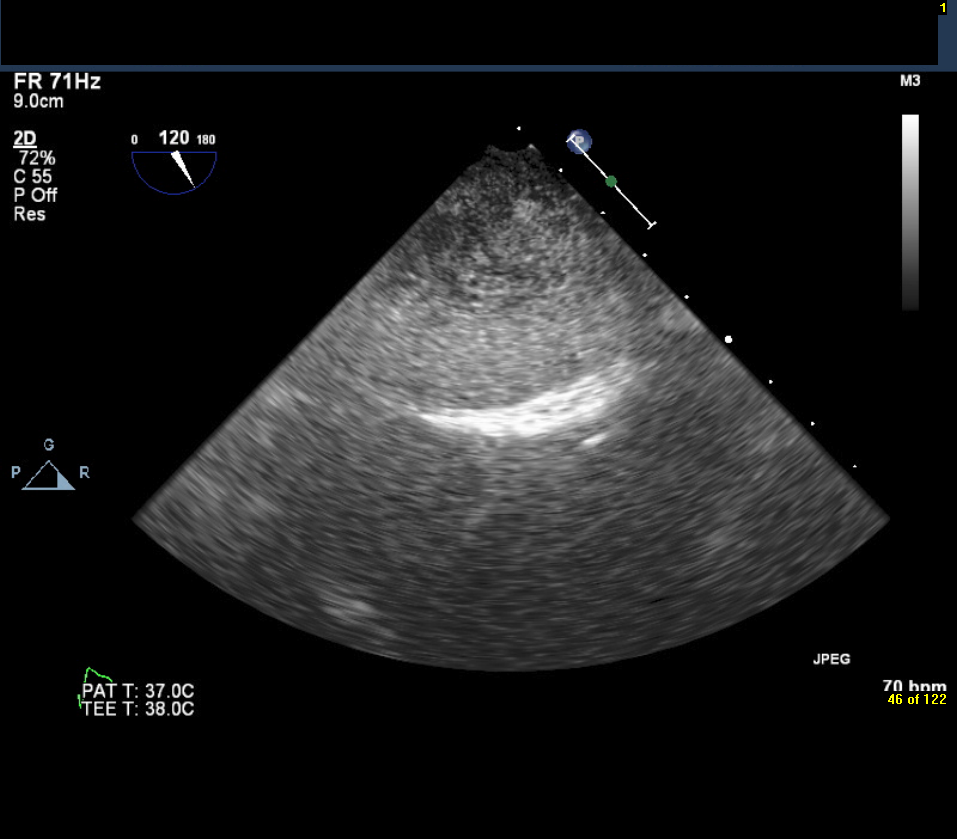
Given this history, the patient is scheduled for an elective transesophageal echocardiogram the day after presenting to the clinic. The images below show the TEE findings: a large 5.5-cm x 2.7-cm heterogeneous multilobulated mass, attached along the posterior wall of the left atrium, which likely represents a thrombus. (Click to enlarge the images.)
Questions:
1. Would you anticoagulate this patient? If so, which agent would you use?
2. Would you perform any further diagnostic testing?
Response:
April 24, 2012
This type of scenario, in which the risks for bleeding and clotting are roughly balanced, is common in clinical practice. The notion that “all bleeding stops” favors anticoagulation (given that stroke is irreversible), but the ultimate extension of that course of action is fatal hemorrhage. This patient has had several life-threatening episodes of both hemorrhage and thromboembolism, so applying traditional risk modeling is not likely to be appropriate.
Discussion of agents other than warfarin in this setting would be largely academic, given that this patient would not be included in a clinical trial.
Unfortunately, an evidence base to inform us here is scant, so we must rely on good old-fashioned common sense, keeping in mind the adage to do no harm. A reasonable empiric approach is an unfractionated heparin “stress test.” Acute bleeding would answer the immediate question of whether to initiate anticoagulation, although this method would be limited in its ability to predict future bleeding. If the UFH is tolerated, I would consider a transition to oral warfarin with an INR target of 2.0 to 2.5. One unifying diagnosis would be amyloidosis, senile or primary.
Finally, I, too, would have tried to get more imaging of the posterior left-atrial mass. However, I have seen this sort of finding after surgical or percutaneous ablations for atrial fibrillation.
Follow-Up:
April 30, 2012
Thank you all for your comments — I wish we had consulted fellow cardiologists in real time. The patient was started on a heparin drip, which she tolerated without any evidence of bleeding. Consistent with a finding of intra-atrial thrombus, she underwent a cardiac CT scan (MRI was not done because of her pacemaker). A diagnosis of amyloidosis was considered and ruled out. The patient was transitioned to warfarin and thus far has done well without any further evidence of bleeding or thromboembolism.
April 10th, 2012
Baseline ECG Abnormalities in Older Patients Tied to Increased CHD Risk
Larry Husten, PHD
Although routine ECG screening in asymptomatic people is not recommended by guidelines, a new study raises the possibility that ECGs in an elderly population can provide a modest improvement in risk classification.
In the Health, Aging, and Body Composition Study, published in JAMA, Reto Auer and colleagues followed 2192 adults 70 to 79 years of age without known cardiovascular disease. People with any ECG abnormality at baseline had a significant increase in risk for CHD after adjustment for other risk factors:
- HR 1.35, CI 1.02-1.8 (17.2 per 1000 person-years for those with no ECG abnormalities compared with 30.8 per 1000 person-years for those who had an ECG abnormality)
The investigators report that by adding the ECG test to a model containing traditional risk factors, 7.1% of the overall population, and 13.6% of the intermediate-risk population, were reclassified. Eight percent of the intermediate-risk group were reclassified as high risk, and this group had an event rate of 15.2%. By contrast, 6.2% were reclassified as low risk, and this group had an event rate of 5.2%.
The authors conclude that because of “the safety, the low cost, and the wide availability of ECG, ECG data might be useful to improve CHD risk prediction in older adults.” But they stated that before the ECG becomes a routine screening test, it “should be evaluated in randomized controlled trials.”
In an accompanying editorial, Philip Greenland points out that a sufficiently largely clinical trial would be prohibitively expensive and would have little likelihood of demonstrating substantial benefit. He advises that “in the absence of clear evidence of benefit and no clear implications for costs, the best advice is not to perform ECGs in asymptomatic patients, regardless of age.”
April 10th, 2012
Round Two: Heart Rhythm Editor Rejects St. Jude Request to Retract Riata Paper
Larry Husten, PHD
Douglas Zipes, the editor of Heart Rhythm, said the journal will not retract a controversial paper that has raised new safety concerns about St. Jude’s embattled Riata leads.
On Friday, as electrophysiologist Wes Fisher told CardioExchange, St. Jude issued a press release alleging numerous mistakes and oversights in an article by Robert Hauser published online in Heart Rhythm linking the company’s Riata and Riata ST leads to 20 or more deaths. The company publicly asked the journal, which is published by the Heart Rhythm Society, to retract the article.
On Tuesday, the New York Times reported that Zipes stood by the journal’s peer review process and would not retract the article. Zipes said there will be “some changes” to the article “involving what he called ‘inflection'” but that “‘the bulk of the manuscript stays as it is.”
Earlier Tuesday, St. Jude continued its assault on the Hauser article by issuing a press release and posting a link to findings from the MAUDE database. The company contended that Hauser had grossly undercounted the number of deaths tied to Medtronic’s Quattro Secure lead, thereby making its own Riata leads appear far worse by comparison.
Hauser and Zipes have not responded in detail to the St. Jude accusations, but Hauser told CardioBrief on Friday that the authors “stand by the conclusion of our study.” In a series of tweets, electrophysiologist Edward J Schloss (who has blogged extensively about Riata), noted that Hauser and St. Jude had applied different methodologies in their search of the MAUDE database, and that St. Jude may have failed to exclude Quattro deaths with no known lead problems.
April 10th, 2012
Selections from Richard Lehman’s Literature Review: Week of April 10th
Richard Lehman, BM, BCh, MRCGP
CardioExchange is pleased to reprint selections from Dr. Richard Lehman’s weekly journal review blog at BMJ.com. Selected summaries are relevant to our audience, but we encourage members to engage with the entire blog.
Week of April 10th
NEJM 5 Apr 2012 Vol 366
Rivoroxaban (pg. 1287): The successful EINSTEIN-PE trial of rivoroxaban has been talked about for a while, and you don’t have to be Einstein to work out that this is very good news for Bayer HealthCare and Janssen Pharmaceuticals, who co-funded the trial. It was an open-label trial, pitting the new oral fixed-dose factor Xa inhibitor against an adjusted-dose vitamin K antagonist (in the States, they use dicoumarol as well as warfarin) for 3, 6 or 12 months after symptomatic pulmonary embolism. As far as I can tell (and you know I am far from infallible) the stuff did what the manufacturers put on the can: rivaroxaban was as good at preventing recurrences, and less likely to cause major bleeds than a coumarol/INR regime.
Cancer Diagnosis and Risk for Suicide/Cardiovascular Death (pg. 1310): Here’s a really thought-provoking study from Sweden showing that in the week after receiving a cancer diagnosis, the relative risk of suicide goes up by 12.6 and the RR for cardiovascular death by 5.6. Taken over the first year, the risk ratios are slightly over 3 for both. The immediate cardiovascular effects of a shocking diagnosis could hardly be more dramatically demonstrated, while the continuing physical effect could be partly explained by prothrombotic and inflammatory effects from the cancer itself. But the suicide figures once again raise the question of what is an “appropriate” response to a cancer diagnosis. Palliative care specialists, at least in the UK, share a religious predisposition to expect all cancer patients, at whatever stage, to bear their sufferings to the end, encouraged by promises (which may be undeliverable) of complete relief. To me personally, this interpretation of the will of God seems neither rational or generous, nor even always honest. The original Zarathustrian religion of good thoughts, good words and good deeds seems to me a better guide: it acknowledges that God (or good, or whatever you want to call it) can only act through man in the physical world. Suicide in the first week of diagnosis is likely to be an immediate distress reaction, almost certain to cause a lot of distress in others: it is not irrational, but is usually best averted if possible. But well-planned suicide in the face of impending suffering and death does not seem to me either irrational or ignoble, provided it is done with full consideration to others.
Lancet 7 Apr 2012 Vol 379
Computer Reminders vs. Pharmacist Outreach (pg. 1310): This cluster-randomized trial from British general practice compared computer-generated reminders about medication dangers with something they grippingly called PINCER – “a pharmacist-led information technology intervention, composed of feedback, educational outreach, and dedicated support”. You can choose which you hate most – this description or the acronym. The end-points were: non-selective non-steroidal anti-inflammatory drugs (NSAIDs) prescribed to those with a history of peptic ulcer without co-prescription of a proton-pump inhibitor; β blockers prescribed to those with a history of asthma; long-term prescription of angiotensin converting enzyme (ACE) inhibitor or loop diuretics to those 75 years or older without assessment of urea and electrolytes in the preceding 15 months. Fair enough, I suppose (though I suspect some surprises when someone eventually looks at the end-points in “asthma” patients given very low-dose β blockers versus those given β agonists): and of course the PINCERed practices did better. So what should you commissioning guys invest in? More paid-for interference – sorry, I mean outreach and dedicated support – by community pharmacists, or punchier, clearer computer reminders?
April 9th, 2012
Meta-Analysis: No Secondary CV Prevention Benefits for Omega-3 Fatty Acid Supplements
Larry Husten, PHD
A new meta-analysis published in the Archives of Internal Medicine finds no evidence to support claims of a beneficial effect of omega-3 fatty acid supplements on secondary CV prevention.
Sang Mi Kwak and colleagues in the Korean Meta-analysis Study Group analyzed data from more than 20,000 patients with a history of CV disease who were randomized in 14 double-blind, placebo-controlled trials. There were no significant differences for most of the endpoints measured in the studies:
- Cardiovascular events: RR 0.99, CI 0.89-1.09
- Mortality: RR 0.96, CI 0.90-1.02
- Sudden cardiac death: 0.93, CI 0.66-1.30
One endpoint, cardiovascular death, achieved nominal significance but was no longer significant after excluding a study with methodological problems:
- Cardiovascular death (overall): RR 0.91, CI 0.84-0.99
- Cardiovascular death (excluding 1 trial): RR 0.92, CI 0.35-1.01
In an accompanying editorial, Frank Hu and JoAnn Manson note that most of the included trials “were very small short-term studies and were not designed to evaluate CVD end points.” They also point out that the meta-analysis did not include two large open-label trials (GISSI-Prevenzione and JELIS) that did offer evidence in favor of omega-3 supplements. But, they write, “there is no conclusive evidence to recommend fish oil supplementation for primary or secondary prevention of CVD.”
However, a diet high in fatty fish (>=2 servings of marine fish per week) should continue to be recommended for the general population and for patients with existing CVD because fish not only provides omega-3 fatty acids but also may replace less healthy protein sources, such as red meat. Individuals who are unable or unwilling to eat fish or related products should consider increasing their consumption of plant-derived omega-3 fatty acid (α-linolenic acid). For primary or secondary prevention, omega-3 supplementation cannot supersede an overall healthy diet, but a cardioprotective diet needs to be rich in omega-3 fatty acids.
April 9th, 2012
CEO Jack Lewin Leaving ACC After 5 Years
Larry Husten, PHD
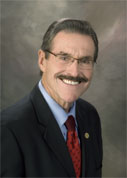 The American College of Cardiology today announced that Jack Lewin, its CEO for the last 5 years, is leaving the ACC “to pursue other opportunities and challenges.” The ACC’s General Counsel and COO, Tom Arend, will serve as the interim Chief Staff Officer, according to the college. The Board of Trustees will soon begin recruiting the college’s next CEO.
April 9th, 2012
David vs. Goliath: St. Jude Medical Seeks Retraction of Heart Rhythm Journal Manuscript
Shengshou Hu, M.D.
CardioExchange welcomes this guest post from Dr. Westby Fisher, an electrophysiologist practicing at NorthShore University HealthSystem in Evanston, Illinois, and a Clinical Associate Professor of Medicine at University of Chicago’s Pritzker School of Medicine. This piece originally appeared on his blog, Dr. Wes.
St. Jude Medical, a widely-used manufacturer of implantable cardiac devices, finds they have a bit of a problem with a form of insulation that surrounds wires contained in several lines of their pacing and defibrillator leads. They decide to pull these products from the market after substantial evidence that their leads’ reliability falls below their standards.
A credible doctor, Robert G. Hauser, MD, known for his work in reviewing medical device safety issues, published a perspective piece critical of the post-market surveillance of the Riata leads in the New England Journal of Medicine. St. Jude Medical takes issue with Dr. Hauser, and publishes a rebuttal in the same issue of the New England Journal of Medicine.
Dr. Hauser then submits a paper to the scientific peer-reviewed Heart Rhythm Journal for publication. The paper reveals deaths that might be caused by St. Jude Medical’s faulty leads. The reviewers feel it is an important paper to share with their readership. The paper is published.
Today we learn that St. Jude Medical is REALLY not happy with Dr. Hauser and demands that his paper be retracted from the Heart Rhythm Journal on the basis that they feel their competitor’s lead data reliability was misreported. The same letter fails to mention their own quality issues.
They then issue a press release to assure viral-media spread in an attempt to discredit the physician’s findings far and wide before facts can be verified. They say in their press release that they are justified in their action because Dr. Hauser failed to come to them before publishing his article:
St. Jude Medical was not consulted prior to the publication, nor asked to validate any of the data against its returns analyses. Since the manuscript was published, the company has spent more than 300 hours attempting to reach the same conclusions as Dr. Hauser, but can find no way of analyzing the MAUDE database that reproduces the same numbers reported in the manuscript. The company has identified duplicate reports, inconsistent categorizations and failures to include all available reports.
Ladies and gentlemen, this is an electronic SMACKDOWN!
Interestingly, word on the street was that a not-so-pleasant article about St. Jude’s lead issue and the problems therein was about to be published in a major newspaper, and it has – here’s the New York Times article.
As Shakespeare famously said: “The lady doth protest too much, methinks.”
April 5th, 2012
NIH Appoints Gary Gibbons As Next Director of the NHLBI
Larry Husten, PHD

NHLBI Acting Director Dr. Susan Shurin, NIH Director Dr. Francis Collins, and the selected new NHLBI director, Dr. Gary Gibbons
Gary Gibbons will be the next Director of the National Heart, Lung, and Blood Institute (NHLBI). The selection of Gibbons was announced today by the National Institutes of Health Director Francis Collins. Gibbons is the founder and current director of the Cardiovascular Research Institute, chairperson of the Department of Physiology, and professor of physiology and medicine at the Morehouse School of Medicine in Atlanta. Susan Shurin, who has been serving as the acting director of NHLBI, will return to her position as the NHLBI’s deputy director when Gibbons assumes his position this summer.
“It’s an honor to join the NIH and lead the Heart, Lung, and Blood Institute,” said Gibbons, in an NHLBI press release. “The globally recognized research and training supported by the NHLBI continues to advance biomedical knowledge in fields related to heart, lung, and blood diseases. I look forward to working with the institute staff and with the many researchers supported by the Institute to foster multidisciplinary approaches to improve disease prevention, diagnosis, and treatment that will advance the health of all Americans.”
Gibbons was an undergraduate at Princeton University and graduated magna cum laude from Harvard Medical School. He completed his residency and cardiology fellowship at Brigham and Women’s Hospital. Before going to Morehouse in 1999, he served on the faculty at Stanford University and Harvard Medical School.
Here is the description of Gibbons research program on his Morehouse webpage:
One of the long-term goals of Dr. Gibbons’ research program is to utilize new genomic technologies to integrate the areas of physiologic genomics, functional genomics and human molecular genetics in the field of vascular biology and medicine. Dr. Gibbons’ translational research laboratory has a longstanding interest in elucidating the molecular mechanisms involved in vascular remodeling in health and disease. His laboratory is interested in discovering novel mediators of vascular disease that may constitute candidate disease susceptibility variants. His program is actively involved in collaborative projects designed to study the functional significance of epigenetic and genomic variation and the potential role of genetic variation in promoting the susceptibility to cardiovascular disease in both clinical and community-based settings. One of the ultimate goals of his program is to take a multi-level, multi-disciplinary approach to understanding and ameliorating racial/ethnic disparities in cardiovascular health.