
March 14th, 2012
The $800 Million Gamble: Jumping Aboard or Jumping the Gun?
Richard A. Lange, MD, MBA and L. David Hillis, MD
In the CLOSURE I trial (Evaluation of the STARFlex Septal Closure System in Patients with a Stroke and/or Transient Ischemic Attack Due to a Presumed Paradoxical Embolism through a Patent Foramen Ovale), 909 patients with a PFO who had a stroke or a transient ischemic attack (TIA) of unclear etiology were randomly assigned to device closure of the PFO or to optimal medical therapy. The risks for stroke, TIA, and death (individually or combined) did not differ between the two groups.
|
2-year outcome |
Device Closure |
Medical Therapy |
P value |
| Stroke or TIA |
5.5% |
6.8% |
0.37 |
| Stroke |
2.9% |
3.1% |
0.79 |
| TIA |
3.1% |
4.1% |
0.44 |
| Death from neurologic cause |
0% |
0% |
Furthermore, PFO closure increased the risks for a major vascular event (3.2% absolute increase, P<0.001) and for atrial fibrillation (5% absolute increase, P<0.001).
But here’s the really interesting thing.
Patient enrollment was slow because of frequent off-label use of closure devices. Each study site recruited an average of only two patients per year, primarily because of decisions to close many PFOs outside the trial. During the 9-year study period, approximately 80,000 patients had a PFO closure with the use of a device. At an average cost of $10,000 per procedure, we spent ≈$800 million on a procedure that had no demonstrable benefit (and, as noted, increased risks).
In short, many cardiologists were convinced of the benefit of PFO closure devices before the study was performed.
In the future, should third-party payers withhold reimbursement for unproven device therapy unless such treatment is part of a randomized trial?
March 14th, 2012
Angioplasty Pioneer Geoffrey Hartzler Dead at 65
Larry Husten, PHD
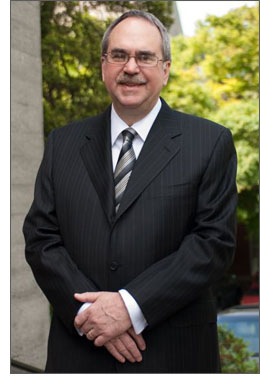 Geoffrey Hartzler, a key figure in the development of interventional cardiology in the United States, has died from cancer at the age of 65. He was one of the first cardiologists to learn the technique of percutaneous transluminal coronary angioplasty (PTCA) from its founder, Andreas Gruentzig. Hartzler then went on to perform the first angioplasty procedure at the Mayo Clinic in 1979.
In 1980 he established the interventional program at the Mid-America Heart Institute in Kansas City, MO. Hartzler retired from clinical practice due to chronic back pain in 1995. Hartzler was renowned for training an entire generation of cardiologists in the then new technique, and helped to expand its clinical application and to develop improved catheters and balloons. Gregg Stone, who had a fellowship with Hartzler, told Heartwire:
Whereas Andreas Gruentzig was responsible for bringing angioplasty to the world, Geoff Hartzler was the single person most responsible for extending its application to the millions of patients who currently benefit each year from interventional cardiology. Whereas Andreas believed PTCA should be restricted to proximal focal lesions, Geoff was the pioneer who brought interventional cardiology (balloons only, no less) to patients with acute MI, multivessel and left main disease, chronic total occlusions, and much more.
Rick Lange recalls the early days of interventional cardiology and Hartzler’s key role in helping it grow:
David Hillis taught me to do PTCA when only 1 brand of guide catheter, 1 type of guide wire and 2 types of balloons were available…..one of which was the Hartzler balloon catheter. I attended Hartzler’s angioplasty course when it was only 1 of 2 offered in the U.S. For 4 or 5 consecutive years afterwards, Geoff took one of our Parkland cath fellows into his PTCA program (which accepted 2 or 3 fellows/yr). They were all superbly trained.
The following information is from the Kansas City Star: Funeral: 11:30 a.m. Friday in Greenwood Chapel, Fort Worth, TX. A memorial service will follow in Kansas City, on a date to be determined. Interment: Greenwood Memorial Park. Visitation: 6- 8 p.m, Thursday at Greenwood Funeral Home. Memorials: In honor of his courageous battle against prostate cancer, gifts in Geoffrey’s memory can be sent to the Prostate Cancer Foundation at www.pcf.org/geoffreyhartzler or the American Heart Association at www.honor.americanheart.org.

March 13th, 2012
Prominent Japanese Cardiologist Accused of Scientific Misconduct
Larry Husten, PHD
Following accusations by independent bloggers in Japan and Germany, the American Heart Association (AHA) has issued an Expression of Concern about five papers published in AHA journals co-authored by Hiroaki Matsubara, a prominent cardiologist and researcher at Kyoto Prefectural University in Japan. In addition to his many papers exploring the basic science of the renin-angiotensin system, Matsubara was the chief investigator of the KYOTO HEART Study, a randomized, open-label study examining the add-on effect of valsartan to conventional therapy in high-risk hypertension.
Questions about Matsubara’s work were initially raised last year on a Japanese blog and then pursued in three English language posts (here, here, and here) on a German site, the Abnormal Science Blog. Abnormal Science reported evidence of serious scientific misconduct in 12 papers in which Matsubara was the only common co-author. The AHA posted its Expression of Concern on Monday, which was subsequently reported by Retraction Watch.
The three posts on Abnormal Science demonstrate repeated examples of image manipulation and copying, as well as self-plagiarism. The non-AHA journals cited by Abnormal Science include Kidney International, Biochemical and Biophysical Research Communications, and Journal of Molecular and Cellular Cardiology. At least one paper, in Molecular and Cellular Biochemistry, has been retracted “due to a mistake of duplicating the publication of original data” that already had appeared in Circulation Research. Here is how Abnormal Science summarized its initial findings in several of the papers:
It is apparent that band images from ‘real’ blots may have been digitally reassembled into new blot images pretending to be derived from distinct experimental settings. Since ‘reconfigured blots’ have been densimetrically scanned and the results illustrated in tables and figures, we are presumably confronted with a case of severe data fabrication.
These are the five papers cited by the AHA, including the number of citations as reported by Retraction Watch:
- “Angiotensin II Type 2 Receptor Inhibits Epidermal Growth Factor Receptor Transactivation by Increasing Association of SHP-1 Tyrosine Phosphatase,” published in Hypertension in 2001 and cited 30 times, according to Thomson Scientific’s Web of Knowledge
- “Enhancement of Ischemia-Induced Angiogenesis by eNOS Overexpression,” published in Hypertension in 2003 and cited 64 times
- “Angiogenesis by Implantation of Peripheral Blood Mononuclear Cells and Platelets Into Ischemic Limbs,” published in Circulation in 2002 and cited 167 times
- “Aldosterone Directly Induces Myocyte Apoptosis Through Calcineurin-Dependent Pathways,” published in Circulation in 2004 and cited 57 times
- “Angiotensin AT1 and AT2 Receptors Differentially Regulate Angiopoietin-2 Vascular Endothelial Growth Factor Expression and Angiogenesis by Modulating Heparin Binding–Epidermal Growth Factor (EGF)–Mediated EGF Receptor Transactivation,” published in Circulation Research in 2001 and cited 143 times
March 13th, 2012
Join CardioExchange for Cocktails — and Reduce Your Board Prep Anxieties!
CardioExchange Editors, Staff
Attending ACC 2012? CardioExchange will be hosting an informal get-together in Chicago with cocktails and a discussion of the ABIM boards and recertification exams. Come enjoy some light food and drink, mingle with CardioExchange Editors, Contributors, and Members, and get some great tips to aid in your exam prep.
Our panel will include:
- Susan Cheng, MD, Instructor of Medicine at Harvard, who recently passed her cardiology boards
- Ben Freed, MD, Cardiology Imaging Fellow at University of Chicago, who also recently passed his cardiology boards
- John Harold, MD, Incoming President-Elect of the American College of Cardiology, Clinical Professor of Medicine, David Geffen School of Medicine at UCLA, and a former member of the ABIM Board of Directors Internal Medicine Test Writing Committee
Harlan Krumholz will be the MC and will also be happy to answer some questions, as a member of the ABIM board and as someone who just recertified. And we’ll have a representative from the ABIM on hand to answer any logistical questions.
Our panel can’t answer any specific questions about the content of the exam, of course, but they will be happy to talk about its purpose, format, and blueprint. Most importantly, you can find out what those who took it recently found helpful — or a waste of time — when it came to preparations.
The event will be on Sunday, March 25th from 5:30 p.m. to 7 p.m. at:
Level Two
980 North Michigan Avenue
Chicago, Illinois 60611
Dress is casual. Attendees will get a free one-year digital subscription to Journal Watch Cardiology. But space is limited, and you have to RSVP with Matthew O’Rourke (just e-mail morourke@nejm.org).
We look forward to seeing you in Chicago.
[EDITOR’S NOTE: This post was updated to correct an error in Dr. Harold’s affiliations and to update the list of panelists. Our apologies to our readers].
March 13th, 2012
Cause for Concern: Heart Disease and Breast Cancer in Young Women
Aakriti Gupta, MD
For ages, myocardial infarction (MI) has been dismissed as an ‘old man’s disease’. However, not only is it one of the leading causes of mortality in old women, it also afflicts a sizeable proportion of young women. Data from the American Heart Association and the Centers for Disease Control and Prevention suggest that more than 10,000 women under 45 years of age are diagnosed with a heart attack and nearly 700 die annually in United States, a number that closely parallels the 19,000 women newly diagnosed with malignant breast cancer in the same age group. In fact, data from the Healthcare Cost and Utilization Project, one of the largest collections of hospital inpatient care statistics, showed that nearly 20,000 women under 50 years of age are hospitalized with MI in the US every year.
Each October America turns pink with the arrival of National Breast Cancer Awareness Month. The campaign’s signature pink ribbons are ubiquitous. This stands in stark contrast with the awareness of MI in young women. If we are to fight this disease, myocardial infarction in young women will need to receive the same attention and concern as breast cancer. The ‘Go Red for Women’ initiative by the AHA is a first step in the right direction. We need to support this movement so that concerted efforts are undertaken toward checking a disease as common and daunting as breast cancer.
March 12th, 2012
Bad News for Red Meat Lovers
Larry Husten, PHD
New results from studies following more than 120,000 health care professionals link red meat consumption to higher mortality, cardiovascular disease, and cancer. In a paper published in the Archives of Internal Medicine, An Pan and colleagues report findings from up to 22 years of observation among 37,698 men enrolled in the Health Professionals Follow-up Study and up to 28 years of observation among 83,644 women enrolled in the Nurses’ Health Study.
Here are the hazard ratios, after multivariable adjustment, for a 1-serving-per-day increase in unprocessed and processed red meat, respectvely:
- Total mortality: 1.13 (CI 1.07-1.20) and 1.20 (CI 1.15-1.24)
- CVD mortality: 1.18 (CI 1.13-1.23) and 1.21 (CI 1.13-1.31)
- Cancer mortality: 1.10 (CI 1.06-1.14) and 1.16 (CI 1.09-1.23)
The authors calculated that replacing one serving per day of red meat with other foods like fish, poultry, nuts, legumes, low-fat dairy, and whole grains would result in a 7% to 19% reduction in mortality over the follow-up period.
In an invited commentary, Dean Ornish writes that cutting out red meat is not only good for the health of the individual, but also good for the health of the planet. He recommends substituting red meat with plant-based foods “rich in phytochemicals, bioflavonoids, and other substances that are protective.” By contrast, Ornish cites studies in mice finding that high-fat, high-protein, low-carbohydrate diets “may accelerate atherosclerosis through mechanisms that are unrelated to the classic cardiovascular risk factors.”
Animal agribusiness, according to Ornish, “generates more greenhouse gases than all forms of transportation combined.” He concludes:
At a time when 20% of people in the US go to bed hungry each night and almost 50% of the world’s population is malnourished, choosing to eat more plant-based foods and less red meat is better for all of us—ourselves, our loved ones, and our planet.
In short, don’t have a cow!
March 12th, 2012
5 Ways CME Misses the Mark
Behnood Bikdeli, M.D.
Some people critique Continuous Medical Education (CME) programs as spoon-feeding. As a young physician struggling to learn a lot of material, I actually appreciate a bit of ready-to-consume content that I can learn quickly and effectively. The American College of Cardiology (ACC) and other reputable institutions provide CME programs that, overall, help to keep physicians up on the literature and integrate new findings with existing knowledge. However, despite the basic advantages of these programs, several limitations stand out to me as a frequent user of CME. Here are the key ones:
1. The actual content does not match what is advertised. Sometimes CME programs set up false expectations. For example, in a recent CME program offered by the ACC, called “Complex Cardiovascular Cases: Novel Treatment Strategies for High Risk Patients,” the flier suggested that the reader would learn about “existing HDL raising therapies to reduce cardiovascular risk in dyslipidemic patients.” I learned some useful information from that CME program, but nothing about HDL raising treatments that reduce the cardiovascular risk.
2. The evidence is reported selectively. Sometimes CME programs leave me feeling that I am receiving the extreme expert opinion rather than a balanced review of the evidence. For example, I have seen experts highlight the benefits of omega-3 supplements in improving cardiovascular outcomes, but with little discussion of well-conducted negative trials (e.g., Galan et al., Rauch et al., and Kromhout et al. to name a few).
3. The tests do not focus on matters of clinical significance. The pre-test and post-test questions on CME exams do not necessarily reflect the most fundamental learning points. I have, for instance, encountered questions that ask narrowly about “the average plasma LDL level in hospitalized CAD patients” but few that emphasize the strategies that improve cardiovascular outcomes.
4. Experts with conflicts of interest predominate. Many CME programs are prepared by faculty with strong industry ties. I do not doubt the scientific excellence of such investigators, and I am fully aware of the benefits of collaborative work with industry to generate new and applicable knowledge. Nevertheless, I think adding more panelists who don’t have direct links with industry would be helpful — much like the ACC and AHA policies for development of clinical practice guidelines.
5. The registration process is burdensome. Last, some CME programs require very detailed registration that is mandatory. Participants may use CMEs only to keep themselves up-to-date on particular medical topics, and a time-intensive registration process affects the ease of use, thereby potentially discouraging future participation.
I believe that if such issues were addressed appropriately, CME programs would be even more successful in bringing state-of-the-art information to larger numbers of clinicians.
What has been your experience with CME? In particular, have you noticed a difference between commercially sponsored CME programs and those with no direct funding from drug or device companies? Do my critiques resonate with what you have encountered?
Sorry, there are no polls available at the moment.March 12th, 2012
Selections from Richard Lehman’s Weekly Review: Week of March 12th
Richard Lehman, BM, BCh, MRCGP
 CardioExchange is pleased to reprint selections from Dr. Richard Lehman’s weekly journal review blog at BMJ.com. Selected summaries are relevant to our audience, but we encourage members to engage with the entire blog.
Week of March 12th
Lancet 10 Mar 2012 Vol 379
Stem Cells for the Heart (pg. 895): “The Lancet, you may have noticed, is a seriously weird journal. One of the things it likes to do is publish the results of cutting-edge human experiments before they have any clear outcomes” I wrote here two weeks ago. This hasn’t changed in a fortnight, and in fact it hasn’t changed in over a decade. During this time there have been lots of small trials of stem cells for repairing myocardium: these were novel and exciting to begin with, but you might be forgiven for wanting some evidence of actual benefit by now. Here in the latest phase 1 trial, CADUCEUS, the stem cells were cardiosphere-derived, i.e., grown from the patients’ own cardiomyocytes obtained by endocardial muscle biopsy. Cultured autologous precursor cells were introduced by coronary artery infusion, and at six months there was MRI evidence of scar repair and new myocardium but no change in functional indices at all. There will now be a phase 2 trial. Can’t wait. You may want to read more about what hasn’t yet happened in this field in the review article (pg. 933), Towards regenerative therapy for cardiac disease.
BP in Both Arms and Vascular Disease (pg. 905): In the days when I was still a proper doctor with a consulting room of my own, I used to shock and confuse visiting health professionals by keeping a mercury sphygmomanometer with an adult cuff that covered 80% of the upper arm. That way I could at least believe my own blood pressure readings. I even tried to keep abreast of the hypertension literature for a while, since it seemed best to know something about the commonest reason for treating healthy people in primary care. And I even uncovered the odd case of primary hyperaldosteronism. But I very rarely measured the BP in both arms, except in one memorable lady with a cold hand and a loud subclavian murmur, who provided my one and only diagnosis of subclavian stenosis. Here is a frustrating systematic review of the difference in BP between arms and vascular disease and mortality – frustrating because it doesn’t place its findings in any useful context. In particular there is a digression about the ankle/brachial pressure index without a direct comparison with the arm/arm BP index, but without clarifying which is more useful in which clinical situations. The authors are willing to commit no further than some mights and coulds: “A difference in SBP of 10 mm Hg or more, or of 15 mm Hg or more, between arms might help to identify patients who need further vascular assessment. A difference of 15 mm Hg or more could be a useful indicator of risk of vascular disease and death.”
Ann Intern Med 6 Mar 2012 Vol 156
How Patients and Caregivers Interpret Prognostic Information (pg. 360): Doctors can be very poor at handling numerical data; there have been lots of studies in patients too, and some in surrogate decision makers. Here is a mixed-methods (hurray!) study of how relatives and decision-making carers of people incapacitated by serious disease interpret prognostic information, whether given as numbers or words. Such discussions usually take place in the context of continuing life-supporting treatment, so this could hardly be less trivial. And the investigators find that misunderstanding is rife – and tends to be in one direction only, so that it is not simply misunderstanding but cognitive bias towards optimistic interpretation.
March 8th, 2012
Michael Ezekowitz Joining Cardiovascular Research Foundation to Establish AFib Research Center
Larry Husten, PHD
 Michael Ezekowitz is joining the Cardiovascular Research Foundation (CRF) in New York City to start a new center for atrial fibrillation research. Ezekowitz, a cardiologist at the Lankenau Institute for Medical Research in Philadelphia, had been a professor and vice president for clinical research at Lankenau. Recently, Ezekowitz was a co-principal investigator of the RE-LY trial of dabigatran versus warfarin for stroke prevention in AF patients. Ezekowitz went to medical school in South Africa, received a D. Phil from Imperial College at London University, and completed his cardiology fellowship at Johns Hopkins.
Ezekowitz’s appointment represents a new area of interest for CRF, which has traditionally focused on procedures and devices associated with interventional cardiology. The CRF’s Gregg Stone said:
We’ve always had an intense interest in the intersection between pharmacotherapy and interventional cardiology. Atrial fibrillation management has emerged as an entity that may be treated with pharmacology, intervention (left atrial appendage closure), EP ablation and/or surgery – so this area is a natural for CRF. Mike is one of the world’s foremost authorities on the management of patients with atrial fibrillation, having led or been involved with many of the seminal studies in Afib over his distinguished career. We are very pleased that he has brought his prodigious talents to CRF.
March 8th, 2012
The Psychological Impact of DVT and PE
Beth Waldron, MA
The evaluation of the care and outcome of patients with venous thromboembolism is often focused on the visible short-term effects of a clot, such as: Has the acute clotting episode resolved? Are chronic pain, swelling, or other post-thrombotic issues well managed? Has there been any bleeding associated with anticoagulation? Has there been a VTE recurrence? Often overlooked is consideration of a patient’s emotional state and the impact VTE has on the patient’s quality of life.
I direct a program at the University of North Carolina at Chapel Hill that provides information about venous thrombosis, thromobophilia and anticoagulation via a website called ClotConnect. This work brings me into contact with a diverse mix of VTE patients from around the country.
Patients most often have concrete educational needs. They want to understand:
- Why did I develop a clot?
- How long will I need to take an anticoagulant?
- How can I manage post-thrombotic complications?
- How can I keep a stable INR?
Since the clinical impact of VTE is well-known, developing resources to meet these educational needs has been somewhat straightforward.
But VTE patients have also expressed a depth of unmet emotional needs which are far more difficult to address. As an example, consider the following excerpts from recent posts by VTE patients on our program’s discussion board and social media forums which reflect the emotional impact of VTE:
I didn’t realize the mental burden the clot would have. Five years later and anytime I have a symptom — my mind automatically thinks there’s the possibility it could be a clot!
It was one of the scariest things I’ve had happen to me, not to mention all of the things you have to go through afterwards (i.e. the injections). I cried for the first week.
While I’ve fully recovered, play sports, do stuff with my family, and live a normal life, it never leaves you completely, the details, the memory of not being able to take a breath. I still get a little chill when I think about it. What a thing.
It is a constant worry it will happen again. The fact is that this event takes a huge emotional toll on you!
Knowing I had a clot put me in an emotional whirlwind and I just wish I had someone telling me ‘it is going to be ok, we’re doing everything we can to make this better’ but I never got that.
It’s good to know that I’m not the only one who was overwhelmed after being diagnosed with a DVT; it was truly life changing.
I have a fear of dying suddenly.
I have been struggling with dealing with the aftermath of this life changing event.
Immediately after diagnosis you don’t really have time to assess the emotions. You’re kind of on auto pilot. Couple of years later, it catches up with you.
I think of my husband witnessing my collapse in our home, an image that still haunts him even now.
Emotional states (such as depression, anxiety, happiness, and optimism) have been shown to influence health outcomes in many medical conditions, including cardiovascular disease. This is one reason why we see the provision of robust psychological support services for patients in a range of life-threatening and lifestyle-impacting medical conditions.
While VTE is also life-threatening and lifestyle-impacting, we don’t see the widespread provision of support services for these patients. In many clinical practices, there is no systematic approach taken to addressing the psychological needs of patients with VTE. There are very few in-person support groups in the US for persons affected by VTE. The utilization of advice helplines and social workers to assist VTE patients is limited. The psychological effects of VTE are both understudied and underserved.
A more detailed discussion of what is known about the psychological impact of VTE and what clinicians can do can be found at: http://professionalsblog.clotconnect.org/2012/02/28/psychological-impact-of-dvt-and-pe/