
January 9th, 2012
Statins Elevate Diabetes Risk in Postmenopausal Women
Larry Husten, PHD
Statins increase the risk for developing diabetes in postmenopausal women, according to a new study published in the Archives of Internal Medicine. The study provides more evidence and details about the previously reported link between statins and diabetes development.
Using data from more than 153,000 postmenopausal women who were participating in the Women’s Health Initiative (WHI) and did not have diabetes mellitus (DM) at baseline — and with more than 1 million person-years of follow-up — the investigators found a significant increase in the risk for diabetes in women taking statins at baseline:
- Diabetes developed in 9.93% of women (1076 out of 10,834) taking statins compared with 6.41% of women (9166 out of 143,006) not taking statins.
- The unadjusted hazard ratio for women taking statins was 1.71 (1.61-1.83).
- After multivariate adjustment, the HR remained significant but was slightly reduced: 1.48.
- The results were consistent across a broad range of subgroups, including different types of statins and the potency of the statins.
In their conclusion, the authors note that the cardiovascular benefits of statins are evident in both diabetic and nondiabetic populations, and that current guidelines do not need to be changed because of the increased risk for diabetes associated with statins. “However,” they write, “the consequences of statin-induced DM have not been specifically defined and deserve more attention. Given the wide use of statins in the aging population, further studies among women, men, and diverse ethnicities will clarify DM risk and risk management to optimize therapy.”
January 9th, 2012
Excess Risk for Cardiac Events Associated with Dabigatran
Larry Husten, PHD
Compared with control treatment, dabigatran (Pradaxa) is associated with a higher risk for cardiac events, according to a new meta-analysis published online in the Archives of Internal Medicine.
Ken Uchino and Adrian Hernandez analyzed data from seven clinical trials comparing dabigatran with warfarin, enoxaparin, or placebo in 30,514 patients. The rate of myocardial infarction (MI) or acute coronary syndrome (ACS) was significantly higher in the dabigatran groups than in the control groups:
- dabigatran: 1.19% (237/20,000)
- controls: 0.79% (83/10,514)
- OR 1.33, CI 1.03-1.71, p = 0.03
The results were similar when different analyses were performed, including the exclusion of short-term trials and revised results from the RE-LY trial. The authors note that the RE-LY trial had a dominant effect on the meta-analysis, contributing 59% of the cohort and 74% of the events in the analysis.
Uchino and Hernandez conclude that “the overall benefit and risk balance of dabigatran use appears to be favorable in patients with AF because of reduction in ischemic stroke,” but that its cardiac risk “should be investigated further, especially if it is used in populations at high risk of MI or ACS.”
In an accompanying editorial, Jeremy Jacobs and Jochanan Stessman write that the problem highlighted by the meta-analysis is part of a much-larger problem:
A far wider issue of perhaps deeper concern is the enthusiasm—nearly to the level of euphoria—to embrace the new, which must be restrained by the old aphorism: primum non nocere.
In an editor’s note, Rita Redberg writes that several concerns about dabigatran have been raised since the drug’s approval, highlighting “the importance of continued collection and analysis of data after drug approval.”
January 9th, 2012
Do Drug-Eluting Stents Reduce Death? The Devil, the Details, and the Missing Swedes
Richard A. Lange, MD, MBA and L. David Hillis, MD
In a 2009 NEJM article, the Swedish Coronary Angiography and Angioplasty Registry (SCAAR) study group published 1 to 5 (mean, 2.7) year follow-up data for almost 48,000 registry patients who received a bare metal (BMS) or drug-eluting coronary stent (DES) between 2003 and 2006, concluding that the two are associated with a similar long-term incidence of death.
Now the same group reports in the European Heart Journal that DES reduce the incidence of death when compared to BMS. Examining follow-up data from 94,384 consecutive stent implantations recorded in SCAAR from 2006 to 2010, they report that older generation DES (i.e., the same ones reported in the 2009 study) were associated with a significantly lower mortality (adjusted HR, 0.72; 95% CI, 0.64–0.81) when compared with BMS; furthermore, the risk of death in those receiving a newer DES was even lower than those receiving an older DES (adjusted HR, 0.77; 95% CI, 0.63–0.95).
Although the authors of the recent analysis warn that their results “need to be interpreted with caution” (because it is an observational study), they argue that the larger sample size of the more recent study may have provided “more statistical power to detect differences in low-frequency events, such as death.”
Wait just a moment….the devil is in the details of the study. Of the 29,753 DES patients whose data comprise the recent study, follow-up information was available at 1 and 2 years in relatively few — much fewer, in fact, than in the 2009 study.
|
No patients enrolled |
No. at risk |
No. at risk |
|
| 2009 study | |||
| BMS |
28,286 |
26,843 |
19,429 |
| DES |
19,681 |
12,691 |
12,691 |
| Recent study | |||
| BMS |
64,631 |
31,329 |
21,813 |
| Older DES |
19,202 |
6857 |
4679 |
| Newer DES |
10,551 |
1636 |
346 |
One might legitimately inquire, “Where are the missing Swedes?” Of the 29,753 DES subjects whose data are reported in the recent study, 2-year follow-up data were available in only 5,025 (17%). Even more striking, of the 10,551 DES patients, 2-year follow-up data were available in only 346 (3%!!). I’d expect more to be alive and available for follow-up if DES actually reduces death.
Now which is correct, the 2009 study or the more recent study? Is mortality truly lower with DES when compared to BMS?
January 9th, 2012
What Are the Biggest Opportunities for Cost Savings in Cardiology?
Harlan M. Krumholz, MD, SM
Everyone is focusing on the escalating, and presumably unsustainable, increases in medical costs. When Don Berwick departed from the Centers for Medicare and Medicaid Services last month he estimated that 20-30% of medical spending in the US is waste—spending that provides no meaningful benefit to patients. The American Board of Internal Medicine (ABIM) Foundation has launched the Choose Wisely Initiative with 9 specialty societies—including the American College of Cardiology—and Consumer Reports to identify 5 tests or procedures in each field that should be carefully questioned to help reduce waste (see here for a recent news story).
Here is a chance for our community to contribute. Where is the waste? What could we eliminate without risking the wellbeing of our patients? How many good ideas can we generate?
Comments are closed on this post, but please join the conversation at our news story on the ACC’s and the American Society of Nuclear Cardiology’s contributions to the Choosing Wisely initiative.
January 5th, 2012
Diets Differ in Effect on Weight Gain and Fat and Lean Mass
Larry Husten, PHD
A new study published in JAMA demonstrates the various effects of overeating of three diets that differed mainly in protein composition.
George Bray and colleagues randomized 25 healthy volunteers to participate in an inpatient study to consume low-, normal-, or high-protein diets that provided 40% more calories than required to maintain one’s normal weight. After 8 weeks, there was less weight gain in the low-protein group than in the other groups (p=0.002).
Weight gain:
- low-protein group: 3.16 kg
- normal-protein group: 6.05 kg
- high-protein diet group: 6.51 kg
However, there was no difference across the groups in the increase in body fat, and the low-protein diet caused no increase in energy expenditure or lean body mass. By contrast, energy expenditure and lean body mass increased with the normal- and high-protein diets.
Lean body mass:
- low-protein group: -0.70 kg
- normal-protein group: +2.87 kg
- high-protein diet group: +3.18 kg
For the low-protein diet, more than 90% of the extra calories were stored as fat, while for the normal- and high-protein diets, only 50% of the excess calories were stored as fat.
In an accompanying editorial, Zhaoping Li and David Heber write that the study showed that “body fat increased in proportion to excess calories but overall weight gain was less with low protein relative to normal or high protein diets.” Because Western diets are high in fat and carbohydrates, they note, the results “suggest that body weight may underestimate the true hazards of overnutrition.” They point out that in free-living populations, high-protein diets “may contribute to more successful weight loss in the long-term due to the effects on resting energy expenditure observed in this study.”
The editorialists offer the following advice to physicians:
Clinicians should consider assessing a patient’s overall fatness rather than simply measuring body weight or body mass index and concentrate on the potential complications of excess fat accumulation. The goals for obesity treatment should involve fat reduction rather than simply weight loss, along with a better understanding of nutrition science.
January 5th, 2012
Coach Wants Me to Play. Will You Let Me, Doc?
Tariq Ahmad, MD, MPH and James Fang, MD
A 21-year-old Division I college football player presented with palpitations that had started during athletic practice. He was referred to a cardiologist for further evaluation.
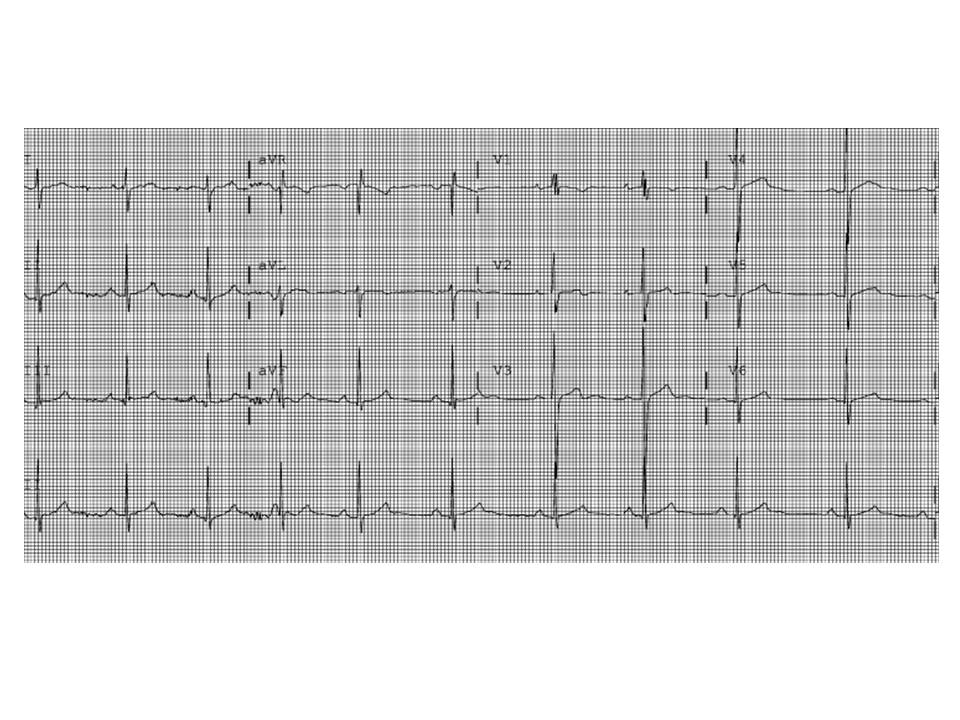
Vital signs and physical exam were normal. An EKG showed prominent R waves, inverted T waves in leads V1–V2, along with a biphasic T wave in lead V3. QRS axis and QTc interval were normal.
A transthoracic echocardiogram raised concerns about possible left-ventricular noncompaction.
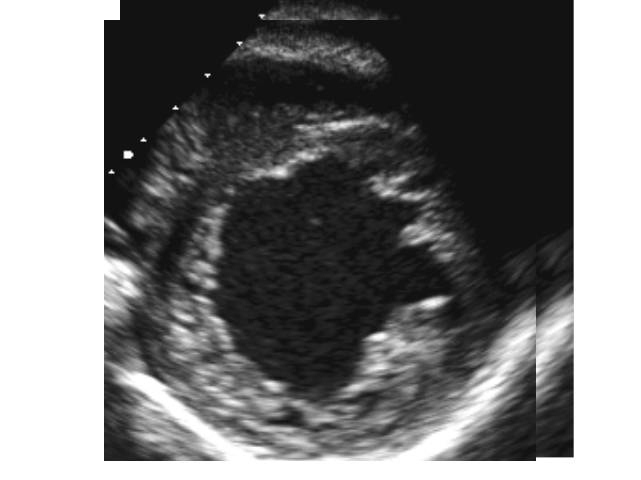
LV systolic function was found to completely normal. However, the ratio of thick, noncompacted myocardium to thin, compacted myocardium was 1.7 in end-systole. (Jenni criteria include the presence of a maximum ratio of noncompacted-to-compacted myocardium >2 to 1 at end-systole in the parasternal short-axis view.)
An MRI was performed to confirm the diagnosis.
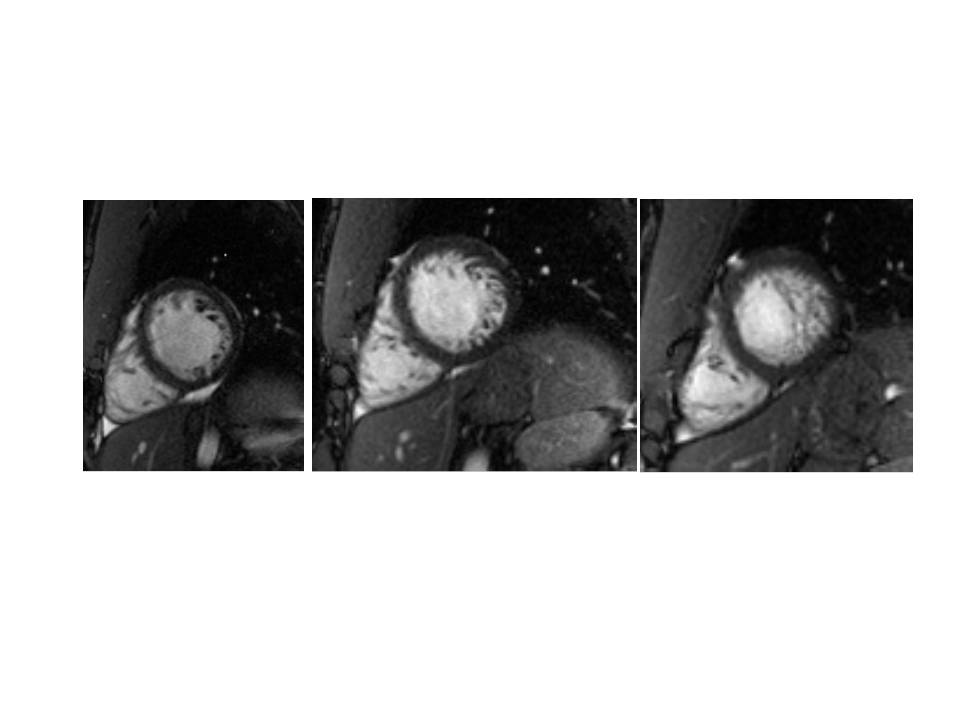
A detailed review showed mild biventricular enlargement with a ratio of thick, noncompacted to thin, compacted myocardium of 2.0. (The best distinguishing feature for LV noncompaction was a maximum ratio in diastole of noncompacted-to-compacted myocardial thickness of >2.3 to 1, as assessed in three long-axis views.)
The patient has a college football scholarship and dreams of becoming an NFL player.
Questions:
1. Would you advise the patient to continue playing competitive football?
2. Would you perform any additional tests? How would the test results affect your decision about whether to let him play?
Response:
January 12, 2012
This young man with palpitations has modest EKG abnormalities, as well as echo and MRI findings that suggest LV noncompaction (LVNC) — an uncommon cardiomyopathy due to congenital lack of endocardial compaction of the spongiform myocardium. The patient requires more investigation before concluding that he has LVNC. Exercise testing and Holter monitoring should be performed. In addition, a careful family history should be taken, given that up to half of all LVNC cases are reported to be familial. The inheritance pattern of LVNC appears to be X-linked, which should be considered in obtaining the family history.
Important aspects of the imaging diagnosis include the ability to see flow within the trabeculae of the noncompacted endocardium and localization of the noncompaction to the inferolateral and apical regions. The diagnosis generally requires a clinical picture of systolic heart failure, thromboembolic phenomena, arrhythmia, and/or familial inheritance.
If systolic and diastolic function are completely normal in the setting of normal exercise echocardiography and Holter results, the diagnosis of LVNC would be, at best, possible. However, the patient should be followed for the development of symptoms. Although sudden death from arrhythmias is a well-known complication of LVNC, it is an unusual first manifestation.
The diagnostic criteria for LVNC continue to evolve. The criteria differ depending upon the modality used to establish the diagnosis. Specifically, the diagnosis is made (1) from the systolic ratio of spongiform endocardium to epicardium using echocardiography but (2) from the diastolic ratio using MRI. Furthermore, the imaging quality of MRI has become so good that “hypertrabeculation” in many instances represents a normal variant rather than a pathologic finding. Some have expressed concerns that, in the absence of a suggestive clinical picture (e.g., symptoms, family history), a diagnosis of LVNC should not rest entirely on the imaging findings. In fact, both underdiagnosis and overdiagnosis likely occur in clinical practice.
Given these considerations, the patient should refrain from athletic activity until the above evaluation is completed. I would ultimately advise against participation in vigorous athletics in the case of a positive family history, abnormal results on the tests I have recommended, or development of further symptoms.
Follow-Up:
January 19, 2012
The patient underwent a cardiac catheterization that revealed normal coronary arteries. During a manual 1-minute-stage exercise protocol, he exercised for 9 minutes 35 seconds and achieved a peak workload of 17.9 METs. Peak oxygen consumption was 54 mL/kg/minute (114% of predicted). No arrhythmias were noted during the study.
During an electrophysiologic study to risk-stratify the patient for sudden cardiac death, ventricular extra stimulus testing was performed using pacing at both the right-ventricular outflow tract and the right-ventricular apex, with up to 3 extra stimuli. Ventricular tachycardia (nonsustained or sustained) could not be induced.
The patient was told to “sit out” this football season and, if he remained asymptomatic, resume playing next year. He did so, without any further symptoms.
Interestingly, transthoracic echocardiography, performed after the patient reduced his activity level, showed improvement in trabeculations.
January 4th, 2012
High STEMI Readmission Rate in U.S. Linked to Shorter Hospital Stays
Larry Husten, PHD
STEMI (ST-segment elevation myocardial infarction) patients in the U.S. are more likely to be readmitted to the hospital within 30 days compared with patients outside the U.S., but this difference loses significance when length of stay (LOS) is taken into account, according to a new study published in JAMA.
Robb Kociol and colleagues, analyzing data from 5745 STEMI patients enrolled in the Assessment of Pexelizumab in Acute Myocardial Infarction trial, found that U.S. patients had a 68% increase in the risk of readmission compared with patients outside the U.S.
- 30-day readmission rates: 14.5% in the U.S. versus 9.9% in other countries (p<0.001)
- The median LOS was shortest in the U.S. (3 days) and longest in Germany (8 days).
U.S. patients had a significantly elevated risk of readmission at 30 days (OR 1.53, CI 1.20-1.96), but this risk completely disappeared when LOS was included in the model (OR 0.98, CI 0.69-1.40). Each 1-day increase in the country-level LOS was associated with a 17% reduction in the likelihood of readmission at 30 days.
In their comments, the author note that some observers have suggested “that LOS has declined too far in the United States, resulting in suboptimal outcomes” and that “this trend may be driven by a health care system that financially rewards early discharge.” However, they point out, “LOS may be a marker for a combination of differences in health care patterns across different countries.” Balancing LOS and readmissions can be complex, they further point out: “The economic tradeoff between prolonging index hospital stays and reducing readmissions needs further research because the former may simply decrease overall efficiency without a significant effect on outcomes or overall resource use.”
January 4th, 2012
Missing Data: The Elephant That’s Not in the Room
Harlan M. Krumholz, MD, SM
There is a problem so grave that it threatens the very validity of what we learn from the medical literature. Bad data? Not exactly. Actually, it’s missing data — information, relevant to the risks and benefits of treatments, that is simply not published. In some cases, these data would make a critical difference in the inferences that readers draw from the literature. The absence of the data renders meta-analyses, systematic reviews, and book chapters suspect. Conclusions are made on the basis of incomplete science. In short, publication bias and selective publication are impugning the validity of what we can learn from a PubMed search or even the most careful review of published studies.
This matter demands our immediate attention and speaks to the need to rethink the configuration of clinical medical science. It may be time to adopt strategies to ensure that all relevant studies, results, and supporting documentation are made publicly available. “Out of sight, out of mind” is a dangerous reality in science and medicine. It’s time for a change — and it starts with the recognition that we have a problem.
I urge you to read BMJ this week to explore the evidence of this problem. In full disclosure, the studies include one by me (with others, led by Joe Ross) showing that more than half of trials sponsored by the NIH go unpublished even 30 months after completion. The other articles reveal troubling information, including about how missing data can affect the results of meta-analyses — and how many investigators are ignoring the requirements for mandatory reporting of trial results, raising the question of what “mandatory” actually means.
It is time to pay attention to this issue — and to begin working together to solve it. Let’s advocate for open science and get all the information out in a timely way for everyone to inspect. There are many facets to this problem, and we should not look to assign blame, but we do need to change our research and publication culture. Our entire clinical research community, including those who use the information and those who contribute to its dissemination, must collectively determine how best to get beyond this period when we are working with an incomplete view of medical evidence. Let’s put everyone on notice: The era of missing data must end.
After you review the studies in BMJ, please share your thoughts here with fellow members on CardioExchange. Links to several of the articles are provided below, with key quotations from each one.
Ross et al: Despite recent improvement in timely publication, fewer than half of trials funded by NIH are published in a peer reviewed biomedical journal indexed by Medline within 30 months of trial completion. Moreover, after a median of 51 months after trial completion, a third of trials remained unpublished.
Hart et al: The effect of including unpublished FDA trial outcome data varies by drug and outcome.
Ahmed et al: Publication, availability, and selection biases are a potential concern for meta-analyses of individual participant data, but many reviewers neglect to examine or discuss them. These issues warn against uncritically viewing any meta-analysis that uses individual participant data as the most reliable.
Prayle et al: Most trials subject to mandatory reporting did not report results within a year of completion.
Wieland et al: Based on the results for 2005, at least 3000 records describing randomised controlled trials but not indexed using RCT may have been entered into Medline between 2006 and 2011.
To leave or read comments, you’ll have to visit the version that’s only open for CardioExchange members.
Become a CardioExchange member and enjoy full access to our content and member discussions by clicking here.
January 3rd, 2012
Missing Data: The Elephant That’s Not in the Room
Harlan M. Krumholz, MD, SM
There is a problem so grave that it threatens the very validity of what we learn from the medical literature. Bad data? Not exactly. Actually, it’s missing data — information, relevant to the risks and benefits of treatments, that is simply not published. In some cases, these data would make a critical difference in the inferences that readers draw from the literature. The absence of the data renders meta-analyses, systematic reviews, and book chapters suspect. Conclusions are made on the basis of incomplete science. In short, publication bias and selective publication are impugning the validity of what we can learn from a PubMed search or even the most careful review of published studies.
This matter demands our immediate attention and speaks to the need to rethink the configuration of clinical medical science. It may be time to adopt strategies to ensure that all relevant studies, results, and supporting documentation are made publicly available. “Out of sight, out of mind” is a dangerous reality in science and medicine. It’s time for a change — and it starts with the recognition that we have a problem.
I urge you to read BMJ this week to explore the evidence of this problem. In full disclosure, the studies include one by me (with others, led by Joe Ross) showing that more than half of trials sponsored by the NIH go unpublished even 30 months after completion. The other articles reveal troubling information, including about how missing data can affect the results of meta-analyses — and how many investigators are ignoring the requirements for mandatory reporting of trial results, raising the question of what “mandatory” actually means.
It is time to pay attention to this issue — and to begin working together to solve it. Let’s advocate for open science and get all the information out in a timely way for everyone to inspect. There are many facets to this problem, and we should not look to assign blame, but we do need to change our research and publication culture. Our entire clinical research community, including those who use the information and those who contribute to its dissemination, must collectively determine how best to get beyond this period when we are working with an incomplete view of medical evidence. Let’s put everyone on notice: The era of missing data must end.
After you review the studies in BMJ, please share your thoughts here with fellow members on CardioExchange. Links to several of the articles are provided below, with key quotations from each one.
Ross et al: Despite recent improvement in timely publication, fewer than half of trials funded by NIH are published in a peer reviewed biomedical journal indexed by Medline within 30 months of trial completion. Moreover, after a median of 51 months after trial completion, a third of trials remained unpublished.
Hart et al: The effect of including unpublished FDA trial outcome data varies by drug and outcome.
Ahmed et al: Publication, availability, and selection biases are a potential concern for meta-analyses of individual participant data, but many reviewers neglect to examine or discuss them. These issues warn against uncritically viewing any meta-analysis that uses individual participant data as the most reliable.
Prayle et al: Most trials subject to mandatory reporting did not report results within a year of completion.
Wieland et al: Based on the results for 2005, at least 3000 records describing randomised controlled trials but not indexed using RCT may have been entered into Medline between 2006 and 2011.
January 3rd, 2012
Measuring In-Hospital Mortality Favors Hospitals with Short Stays
Larry Husten, PHD
As a measure of performance and quality, in-hospital mortality systematically favors hospitals with shorter overall length of stay (LOS) times, according to a new study published in Annals of Internal Medicine. This finding may have important implications for quality improvement initiatives that use mortality as a performance measure.
Elizabeth Drye and colleagues (including senior author Harlan Krumholz, editor-in-chief of CardioExchange) analyzed Medicare data from nearly 3.5 million hospital admissions for acute MI, heart failure, and pneumonia. They observed wide variations in the LOS for each condition and large differences between the in-hospital and 30-day mortality rates. Performance ratings were different for a substantial number of hospitals based on the mortality assessment used.
Acute MI:
- Mean LOS varied from 2.3 to 13.7 days
- In-hospital mortality and 30-day mortality: 10.8% and 16.1%, respectively
- 8.2% of hospitals had a change in performance classification based on type of mortality assessment
Heart Failure:
- Mean LOS varied from 3.5 to 11.9 days
- In-hospital mortality and 30-day mortality: 5.2% and 11.2%, respectively.
- 10.8% of hospitals had a change in performance classification based on type of mortality assessment
Pneumonia:
- Mean LOS varied from 3.8 to 14.8 days
- In-hospital mortality and 30-day mortality: 6.4% and 12.2%, respectively
- 14.7% of hospitals had a change in performance classification based on type of mortality assessment
The authors conclude:
As the United States increases its use of outcome measures to assess and reimburse for quality and to evaluate system innovations, outcomes measures with standardized follow-up periods, which are unaffected by variation in LOS or transfer patterns, should be preferred over in-hospital measures. Building national databases of key outcomes that can be readily linked to patient data, such as mortality, would make measures that use standardized outcome periods more feasible and timely.