
July 23rd, 2012
Selections from Richard Lehman’s Literature Review: July 23rd
Richard Lehman, BM, BCh, MRCGP
CardioExchange is pleased to reprint selections from Dr. Richard Lehman’s weekly journal review blog at BMJ.com. Selected summaries are relevant to our audience, but we encourage members to engage with the entire blog.
Lancet 21 July 2012 Vol 380
The Effect of Physical Inactivity on Worldwide Health (pg. 219): The dear old Lancet has the usual spread of articles this week, beginning with a global modelling paper from six prestigious centres which tells us to get off our bottoms and jolly well increase the average world life expectancy by 0.68 years. A surprisingly exact figure, given that nobody can possibly quantify the earth’s store of human idleness: but of course it is the sort of thing that gets into the news media and spawns a fine range of puritanical commentary pieces elsewhere in this Lancet. Why, it nearly had me going for a walk.
Transplantation of a Vein Bioengineered with Autologous Stem Cells (pg. 230): Another Horton favourite follows: clever men grow new vein on dead man’s, child’s life is saved. Or to put it another way, this is a proof-of-concept study demonstrating clinical transplantation of a deceased donor iliac vein graft repopulated with recipient autologous stem cells in a patient with extrahepatic portal vein obstruction. An interesting technical feat which has succeeded in one ten year old girl, needing no immune suppression. Why, you could almost say that further studies are needed.
Flecainide for Preventing AF after Electrical Cardioversion (pg. 238): Now for a randomized controlled trial: the question it seeks to answer is whether a 4-week course of flecainide is as good as a long-term flecainide for preventing the recurrence of atrial fibrillation after electrical cardioversion. For good measure, there was a no-treatment arm as well—not placebo, because allocation was not blinded. In fact, short-term flecainide is probably not as good as long-term flecainide at preventing recurrent AF (but long-term has other dangers). The excellent editorial that accompanies the paper says that “non-inferiority could not be established.” This may sound ugly but is a necessary use of the technical term “non-inferiority”, because in this case actual inferiority was not established (95% CI -1.7 to 17.7, p=0.208).
BMJ 21 July 2012 Vol 345
Bevacizumab and Ranibizumab Not Associated with Certain CV Risks: An increasing number of high-risk, mostly elderly individuals are receiving treatment with vascular endothelial factor inhibitors by intravitreal injection, usually for macular degeneration, but increasingly for diabetic macular oedema too. So it was a good idea on the part of these Canadian investigators to examine a large cohort of Ontarians who had received treatment with bevacizumab or ranibizumab to see if they showed an excess incidence of ischaemic stroke, acute myocardial infarction, congestive heart failure, or venous thromboembolism. They didn’t.
July 23rd, 2012
A Proposal To Improve The Value Of Observational Studies
Harlan M. Krumholz, MD, SM
I believe that observational studies can reveal important truths and have a critical place in the portfolio of clinical research. However, I sometimes wonder, when I see a study, just how it was conducted. Was the study question clearly defined before the analyses were begun…or did the study question emerge only after the investigator conducted many undirected analyses? In an Editor’s Perspective that I wrote, I question whether it would be useful to have journal’s require authors to disclose the methods history. Should they post their original study protocol in an online appendix? If the study was exploratory, should they disclose that intent? Would that help us better interpret the findings? I would be interested in your thoughts. I am Editor in Chief of Circulation: Cardiovascular Quality and Outcomes and we are discussing whether we should require information about the methods history for each observational study that is submitted. We would benefit from hearing your thoughts. What should we do?
If you are interested in my Editor’s Perspective, please see http://circoutcomes.ahajournals.org/content/5/4/418.full
July 20th, 2012
The BMJ’s Amazing Shock and Awe Assault on Sport Drink Science
Yoni Freedhoff, MD
CardioExchange welcomes this guest post by Yoni Freedhoff, an assistant professor at the University of Ottawa and founder of Ottawa’s Bariatric Medical Institute. This piece originally appeared on his blog, Weighty Matters.
wow.
Wow, WOw, WOW!
What words would you use when one of the world’s most prominent medical journals publishes not just one article critical of a specific category of food, but seven such articles, and those articles conclude that the food is being marketed on the basis of food-industry-funded hype and collusion?
I’d use the words, “Thank You!”
You’ll definitely hear about it in the news today as the British Medical Journal has seven incendiary pieces that are highly critical of sport and energy drinks, their Big Food parents, and the researchers that are conflicted by them.
The first piece (The evidence underpinning sports performance products: a systematic assessment) has researchers analyzing sport-drink advertising and identifying an astonishing 431 performance-enhancing claims for 104 different products. Those claims were “backed up” by references made on the products’ websites to 146 references. Of those 146, the authors could only find half of them. Of that half:
“84% were judged to be at high risk of bias”,
while only three were deemed to be of high quality and of low risk of bias. Ultimately, the authors — not surprisingly — concluded that:
“The current evidence is not of sufficient quality to inform the public about the benefits and harms of sports products.”
In the next article (The truth about sports drinks), BMJ‘s Investigations Editor Deborah Cohen explores the funding and financial ties between sports drinks’ parent Big Food companies, professional sport organizations, and expert advisory panels. Her hard-hitting piece is absolutely fascinating and covers how sport-drink-friendly messaging evolved and later became questionably incorporated into official medical and sport recommendations, often by advisory boards with multiple members on sport-drink payrolls.
Then, the BMJ tackles the European Food Safety Authority’s criteria for sport-drink claims (How valid is the EFSA’s assessment of sports drinks?). The authors were highly critical of the two claims approved by the EFSA: that sport drinks “improved water absorption during exercise” and that they helped with “maintenance of endurance performance.” They state that the EFSA asked Big Food to supply the references upon which their decision was based, that they had no formal criteria to evaluate which studies warranted inclusion in the analysis (Big Food submitted non-peer-reviewed book chapters, opinion pieces, etc.), and that, of those studies supplied to the EFSA, many were absent methodologies.
For the “improved water absorption during exercise” claim, the authors combed through the only 22 scientific studies presented to the EFSA and concluded that 17 were of poor quality, the subjects were predominantly male, only 3 studies included people over the age of 30, and not one had an outcome that included performance in a race or a sporting event.
For the “maintenance of endurance” claim, there were 26 scientific studies of which 19 were deemed to be of poor quality, 89% of the subjects were men, 73% of the subjects were endurance-trained men, 65% of subjects were endurance-trained men between the ages of 20 and 30, and only one study measured performance in a race setting.
The next explosion comes from Tim Noakes, the Discovery Health Chair of Exercise and Sport Science from the University of Capetown, in a commentary (Role of hydration in health and exercise) that can succinctly be summarized as: If you get thirsty you should drink and that over-hydration is a much more common and dangerous risk to the athlete than is dehydration.
Next up is an analysis of the science behind the GSK sport drink Lucozade’s claims that it boosts performance (Forty years of sports performance research and little insight gained). The authors’ conclusion says it all:
“From our analysis of the current evidence, we conclude that over prolonged periods carbohydrate ingestion can improve exercise performance, but consuming large amounts is not a good strategy particularly at low and moderate exercise intensities and in exercise lasting less than 90 minutes. There was no substantial evidence to suggest that liquid is any better than solid carbohydrate intake and there were no studies in children. Given the high sugar content and the propensity to dental erosions children should be discouraged from using sports drinks.”
And there’s still more!
Authors explore the marketing of sport drinks through social media and user endorsements (Miracle pills and fireproof trainers: user endorsement in social media). Not surprisingly, Big Food are savvy marketers, and Facebook and Twitter let them get away with making claims that even the EFSA would frown upon. Basically what companies do is try to encourage “user-generated content” which in turn they can then claim they didn’t actually write.
With the seventh article comes mythbusting (Mythbusting sports and exercise products). Among the busted myths:
- The colour of urine accurately reflects hydration (nope)
- You should drink before you feel thirsty (nope)
- Energy drinks with caffeine or other compounds improve sports performance (nothing other than equivocal benefit from caffeine)
- Carbohydrate and protein combinations improve post-workout performance and recovery (nope)
- Branched chain amino acids improve performance or recovery after exercise (subjectively did help, objectively equivocal)
- Compression garments improve performance or enhance recovery (performance, probably not; recovery, yes)
Finally, there is a commentary on how to stay hydrated (To drink or not to drink recommendations: the evidence). The 4 conclusions?
- There’s a wide range of hydration within which our amazing bodies work wonderfully.
- Freely chosen rates of fluid intake among elite athletes match sport-body recommendations (0.4-0.8 litres per hour).
- Intake at rates higher than sport-body recommendations confer no advantages.
- Athletes who lose the most body mass during marathon, ultra-marathon, or Ironman races do the best.
These articles are all unbelievably important, both in regard to the recommendations we give ourselves and our children and as to how unwise it is to let Big Food push an agenda. They are not our friend.
Huge props to the BMJ and their investigative partner BBC Panorama for this groundbreaking series.
July 19th, 2012
New ICD Lead Technology Creates New Set of Problems: A Perspective From One Electrophysiologist
Edward J. Schloss, MD
CardioExchange welcomes this guest post from Edward J. Schloss, MD, the medical director of cardiac electrophysiology at Christ Hospital in Cincinnati, OH.
Why I Don’t Like DF-4: A Personal Perspective
Since the first human implantable cardioverter defibrillator (ICD) implant in 1980, there have been a wealth of technological advances that have allowed these devices to become a standard therapy in the treatment of patients at risk for sudden cardiac arrest. Some of these, such as nonthoracotomy lead systems and biphasic waveforms, have revolutionized the industry. Others, such as downsized lead caliber, have added risk without clear benefits.
The DF-4 ICD lead is one of the latest technologies to be approved in cardiac rhythm management. DF-4 refers to the type of pulse generator connector on these leads. All three major U.S. ICD vendors have FDA-approved DF-4 ICD leads, and these have been generally well received by the implanting physician community. In this perspective, I endeavor to show that it may be appropriate to temper this enthusiasm.
Historical Background and Lead Design
Early ICDs required open-chest surgery to implant and were offered only to high-risk cardiac arrest survivors. In the early 1990s, transvenous lead ICD systems eliminated the need for thoracotomy or sternotomy. Soon thereafter, these leads were coupled with downsized ICD generators and advanced shock waveforms resulting in significant improvements in implant safety and success. As device indications expanded into primary prevention after the MADIT and SCD-HeFT trials, ICD implantation exploded in the U.S.
Over the years, a variety of industry standards have evolved to connect ICD leads to pulse generators under the guidance of the International Organization for Standardization (ISO). For most of the modern ICD era, we have been using ICD leads that have the DF-1/IS-1 connector. A representative DF-1/IS-1 lead is shown in figure 1:
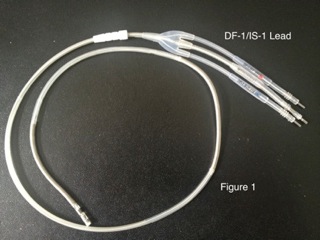
In the figure, note the pulse generator header connections are on the top right and the connection to the ventricular endocardium is in the bottom left. The header connectors consist of one low-voltage pacing/sensing connector, termed IS-1, in the middle, and one or two high-voltage shock connectors, termed DF-1, alongside. These come together into a yoke that integrates the conductors into a single lead body as it enters the vasculature.
DF-4 was designed as an independent standard, combining all conductors into a single connection to the ICD header. In 2009, the first DF-4 ICD lead was FDA approved and marketed by St. Jude Medical. In the U.S., Medtronic and Boston Scientific also have available DF-4 ICD leads. Pictured in figure 2 is a DF-4 connector above a DF-1/IS-1 connector:

Note that the DF-4 lead has only one connection and no yoke. In addition, there are no plastic sealing rings on the lead connectors, as these are now integrated into the pulse generator.
At implant, these lead connectors are attached to an ICD pulse generator. The lead body is coiled behind and closed within the device pocket as shown in figure 3.

Doctors have embraced DF-4 technology and, according to some industry personnel, adoption has exceeded expectations. Potential advantages to DF-4 include:
- Easier implant with only one connector to attach rather than two or three
- Less likelihood of inadvertent misconnection to wrong port
- Easier dissection of lead at device replacement with less potential for lead damage and shorter procedure times
- Less pocket bulk
- Fresh sealing rings with each new pulse generator
At the 2012 Heart Rhythm Society Meeting in Boston, Dr. Michael Mirro reported the first long-term experience with DF-4 ICD leads. In the St. Jude SJ4 Post Approval Study, a 1700 patient experience over 5 years showed excellent performance with high satisfaction among implanting physicians.
So What’s the Problem with DF-4?
DF-4 ICD leads have a variety of known and potential disadvantages that must be weighed in the decision whether or not to use in a given patient. Some of these relate to the loss of flexibility in connectivity, others are due to the inherent uncertainty that comes along with a new lead design.
At ICD implant a DF-4 lead limits the ability to address high defibrillation thresholds (DFT). With DF-1/IS-1 leads, it is straightforward to add a supplemental shocking coil or array to the ICD lead system and plug this directly into the header block. With a DF-4 system, a high DFT would require replacement of both the ICD lead and pulse generator to allow addition of a new shocking lead. High DFTs are an infrequent but very important problem, and DF-4 takes away our flexibility in handling these patients. This year, Cogert et al published a case report of this scenario in PACE with the warning “until additional connectivity is added to the DF-4 defibrillator, we caution against selecting this technology in patients at risk for high DFTs.”
Isolated failure of the pacing/sensing component of an ICD lead is a common problem, especially with established leads not on recall. This can occur due to fracture of that element of the ICD lead or because of problems at the lead/myocardial interface (exit block). With DF-1/IS-1 leads, adding a dedicated pacing lead and substituting this in the header is a straightforward fix. Unfortunately, it is impossible to revise a DF-4 system in this fashion. Rather, an entirely new ICD lead would need to be implanted and the old lead abandoned or extracted.
Downgrade of an ICD to a pacemaker is straightforward with DF-1/IS-1 systems. This procedure is sometimes appropriate in patients no longer needing or desiring defibrillation backup at battery depletion but still having pacing indications. We offer this commonly to our elderly or ill CRT responders, and anyone else in whom ICD therapy is no longer appropriate or desired, who still need pacing therapy. Unfortunately, those with a DF-4 system will not have an easy path to downgrade due to the lack of a DF-4-compatible pacemaker system.
All of the above concerns could be addressed with new adapters or novel devices with modified header blocks. Unfortunately, there does not seem to be much movement from industry to address these issues. An adapter has been developed that will address the high DFT issue, but this has not yet been submitted for U.S. FDA approval. There have been no low-voltage adapters or modified headers developed yet, and none on the horizon. Industry personnel tell me that the high development cost and long approval cycle have been significant barriers. New restrictions from the FDA will likely have the unintended effect of slowing or halting the development cycle of these hardware fixes.
Over time we may see other unanticipated problems with DF-4 ICD leads. In an excellent review on this topic in April 2012 in Europace, Sticherling and Burri express concern that the complex design of the header/lead interface could lead to sensing or electrical isolation problems. Anyone quick to dismiss this potential problem need only think back on our humbling recent experiences with ICD failures to recognize that the late manifestation of an unanticipated failure mechanism is a fact of reality in cardiac rhythm devices.
To summarize, DF-4 disadvantages include:
- Inability to add additional shock electrode in setting of high DFT
- Inability to add pacing lead to remedy ICD lead fracture or pacing exit block
- Inability to downgrade ICD to pacemaker in future
- Uncertain long-term performance of DF-4 connector
Most of the perceived advantages of the DF-4 standard appear to be for the benefit of the doctor, not the patient. Even those advantages are pretty minimal. At initial implant, cutting back the number of connectors to attach may shave perhaps 30 seconds off the implant time. At device change, DF-4 may take a few minutes less to dissect out.
DF-4 does appear to reduce the incidence of improperly deployed setscrews and lead/header mismatch (abstract). One should recognize, however, that this rare problem should be 100% avoidable by a careful implanter and support staff with any lead system. It really shouldn’t be too much for our patients to expect us to put the right lead into the right connector and properly tighten three screws. A simple lab checklist would be a better and cheaper solution than designing and implementing a whole new lead technology.
Reduction in pocket bulk with DF-4 has been touted, but this is also a modest benefit at best. Observe in figure 3 above that an ICD lead properly wound into the pocket will hide its bulk behind the pulse generator and may not be noticeable. In addition, despite the loss of two connector ports, ICD pulse generator volumes are no smaller across vendors (EuroPace article, table 2).
Applying care and reason to the decision to use DF-4, there may be only a limited patient population in which benefit seems to outweigh risk. For my purposes, I would most likely consider DF-4 in a patient with the combination of being thin (to minimize pocket bulk), elderly or inactive (less likely to have lead fracture), without pacing indications (unlikely to need device downgrade in future), and without marked LV dilatation or very low EF (less likely to have high DFT or pacing threshold problems).
It is critical to adopt any new technology in a measured and thoughtful fashion. Experience has taught us time and again that newer isn’t always better. Determining true risks and benefits can be challenging, as we tend to learn all risks only years after product release. Because implantable devices, especially leads, are not easily replaceable, we need to anticipate potential problems while we wait for supportive long-term data. I’ve often said that the most valuable attribute in a pacemaker or ICD lead is a long, reliable track record.
Industry needs to prioritize patient safety in product design and marketing. DF-4 leads have been released and popularized even in the face of known deficiencies. Equal priority has not been applied to the development of adapters or modified pulse generators that we need to address predictable problems. Until we have these hardware fixes, I fear DF-4 will remain an example of a product designed more for the benefit of the doctor than the patient.
July 18th, 2012
Lessons from EKG Class
Shengshou Hu, M.D.
CardioExchange welcomes this guest post from Dr. Westby Fisher, an electrophysiologist practicing at NorthShore University HealthSystem in Evanston, Illinois, and a Clinical Associate Professor of Medicine at the University of Chicago’s Pritzker School of Medicine. This piece originally appeared on his blog, Dr. Wes.
“Dr. Fisher, can you teach our residents’ EKG lecture series?”
Naively, I said “Sure!”
What I didn’t realize is how hard this is to do today.
Much of this is not residents’ fault. They only have so many hours in so many days to attend lectures while caring for patients. Thanks to residency work-hour restrictions, those hours have become even fewer. To make matters much worse, through the year residents are torn to different rotations at different times and different hospitals. Since topics for EKG interpretation span over many lectures, it is impossible for residents to attend every lecture over the academic residency year. Just like when a student misses half the lectures for a college course, it’s hard to get an A.
Yesterday, I stood before a crowded room of about 35 to 40 residents and interns for their first of many EKG classes. There they sat, with their nicely pressed fluorescent-white lab coats ready to learn. They were quiet and respectful as they sized up their middle-aged physician attending who apologetically arrived 5 minutes late after seeing an urgent consult in the Emergency Room. They had no idea what to expect. In some ways, neither did I.
I plugged in the obligatory USB thumb drive to the obligatory computer to display the obligatory Powerpoint presentation, then stopped. Up came the image on the screen. They turned toward it, oblivious how uninterested I was in the contents of the slide. I asked them a question.
“How many of you don’t know the first thing about an EKG?”
Their heads swung back to me, silently. Much of the room smiled, not certain where I was going. Hesitantly, a few hands rose in the air.
I had never seen this before. As their soon-to-be instructor, I could not help but ask myself silently what the heck these kids have spent at least $200,000 of their parents’ money learning in medical school. How on earth can any student leave four years of medical school education and not know the first thing about an EKG?
I pressed on.
“How many of you know something about an EKG and its basics but realize you need to know more?”
Relieved, I saw many more hands go up.
EKG reading is one of those basic skills about which every physician should at least have a rudimentary knowledge. Medical school’s controlled classroom-like environment lends itself better to instruction of the basics rather than hurried clinical rotations. Clinical rotations are where residents should fine-tune their skills in this area. How and why some medical students are not even exposed to this basic skill before entering their internship is one question, but what these young doctors are receiving for their huge costs of education is an even more important one.
As pressures continue to mount on physician salaries in the years ahead and their corresponding debts climb, perhaps we should ask ourselves why our young doctors continue to pay huge sums for their medical education when the quality of the instruction has been allowed to slip to this level.
Could it be that their academic instructors never attended an EKG class either?
July 18th, 2012
FDA Approves Another New Weight Loss Drug
Larry Husten, PHD
The US FDA approved on Tuesday a new weight loss drug that will be called Qsymia, the brand name for the combination of two previously approved drugs, phentermine and extended-release topiramate. The drug is manufactured by Vivus, Inc.
In a press release, the FDA said Qsymia had been approved for use in obese adults (BMI of 30 or above) or in overweight adults (BMI of 27 or above) with at least one other weight-related condition, such as hypertension, diabetes, or dyslipidemia.
The label recommends a daily dose of Qsymia containing 7.5 mg of phentermine and 46 mg of extended-release topiramate. The drug will also be available at the higher dose of 15 mg of phentermine and 92 mg of extended-release topiramate.
According to the FDA, in clinical trials, at 1 year, patients taking the recommended dose had an average weight loss of 6.7%, while those taking the higher dose had an average weight loss of 8.9%, when compared with patients taking placebo. People taking the lower dose of Qsymia who do not lose 3% of their body weight after 12 weeks are unlikely to achieve a sustained weight loss on the same dose. These patients should either discontinue the drug or move to the higher dose. After 12 weeks on the higher dose, people who do not achieve a 5% weight loss should discontinue the drug.
The combination drug is contraindicated during pregnancy. Because of the high risk for oral clefts in fetuses exposed to topiramate, women should have a negative pregnancy test before starting Qsymia and every month while taking the drug, in addition to using contraception. The drug is also contraindicated in people with glaucoma or hyperthyroidism. Because the drug may increase heart rate, its use in people with recent or unstable heart disease or stroke is not recommended. In addition, the FDA recommends that all patients taking Qsymia have their heart rate monitored regularly, in particular when starting the drug or increasing the dose.
FDA is requiring Vivus to implement a Risk Evaluation and Mitigation Strategy (REMS), consisting of a Medication Guide for patients and a plan to educate prescribers and patients to avoid the increased risk for birth defects associated with the drug. Pharmacies will need to obtain a special certification before dispensing Qsymia. The FDA is requiring the company to perform a long-term cardiovascular outcomes trial.
The drug had previously been known as Qnexa, but was forced to change the name by the FDA “because too many other drugs ended in the same letters and it would have caused confusion,” Vivus President Peter Tam told Bloomberg News.
The approval of Qsymia, along with the approval a few weeks ago of Arena’s lorcaserin (Belviq), are the first new weight loss drugs approved by the FDA since 1999.
July 17th, 2012
Still the One: Cleveland Clinic Retains Top Spot on U.S. News & World Report Heart Hospital Rankings
Larry Husten, PHD
U.S. News & World Report has published its 2012-13 “Best Hospitals” list. Once again, the Cleveland Clinic is the top hospital for heart and heart surgery. Massachusetts General was the top hospital overall, followed by Johns Hopkins, Mayo Clinic, and the Cleveland Clinic.
Here are the top 20 hospitals for heart and heart surgery:
- Cleveland Clinic
- Mayo Clinic
- Johns Hopkins Hospital
- New York-Presbyterian University Hospital of Columbia and Cornell
- Massachusetts General Hospital
- Texas Heart Institute at St. Luke’s Episcopal Hospital
- Duke University Medical Center
- Ronald Reagan UCLA Medical Center
- Brigham and Women’s Hospital
- Mount Sinai Medical Center
- St. Francis Hospital
- Methodist Hospital
- Barnes-Jewish Hospital/Washington University
- NYU Langone Medical Center
- Hospital of the University of Pennsylvania
- Cedars-Sinai Medical Center
- Northwestern Memorial Hospital
- Loyola University Medical Center
- Minneapolis Heart Institute at Abbott Northwestern Hospital
- Ochsner Medical Center
July 16th, 2012
Does PPI + DAPT = MI?
Richard A. Lange, MD, MBA and L. David Hillis, MD
Dual antiplatelet therapy (DAPT) with aspirin and clopidogrel is the standard of care for prevention of coronary stent thrombosis. Unfortunately, DAPT is associated with an increased risk for gastrointestinal hemorrhage. Although this risk can be reduced with the concomitant administration of a proton pump inhibitor (PPI), initial observational studies suggested that PPI use with DAPT is associated with an increased incidence of myocardial infarction (MI), which was attributed to PPI inhibition of the CYP2C19 cytochrome pathway necessary for the activation of clopidogrel. However, the authors of a study released last week concluded that “the interaction between proton pump inhibitors and clopidogrel is clinically unimportant.”
Why don’t the studies agree?
Observational studies — like those first reporting an adverse interaction of PPI and DAPT — attempt to control for confounding variables (i.e., using proportional hazards models), but they can’t adjust for factors that weren’t measured or those associated with PPI use that may independently increase the risk for MI. In other words, differences between patients who are and are not prescribed PPIs could account for the harmful effects observed.
To address this issue, Douglas and colleagues performed two different observational studies on the same dataset. The first was designed as a traditional cohort study, and the second was designed as a self-controlled case series (in which subjects function as their own controls, eliminating confounding between subjects). As in previous cohort studies, the traditional analysis showed that use of PPIs with DAPT was associated with a significantly increased risk for MI (hazard ratio, 1.35; 95% confidence interval, 1.26–1.45). However, the within-subject analysis on the same dataset found no association between PPI use and MI (hazard ratio, 0.75; 95% CI, 0.55–1.01). To confirm their findings, the investigators performed the same analyses for other known CYP2C19 inhibitors and again found no associations with MI in the within-person analyses despite significant associations with MI in the proportional-hazards analyses.
So which is it. . .are PPIs safe or harmful when used with DAPT?
When residual confounding is minimized, no association is demonstrable between PPI use and MI in patients receiving DAPT.
So, PPI or not?
We agree with the the author of the accompanying editorial that clinicians should strongly consider prescribing a PPI to all patients on DAPT who are considered to be at increased risk for gastrointestinal complications, including those over 60 years of age, those with medical comorbidities, and those taking nonsteroidal anti-inflammatory drugs or anticoagulants.
Are you convinced it’s safe to administer PPIs to your patients on DAPT?
July 16th, 2012
Ticagrelor Joins Clopidogrel and Prasugrel in Updated NSTEMI Guidelines
Larry Husten, PHD
Ticagrelor (Brilinta, AstraZeneca) gains equal standing with prasugrel (Effient, Lilly) and clopdiogrel in the newly released focused update of the ACCF/AHA guidelines for unstable angina and non-ST-elevation myocardial infarction (NSTEMI). The change had been widely anticipated since last year’s FDA approval of ticagrelor.
“We have put it on equal footing with two other antiplatelet medications, clopidogrel and prasugrel,” said Hani Jneid, the, lead author of the update, in a press release issued by the AHA.
As part of the standard of dual-antiplatelet therapy (DAPT), aspirin should be given immediately to patients with unstable angina and NSTEMI. Aspirin use should be continued for as long as it is tolerated.
The document offers a highly detailed, near-Talmudic analysis of the literature, with a great deal of attention devoted to analysis of the TRITON-TIMI 38 trial of prasugrel and the PLATO trial of ticagrelor. Overall, the committee concluded:
This guideline explicitly does not endorse one of the P2Y12 receptor inhibitors over the other.
However, based on data from the trials, the document provides some advice about the selection of the P2Y12 receptor inhibitors in specific situations, and related issues involving clopidogrel resistance.
- Because prasugrel was administered only after PCI had been planned, the writing group “does not recommend that prasugrel be administered routinely to patients with UA/NSTEMI before angiography.”
- The writing group cautions “clinicians about the potential increased bleeding risks associated with prasugrel and ticagrelor compared with clopidogrel in specific settings and especially among the subgroups identified in the package insert and clinical trials.”
- The document reviews at length the issue of clopidogrel resistance, but concludes “there is little information about the use of strategies to select patients who might do better with newer P2Y12 receptor inhibitors.”
- On genotype testing for loss-of-function CYP2c19 alleles: “On the basis of the current evidence, it is difficult to strongly recommend genotype testing routinely in patients with ACS, but it might be considered on a case-by-case basis, especially in patients who experience recurrent ACS events despite ongoing therapy with clopidogrel.”
- On platelet function testing: “Any strong recommendation regarding more widespread use of such testing must await the results” of ongoing trials…. the prudent physician should maintain an open yet critical mind-set about the concept until data are available…”
- On the use of proton pump inhibitors and clopidogrel: “The expert consensus statement does not prohibit the use of PPI agents in appropriate clinical settings, yet highlights the potential risks and benefits from use of PPI agents in combination with clopidogrel.”
July 16th, 2012
The Name Game: Why Did “TAVI” Suddenly Become “TAVR”?
Larry Husten, PHD
One of the great, unexplained mysteries of the cardiology world in recent years is the sudden name change from TAVI (transcatheter aortic valve implantation), which had been the universally-used name for the procedure during most of its development period, to TAVR (transcatheter aortic valve replacement) about the time when the procedure edged closer to U.S. approval.
Now, in a clever letter published in the Journal of the American College of Cardiology, Stacey Clegg and Mori Krantz “humbly suggest reversion to the archaic name transcatheter aortic valve implantation (TAVI).” When the procedure is explained to potential patients, they write:
We gracefully explain that we blow up a balloon, smash the old valve to the side, then implant a new one within their existing annulus. Their reaction is often one of bewilderment. This confusion is well founded. Webster’s dictionary defines replace as “to put something new in place of something else,” and implies filling a place once occupied by something removed. One does not have a muffler replaced at the local auto shop and expect to find the old one still in place. Technically, we are performing valve displacement. However, a valve displacement doesn’t sound like an advanced restorative therapy that marketing experts would embrace.
Clegg and Krantz write that TAVI was still in use in 2010 when the first PARTNER trial was published in the New England Journal of Medicine (“Transcatheter Aortic-Valve Implantation for Aortic Stenosis in Patients Who Cannot Undergo Surgery”) but the acronym had been somehow magically transformed by 2011 when the second PARTNER trial was published in NEJM (“Transcatheter Versus Surgical Aortic-Valve Replacement in High-Risk Patients”).
Clegg and Krantz argue that “TAVI” should be restored as “the acronym of choice”:
Why does this matter? We contend that this is not merely semantic, because an accurate name for high-risk expensive procedures is pertinent to healthcare stake holders. It facilitates uniform communication among researchers, payers, regulators, clinicians, and, most importantly, patients. In a clinical landscape cluttered with jargon, we should strive toward verbal precision. Politicians, poets, and pollsters know that words matter. Powerful words launch social movements and even cultural revolutions. The right catch phrase also can launch a new product. However, there should be truth in advertising, and our regulatory bodies should be critical in determining if advertising is misleading or fails to disclose all the relevant facts.
There is one issue about the name change not addressed by Clegg and Krantz, and here we leave the idealistic world of semantics and philosophy and enter the hard-edged world of economics and finance. At the time of the change from TAVI to TAVR, there were numerous rumors and speculations about the real reason for the change. Reimbursement for the procedure, the theory goes, would be much higher if it were based on a comparison with surgical replacement rather than surgical repair.
[youtube=http://www.youtube.com/watch?v=5MJLi5_dyn0&w=600]